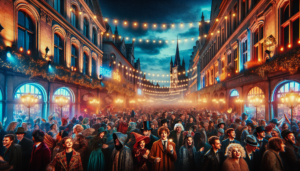
Let’s dive into the fascinating world of collective hallucinations, where perceptions of reality intertwine and merge in a rich and varied cinematic dialogue. Through this first part of exploration, we will highlight the most captivating and innovative projects presented during the 18th edition of the festival, revealing a range of narrative strategies that question the human condition and social dynamics within our modern society. Each film, through its themes and approach, opens new and stimulating perspectives, thus laying the groundwork for an enriching exchange around these singular works.
At the heart of contemporary cinematography, a fascinating phenomenon emerges, often referred to by an evocative term: collective hallucinations. This concept refers to a shared sensory experience, oscillating between reality and the unreal, which films explore with increasing intensity. In this article, we examine the themes that emerge from the latest edition of Hallucinations Collectives, focusing on various innovative films that challenge our perceptions and raise profound questions about human nature.
Narratives that question our perception
Contemporary filmmakers tackle narratives often centered on the individual facing a hostile community. These films range from open confrontation to more insidious underground tensions. Among the works presented, some include striking titles such as Hate and Freeway, which shed light on fractures within society. In these contexts, each protagonist becomes a representation of collective fears and desires, resonating with universal emotions.
The Eyes of Satan, screened alongside The Black Fortress, opens a delicate chapter: that of the transmission of evil. This concept is approached with great sensitivity, highlighting how anxiety spreads in a social setting. Thus, the way the individual interacts with their environment is brought to light. Power plays, rivalry, and the quest for survival are omnipresent themes.
A visual and narrative diversity
The short excerpts screened in preview reveal a great wealth of visual and narrative content. Cloud, for instance, directed by Kiyoshi Kurosawa, presents an ordinary man whose life is turned upside down when the situation spirals out of his control. This film, which addresses modern digital connection, begins as a social satire, quickly evolving into a gripping thriller where each character is shaped by external pressures. The palpable tension is maintained throughout its viewing.
In this vein, another film, The Assessment by Fleur Fortuné, immerses the viewer in a post-apocalyptic world. Here, a couple undergoes a troubling protocol to conceive a child. This confrontational work addresses themes of surveillance and intimacy while questioning the limits of technology. A remarkable cast, featuring performances by Elizabeth Olsen and Alicia Vikander, adds an emotional depth that enhances the narrative tension.
Reimagined tales, a new perspective
The theme of the reimagined tale is at the heart of several films presented during this festival. The Ugly Stepsister by Émilie Blichfeldt is a perfect example. Far from classic adaptations, this film offers a bold reinterpretation of Cinderella, revealing the struggle for acceptance in a kingdom where appearance reigns. The blend of grotesque and baroque embodies a cinematic risk-taking that stands out from more conventional productions.
In the same vein, Daniela Forever by Nacho Vigalondo focuses on how loss and grief dictate our behaviors. By incorporating elements of science fiction, the director explores the blurry contours between dream and reality, creating a rich dialogue around accepting pain and emotional dependencies. This work leads us toward deep introspection regarding human relationships and how to manage absence.
Interaction between dream and reality
Moreover, the idea of a blurry boundary between dream and reality is ever-present, coinciding with the creation of a dreamlike atmosphere. The Surfer, a project by Lorcan Finnegan starring Nicolas Cage, delves into this theme with an innovative vision. The plot, where a man dreams of reclaiming a lost territory, questions the meaning of identity within a background of surrounding violence. This film, by its intense nature, skillfully plays with our perception of events, leaving us to question what is tangible.
In sum, the complexity and nuances of reality and fiction intertwine in these screenings, offering a unique experience to the viewer. This dialogue between different narratives and interpretations enriches current cinematic culture, pushing us to reflect and feel beyond the images presented.
A cinephile temple to discover
The festival, which stands as a true temple of cinema, deserves special mention. Thanks to a passionate team and dedicated volunteers, Comoedia becomes a platform where these exceptional works find their audience. The discussions that arise around the screenings nourish the collective reflection on the meaning of these films and how they interpret our modern world.
This first part of analysis ends here, but it opens the door to further discoveries expected in this rich and varied cinematic universe. Films like Reflet dans un diamant mort, scheduled to close the festival, promise to add more layers of meaning to this bold ensemble. Each screening raises questions, prompting deep reflection and exchange. It thus seems essential to renew our dialogues about the films presented while enjoying this creative effervescence.
|
IN BRIEF
|
In this cinematic discovery, the 18th edition of Collective Hallucinations presents a rich array of films that draw from varied and interconnected themes. By highlighting works such as Cloud, The Assessment, and The Ugly Stepsister, the festival offers a fascinating dialogue between human emotions and contemporary realities. Each film, in its own way, questions the ties of the individual to their environment, oscillating between reality and fantasy.
The way these works approach the human condition is particularly impressive. For instance, in Cloud, a man’s struggle against a hostile digital environment raises questions about individualism and alienation in modern society. Similarly, The Assessment explores the intimacy of a couple subjected to a dehumanizing control process, revealing common anxieties in the face of societal expectations.
Furthermore, the reworking of classic tales in The Ugly Stepsister brings a unique freshness to the genre, challenging norms and immersing the viewer in a grotesque and bold aesthetic. Such artistic choices reflect the filmmakers’ intention to redefine traditional narratives, while questioning our conceptions of beauty and values.
This first part dedicated to the newly screened previews not only emphasizes the vitality of the Hallucinations Collectives framework but also the importance of cultivating discussions around the films. The exchanges that emerge from this selection thus become essential for understanding contemporary issues and the critical reflections that cinema can inspire in its audience. Each work becomes an invitation to explore our own hallucinations and perceptions, bearing witness to a constantly evolving cinematic art.