In the film “The Interest of Adam”, the hospital transcends its traditional role to become a fully-fledged character, influencing the narrative and the fates of the protagonists. Through a captivating immersion, cinema explores how this space, often associated with suffering and healing, can also embody hope, despair, and human relationships. This work invites reflection on the ties that are woven in a place where life and death coexist, thus giving a new dimension to the very concept of a hospital.
In a world where film and reality intertwine, the work “The Interest of Adam” stands out for its ability to transform an ordinary setting into a true protagonist of the story. This film explores not only human relationships but also the impact of the hospital environment on each character. At the heart of this narration, the hospital thus becomes a silent observer, participating in the emotional turmoil and daily dramas. Through poignant scenes and emotionally charged dialogues, the director invites us to reflect on what it truly means to live in a hospital environment.
The Representation of the Hospital: A Key Player
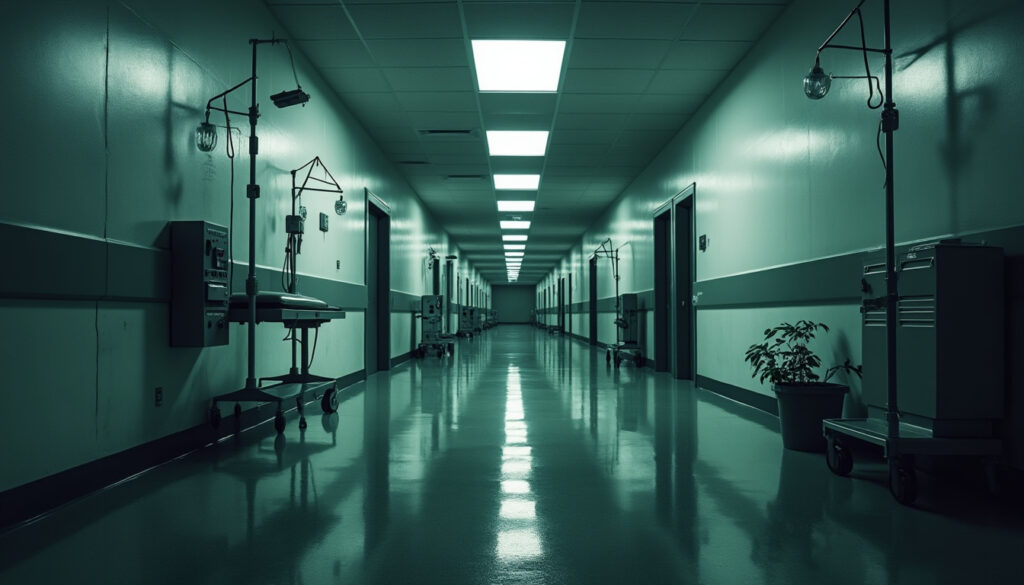
The hospital in “The Interest of Adam” is not just a place for care. It is a space where complex, sometimes tragic stories are woven. The white, sterile corridors, far from being mere backdrops, become a reflection of the protagonists’ inner thoughts. Moreover, each scene, every interaction between patients and medical staff, reinforces the idea that the institution itself can influence the decisions and emotions of each individual. In this place, the fragility of life is laid bare.
The camera plays a fundamental role. It films the actors moving within this vast building. A unique atmosphere results. The sounds of machines and the echoes of footsteps create a disturbing symphony. Thus, the viewer is overwhelmed by the intensity of emotions, sometimes contradictory. This environment, which could be perceived as cold or clinical, becomes a character whose presence is ever-present.
Human Interactions in a Confined Space
This film highlights the interactions between different characters. These encounters, often unexpected, reveal the diversity of emotions. Laughter, tears, and silences intermingle in a constant ballet. In this place, the hospital, everyone tries to find both comfort and solace. These bonds woven under the pressure of daily life are depicted with profound sensitivity. Conversations, sometimes mundane, pave the way for reflections that go far beyond. Each actor, whether a patient or a staff member, contributes a piece to the puzzle of a complex reality.
In addition to dialogues, gestures and non-verbal expressions play a crucial role. They evoke feelings often unexpressed. Hands touching, exchanged glances, every detail matters. The hospital becomes a space where human relationships intensify and reveal hidden truths. Characters confront their deepest fears. The fragility of existence materializes before our eyes.
Universal Themes Through a Hospital Lens
By addressing themes such as death, illness, and reconciliation, “The Interest of Adam” raises timeless questions. The treatment of these subjects within a hospital setting brings unprecedented depth. Patients must face their destiny, and this examination is often unbearable. The film offers a mirror that reflects to viewers questions about their own lives, choices, and relationships.
By making the hospital a fully-fledged character, the film helps depict the complexities of life. Emotional challenges and internal struggles take on broader significance. This allows for a strong connection between the characters and the audience. Each person can recognize themselves, and the themes addressed resonate deeply with the human experience.
At the same time, the hospital also represents hope, healing, and change. The transformations of characters throughout the storyline illustrate how a space such as a hospital can influence an individual’s life journey. Every care provided, every moment shared, becomes a part of this growth and a path to understanding oneself and others.
A Critical Look at Society Through the Medical Prism
The film also invites a broader critique of our society. It questions our relationship with illness and our perception of life and death. The characters evolve within a context that is often rigid, where social norms are deeply entrenched. This hospital setting reveals inequalities, prejudices, and the hardships faced by those who suffer. It encourages an examination of a reality often overlooked, but one that deserves our attention.
The choices in staging highlight this aspect. Sometimes, the camera focuses on billboards, signs that remind viewers of bureaucratic struggles. These elements seem to engage in dialogue with personal stories. Patients, while going through their own trials, are also confronted with a system that can sometimes be merciless. The complexity of the hospital environment then reinforces the film’s message.
In short, through “The Interest of Adam”, the hospital takes on a dimension that goes beyond a mere care space. It becomes a true witness to the lives that intersect there. This cinematic exploration leads us to rethink our own understanding of this often-misunderstood environment.
In the film “The Interest of Adam”, the hospital is not merely the backdrop of a story, but comes to life as a fully-fledged character. This environment, often perceived as cold and impersonal, is here humanized through the narrative. The director manages to establish an atmosphere that is both oppressive and comforting where the walls of the hospital seem to welcome the characters while imprisoning them in their reality.
Each corridor, each examination room becomes a reflection of the emotions and inner struggles of the protagonists. Patients are not just suffering individuals; they become heroes of their own story, fighting for life, love, and dignity. The hospital, with its sounds, its lights, and its interludes of humanity, acts as a catalyst, amplifying dramatic tensions and deepening the bonds between characters.
The interactions between them are often marked by moments of vulnerability, revealing hidden facets of characters that emerge in the face of suffering and hope. The camera evolves the viewer’s perspective, transforming the hospital into a place of reflection and renewal. The film invites us to reconsider places of care, not only as technical spaces but as environments where human resilience manifests itself daily.
In sum, “The Interest of Adam” masterfully illustrates how a place can influence life trajectories. It reminds us that, at the heart of medical urgency, the emotional dimension of human experiences is paramount. Each room, each interaction becomes a chapter of a collective story, where the hospital, far from being a mere background, shapes and resonates with the destinies of the patients and those surrounding them.