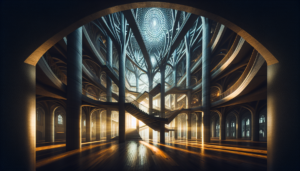
In the contemporary cinematographic universe, few works arouse as much enthusiasm and questioning as Megalopolis of Francis Ford Coppola. This film, real daring fable taking place in a modern metropolis combining the influences of new York and the Ancient Rome, testifies to the excessive ambition of its creator. Through the eyes of a passionate architect, Coppola explores the struggle between futuristic vision And traditions of the past, placing the viewer at the heart of a story rich in historical echoes. Megalopolis is not content to be just a film; it represents an aspiration, a utopian dream shaped by the unique vision of a filmmaker who does not hesitate to delve into the depths of humanity.
For several decades, Francis Ford Coppola has distinguished himself as one of the greatest masters of cinema. His latest project, titled Megalopolis, testifies to his creative ambition and his desire to reinterpret societal issues through a daring cinematographic prism. A true fresco on the future of humanity and utopian desires, this film raises crucial questions about the coexistence of traditions and progressive visions.
A utopian vision in the heart of modernity
Megalopolis is part of a universe where history and modernity mix, a society in search of renewal after a devastating cataclysm. At the heart of this narrative, we follow the journey of an architect whose determination to build an ideal city questions the notions of success and sacrifice. The film resonates like a modern fable whose overflowing ambition could, at certain moments, seem to be lost in the complexity of its ideas.
Historical and cultural influences
Inspired by the Conjuration of Catiline, one of the defining episodes in Roman history, Coppola uses the narrative elements of this period to address contemporary themes such as progress, power and conflict between generations. The juxtaposition between a New Rome and elements of the modern mythology, thus reflects a world in decay, like our current society, where the past and the future clash. In this quest for reinvention, the architect becomes the symbol of a persistent ideal, imbued with light and darkness.
A film revealing excessive ambition
Coppola’s project, often seen as a madness, does not fail to arouse passions. With Megalopolis, he seeks to go beyond the simple framework of entertainment to question intimate and universal ideals. This film is as much a visual exploration as it is a reflection on the duality of human aspirations: on the one hand, the hope for a better future, and on the other, the crushing weight of traditions. This dichotomy highlights the fundamental conflict that exists at the heart of the human soul.
The challenge of sending a clear message
However, this immense ambition carries with it the risk of a certain confusion. Indeed, the multiple themes addressed could potentially drown out the final message. Coppola himself recognized the complexity of the project and the need to harmonize the different narrative layers without the work getting lost in the abundance of thoughts. Megalopolis is therefore a challenge, both in its production and in its reception, and the public reaction could well shape its cinematic legacy.
A work marked by strong artistic choices
For the interpretation of this rich story, Coppola has chosen leading actors who will bring to life nuanced characters, each representing a facet of this complex utopia. Adam Driver, headlining, plays the visionary whose dreams collide with an often brutal reality. His presence on screen promises to bring emotional depth to this already charged story.
Towards a timeless masterpiece
While Megalopolis is presented as a life’s work, it also appears as a milestone in Coppola’s filmography. This timeless director, always in search of authenticity, looks to the future while remaining deeply anchored in his cinematic roots. The long-awaited release of this film could well mark a turning point in his artistic journey, boldly questioning conventions, while redefining our vision of a utopian future. Every detail of this work seems to be the affirmation of a desire to create a rich and captivating cinematographic universe, at the crossroads of time and space.
- Francis Ford Coppola: Iconic director, known for his daring approach to cinema.
- Megalopolis: His most ambitious film project, originally conceived in the 1980s.
- Architectural utopia: An architect tries to build an ideal vision of New York, after a cataclysm.
- Temporal conflict: Exploration of the tension between futuristic vision and traditions of the past.
- Historical inspiration: Taken from the “Conjuration of Catiline”, a reflection of Roman historical episodes.
- A flamboyant young man: Central character confronting lucidity and optimism.
- Profusion of ideas: A potentially confusing tale brimming with innovative ideas.
- Cinematic vision: Coppola offers a work that transcends the conventional limits of film.
- Anticipation in Cannes: A notable event during the Festival, with enormous expectations from the public.
- Masterpiece in the making: Megalopolis could redefine the standards of science fiction cinema.