
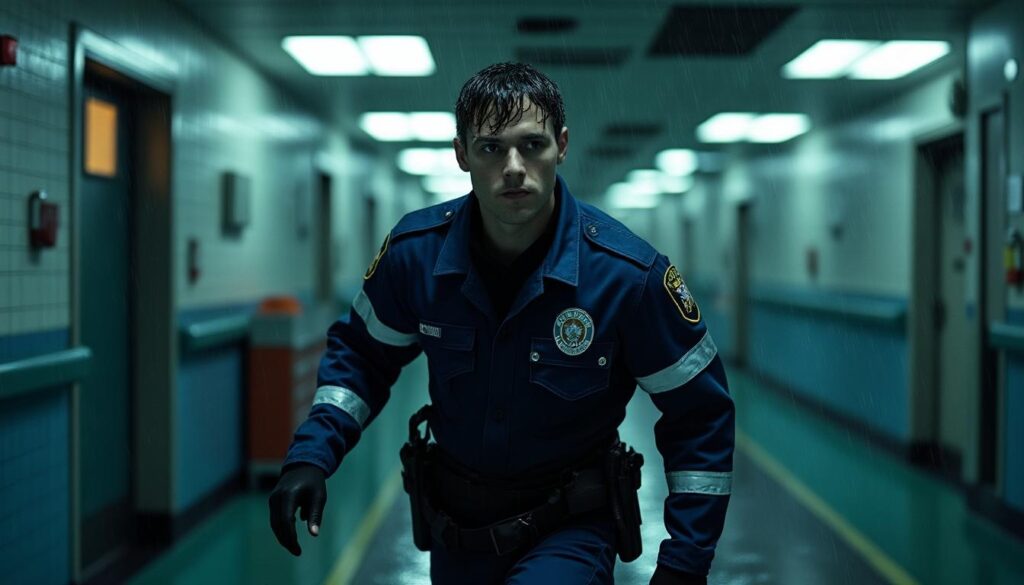
In the world of French cinema of the 80s, Gilles Béhat stands out for his ability to blend tension and emotion through his works. His film “Urgence” (1985) embodies this approach, plunging the viewer into the heart of a gripping thriller where violence and suspense coexist. Driven by an oppressive atmosphere and memorable characters, this feature film testifies not only to Béhat’s mastery but also to his boldness in tackling contemporary social and political themes, while offering a cinematic experience that is both captivating and unforgettable.
This article explores the cinematic universe of Gilles Béhat, particularly his iconic film “Urgence,” released in 1985. The feature film is recognized for its ability to create intense suspense and address relevant social themes related to the far-right and violence. Through an in-depth analysis, we will uncover the elements that make this film a must-see in French cinema of the 80s.
Gilles Béhat: a versatile filmmaker
Gilles Béhat is a name that resonates in the Francophone cinema landscape. Director, screenwriter, and sometimes actor, he has made a mark with his unique works. Before becoming an acclaimed director, he began his career in supporting roles. However, this path only reinforced his determination.
It was in 1978 that Béhat made his debut as a director with the film “Haro.” The evolution of his career led him to direct “Urgence,” which is often considered his masterpiece. This film, despite a mixed reception upon its release, has since become ingrained in collective memory. Its unique approach and ability to tackle complex themes have earned it a status slightly above cult.
Over the years, Béhat has managed to stand out with his striking visual style and effective storytelling. His films are a blend of realism and fiction, where every detail matters in creating a palpable atmosphere. He often uses elements of the thriller genre, which allows him to captivate his audience through poignant and often disturbing narratives.
“Urgence”: a film of tangible intensity
“Urgence” is the quintessence of the thriller of the 80s. In a context where violence is an integral part of daily life, this film immerses viewers in a breathtaking narrative. The story revolves around a journalist who is killed while in possession of crucial information about an imminent racist attack. This clever starting point creates an omnipresent tension and a sense of urgency.
The main character, Jean-Pierre Mougin, played by Richard Berry, embodies a journalist drawn into a deadly trap. The motivations of each protagonist are carefully developed, offering an unprecedented depth to the plot. Béhat knows how to create memorable characters whose choices and struggles resonate with the audience.
Béhat’s direction is bold. He uses innovative shooting techniques, such as a handheld camera, to give a sense of immediacy. The soundtrack, infused with synthesizers, accentuates the film’s anxious atmosphere, echoing the intensity of the story. It is this combination of artistic daring and sense of rhythm that distinguishes “Urgence” from other films of its time.
The themes addressed in “Urgence”
This feature film questions topics such as the far-right, violence, and corruption within institutions. Béhat does not hesitate to confront his audience with sometimes disorienting realities. The social malaise described in the film remains relevant. The feeling of powerlessness in the face of a crisis-ridden society is omnipresent, prompting reflection.
By placing his characters at the heart of complex moral conflicts, Béhat directly engages his audience. The police officers, often portrayed as heroes, are shown in a more nuanced light. Their incompetence and corruption contribute to the overall tension. The film implicitly denounces the dangers of allowing extremism to thrive.
Béhat’s choices regarding casting and dialogue are also significant. Having well-known actors, such as Bernard-Pierre Donnadieu, helps create a recognizable atmosphere. The performances of the actors contribute to making the stakes more palpable, increasing the identification and involvement of the viewer.
A cinematic work to rediscover
With the recent release of high-definition editions, it is time to rediscover “Urgence.” This work, although forgotten by some, deserves to be viewed again. Contemporary critics highlight its undeniable impact on French cinema. The main ingredients that make this film strong are its powerful themes and stylized direction.
In summary, the reissue of “Urgence” is not merely a commercial revival. It is a tribute to a director whose work continues to inspire. Films like this, which thrive on current themes, defy time and encourage reflection.
By revisiting this universe, viewers will not only discover a captivating thriller but also a work of great thematic richness, above all a mirror of our society grappling with crises. It is essential to value and explore narratives like this one. They allow us to question and understand the evolution of our world.
Gilles Béhat and the growing tension of “Urgence”
Gilles Béhat, a filmmaker whose name resonates strongly in the landscape of French cinema of the 80s, has managed to establish himself with his iconic film “Urgence”. This thriller, released in 1985, immerses the viewer in a universe where tension is palpable and suspense is omnipresent. Through meticulous direction and clever storytelling, Béhat captures the essence of an era while addressing pertinent sociopolitical themes.
The story of “Urgence” opens with motifs of violence and danger, where a journalist finds himself in possession of crucial information about a neo-Nazi plot. Béhat, with a skillful script, presents a narrative dynamic that maintains excitement and thrill. The immediate introduction of well-developed characters, such as Lysa and Jean-Pierre Mougin, allows the audience to identify with their struggles and vulnerability, thereby enhancing the intensity of the intrigue.
What truly distinguishes “Urgence” is the way Béhat skillfully weaves visual and auditory elements. The score, enriched with analog synthesizers, enhances the atmosphere of the 80s and contributes to a breathtaking pace. The film resembles a true exploration of human limits in the face of a world plagued by violence and injustice. Béhat successfully denounces the dysfunctions of a failing police system while offering thrilling and immersive action.
In summary, “Urgence” proves to be a significant work of French noir cinema, linking entertainment to a sharp social critique. Gérard Carré and Didier Cohen, the original creators of the literary work, find here a strong adaptation, driven by Béhat’s unique vision. This film reflects the evolution of the genre while positioning Gilles Béhat as an essential director of French cinema.


