The cinema of Graham Swon stands out for its innovative approach combining music, narration, and aesthetic. With works like “The World Is Full of Secrets” (2018) and “An Evening Song (for Three Voices)” (2023), he invites the viewer to dive into a unique sensory experience, where horror blends with a touching story of a love triangle. Through a bold use of speech and staging, Swon explores the boundaries between language and image, creating a gothic atmosphere rich in emotions and mysteries.
Graham Swon: Musical Exploration Between “The World Is Full of Secrets” (2018) and “An Evening Song (for Three Voices)” (2023)
Graham Swon is a unique filmmaker who provokes thought through his work. With his recent films, The World Is Full of Secrets and An Evening Song (for Three Voices), he tackles classical narration while integrating musical elements. His works reveal a bold melody and an innovative approach to storytelling, blending content and form, inviting the viewer to consider horror and romantic relationships from a fresh angle. This journey navigates between tradition and experimentation, offering a rich and nuanced interpretative key.
The World Is Full of Secrets: A Musical Narrative
The first film, The World Is Full of Secrets, focuses on speech as the main vector of emotion. In an almost theatrical setting, the characters share horrifying tales evoking past stories. This narrative device is radical, as it refuses to illustrate horror through explicit images, instead favoring the effect of evocation.
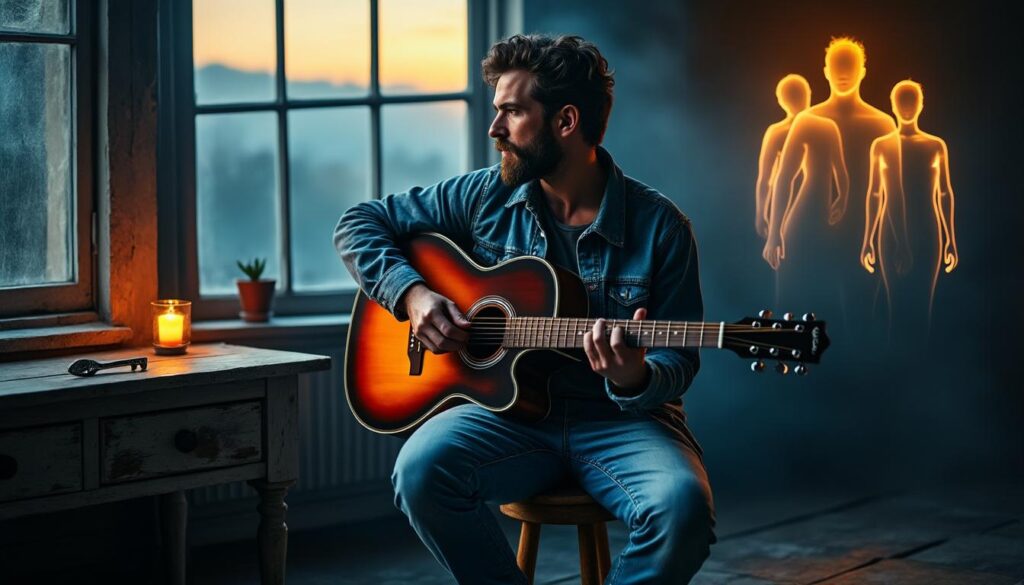
The stories, tinged with nostalgia, are told by young women in an authentic twilight, illuminated only by the vibrant glow of candles. This staging choice heightens the tension and creates an immersive atmosphere, plunging the viewer into the heart of the narrative. At every moment, one feels a mix of shiver and fascination for the art of storytelling.
The film draws its taste for mystery from aesthetics that recall ancient oral traditions, where words have the power to captivate and frighten. Through this resolutely original approach, Swon invites the viewer to let themselves be carried away by the stories, becoming the listener of fascinating tales, much like an audience gathered around a campfire.
An Evening Song (for Three Voices): Towards a Polyphony of Emotions
In his second feature film, An Evening Song (for Three Voices), Swon explores a more romantic and gothic register, venturing into the subtleties of a love triangle. This narrative, although more traditional in its structure, offers an innovative approach, particularly through the alternation of the characters’ voices. Barbara, Richard, and Martha engage in a verbal dance, illustrating the complex dynamics and their buried emotions.
The staging prioritizes the power of speech, transferring the challenges of love and jealousy onto a narrative stage. The viewer is thus immersed in the inner world of characters fighting to exist through their words. This polyphonic narrative choice enhances the story while accounting for the attraction power of language, opposed to the fixed image.
Swon plays with time and emotional spaces, reinforcing the distance between characters while revealing the flaws in their relationships. Thus, the film becomes both an ode to cinema and an introspection on the human condition, exploring the intricacies of love and human desires, thereby creating a disturbing and enchanting atmosphere.
The Musical Echoes of Visual Narratives
Through these two works, Graham Swon invites an unprecedented musical exploration. While The World Is Full of Secrets finds its rhythm in the echoes of narration, An Evening Song (for Three Voices) complements it with emotional interludes that guarantee a palpable romantic tension. The stories intertwine, the sounds of voices and souls responding create a complex patchwork, uniting boldness and depth.
- The use of voice-overs interweaves emotions, creating an emotional narrative harmony.
- The narratives respond to each other, offering a rich tableau that challenges the linearity of classic stories.
- Each character is instrumentalized through their voice, revealing hidden dimensions of their personalities.
In summary, these films testify to a bold and thoughtful approach, where the visual and auditory intertwine to form a unique cinematic experience.
An Innovative Vision of Cinema
Graham Swon’s vision represents a true reflection on the role of the narrator and cinematic storytelling. By standing out from conventional practices, he encourages us to consider how language and image interact. His clever use of eloquence and the third dimension of sound creates a space for dialogue, both intimate and universal.
Swon’s films are not merely passive entertainment. They engage the viewer in an experience where every spoken word is measured and every silence matters. The narratives, far from being mere distractions, become truths that are both universal and personal. It is this exploration of the narrative world that he has set out to examine in depth.
These two works represent an invitation to revisit our relationship with cinema and music, bringing together heterodox elements to engender a reflection on the **nature of storytelling, while provoking the insatiable desire to discover more.
Musical Exploration Between “The World Is Full of Secrets” (2018) and “An Evening Song (for Three Voices)” (2023)
Graham Swon, through his works “The World Is Full of Secrets” and “An Evening Song (for Three Voices)”, offers a singular cinema where the exploration of stories surpasses the predominance of images. In these two feature films, he invites the viewer to dive into atmospheres that are both gothic and romantic, while appropriating traditional narrative structures to provide real depth to the stories told.
In “The World Is Full of Secrets,” Swon achieves a true feat by composing a horror film stripped of tangible horror. Instead of resorting to frightening visual elements, he opts for a mise-en-scène centered on speech, the essential foundation of his narrative. The narrators, plunged into a palpable darkness, weave stories that intertwine and feed off each other, evoking a disembodied fear that lingers, allowing the tension to vibrate between the lines. This raises significant questions about the nature of horror and storytelling itself.
In contrast, “An Evening Song (for Three Voices)” explores the theme of the love triangle within a more conventional yet equally fascinating framework. The narrative structure, giving a voice to each of the three protagonists, underscores the impact that speech has on their existence and interactions. Swon succeeds in creating a poetic echo between the characters and the viewer, revealing the emotional complexities underlying the narratives. The voices, omnipresent, overlap like a melody, carrying the very essence of human relation.
In summary, Graham Swon offers us a unique cinematic experience where the musicality of words and the depth of emotions coexist, anchoring his art in tradition while remaining resolutely modern. His ability to transcend traditional narratives, infusing life into the poetic modality, enriches the contemporary cinematic landscape and breathes new life into often forgotten narrative forms.