
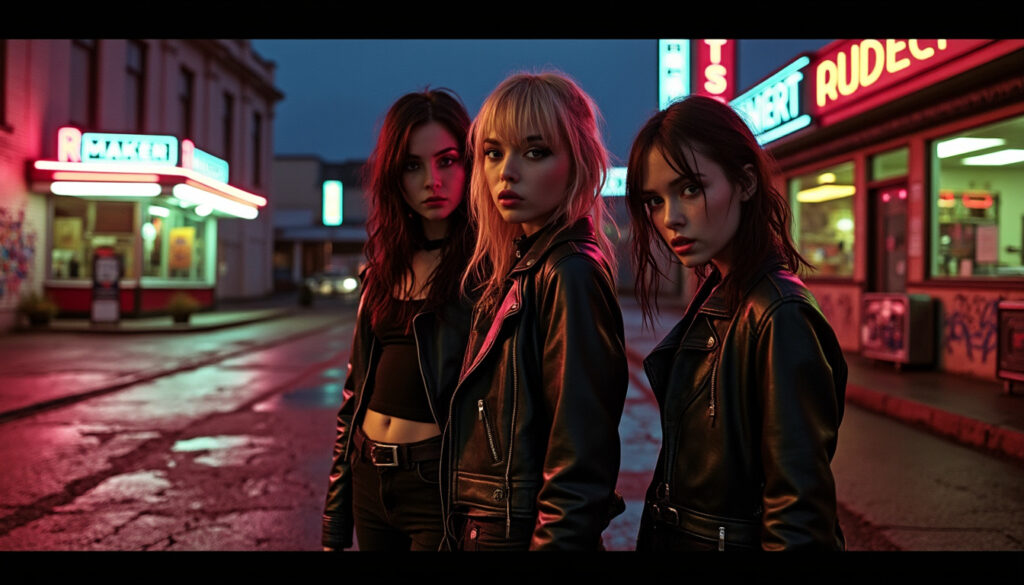
Gregg Araki, an iconic figure in American independent cinema, delivers with The Doom Generation (1995) a remarkable work that redefines the codes of the anti-teen movie. In a conservative and disillusioned America, he introduces us to a trio of young protagonists caught in a whirlwind of violence and sexuality. Through this dark and tumultuous story, Araki tackles poignant themes such as the quest for identity, anxiety in the face of a sick society, and the urgency of liberated sexuality, all wrapped in a bold aesthetic and an electrifying soundtrack. This plunge into the Doom Generation pushes us to reconsider the aspirations and disillusions of a marginalized youth.
In the cinematic landscape of the 90s, Gregg Araki distinguished himself with his provocative and singular approach to the teen movie genre. With his flagship film, The Doom Generation, released in 1995, he overturned established conventions. This feature film, ranked among the emblematic works of the teen apocalypse trilogy, presents a disenchanted vision of teenagers confronted with a chaotic world. This article examines the universe created by Araki, exploring its themes, characters, and the scope of his cinematic legacy.
Gregg Araki’s Unique Vision
Gregg Araki, director, screenwriter, and producer, has made his mark in the industry thanks to his unique style. He became known for addressing subjects often neglected by mainstream cinema. In his films, he particularly explores the themes of identity, sexuality, and despair. His visual style is also very recognizable. Bright colors, intriguing compositions, and evocative music enrich his work.
In The Doom Generation, Araki mixes dark humor with a sharp critique of society. This film is marked by its lack of moralism, a deliberate choice that reflects the cynicism of the youth of the time. The protagonists of the film, although entangled in explosively dramatic situations, maintain a nonchalant relationship with the events surrounding them.
Symbolic Characters
At the center of this narrative, we find three emblematic characters: Jordan, Amy, and Xavier. Their dynamic is essential to understanding the very essence of the film. Jordan, played by James Duval, embodies a sensitivity on edge, while Amy, portrayed by Rose McGowan, represents a disenchanted beauty. Xavier, for his part, is the catalyst for chaos.
- Jordan: An introspective young man searching for meaning in a disenchanted world.
- Amy: A complex female character, oscillating between strength and vulnerability.
- Xavier: A disruptive figure who disturbs the couple’s balance.
Each of them navigates between love, violence, and a sense of survival distorted by circumstances. Together, they wield slogans like “The World Sucks”, expressing a strong sense of rebellion that resonates even today.
A Profoundly Dystopian Narrative
The Doom Generation is not just a simple teen comedy. This film addresses dystopia in an unusual way. From the very first minutes, we understand that the protagonists are not seeking to find their place in a world that rejects them. They are fatally confronted with violence and an incurable anxiety. The themes of suicide, violence, and chaos resonate throughout the scenes.
The film presents elements of a road movie, a quest where everything seems doomed to failure. The trio finds themselves on the run, escaping authority. It’s a dark journey, where each step brings them closer to their figurative death. A striking moment occurs when the characters face a group of nationalists. Tension rises as the scene intensifies, illustrating the dangers of a divided society.
The Enriching Soundtrack
Music plays a crucial role in The Doom Generation. Araki, passionate about sound, succeeds in creating a unique atmosphere with his carefully chosen soundtrack. By integrating iconic bands, he echoes the emotions of his characters. Artists like Cocteau Twins and Sonic Youth contribute to giving depth to the work, making it even more impactful.
The characters regularly insert themselves into the musical universe. They wear t-shirts from iconic bands, thus reinforcing their connection to punk and alternative culture. Music becomes almost a character in its own right, adding an additional dimension to their quest.
The Legacy of the Doom Generation
The Doom Generation marked its time. Although it can be perceived as a radical and nihilistic film, it also presents a dose of romance and hope. Araki manages to weave sincere love stories amidst the chaos. The characters’ desire for connection and affection, despite a society that rejects them, underscores the struggle for enduring humanity in the face of adversity.
Araki himself emphasized that these stories are not solely rooted in despair but also in a desperate search for love and understanding. The complexity of the relationships between the characters continues to inspire and question subsequent generations. By appropriating the sufferings of the Generation X, Gregg Araki has left an indelible mark on the history of independent cinema.
The filmography of Gregg Araki, particularly through his emblematic work The Doom Generation, redefines the codes of the traditional teen movie. Depicting a raw and unflinching reality, Araki plunges viewers into a universe of desolation, where teenagers face a world that is both violent and disenchanted. At a time when cinema often romanticized youth, his film exposes the dark side of adolescence, marked by despair and anxiety in the face of an uncertain future.
In the context of his anti-teen movie, Araki addresses delicate themes such as sexuality, violence, and social rejection. In doing so, he creates characters grappling with chilling realities, embodied by actors like James Duval, whose emotional fragility contrasts with the extreme situations experienced. It is this vulnerability that allows viewers to identify with them, despite the surrounding nihilism. The film does not hesitate to oscillate between drama and absurdity, highlighting the absurdity of an existence often marked by misunderstanding and marginalization.
By juxtaposing an explosive universe with an eclectic soundtrack, Araki does not merely entertain; he provokes a reflection on youth and its turmoils. Some scenes resonate like a melody of despair, but are coupled with a foundation of hedonism and the quest for human connection. This blend of romance and cynicism makes The Doom Generation an essential work, paving the way for a new approach to adolescent narratives, where there is no fear of addressing the brutal realities of life.


