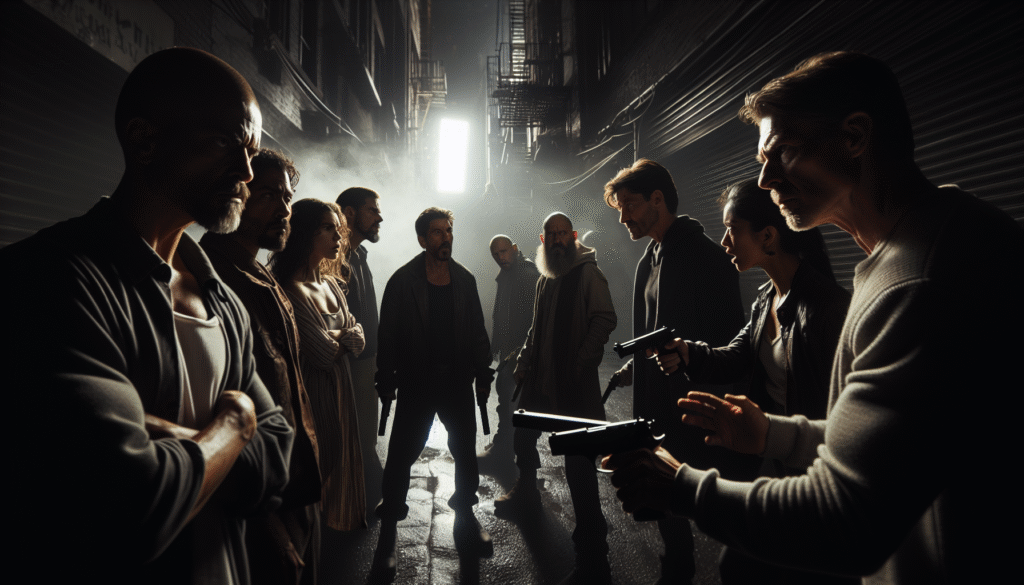
As part of the promotion for his first feature film, The Clan of Beasts, director Christopher Andrews reveals himself through a captivating interview. He discusses not only the genesis of his film but also his unique vision on violence in cinema, where he aspires to achieve an authenticity and responsibility that challenge the audience. Drawing inspiration from his personal experience, Andrews highlights family dynamics, exploring profound themes while paying tribute to iconic directors like Sam Peckinpah.
In a fascinating encounter with Christopher Andrews, the director of The Clan of Beasts, he reveals the foundations of his work. Through this interview, he shares his vision of cinema, his inspirations, and his bold approach to violence in cinema. This film, which addresses complex themes, embodies his quest for authenticity while exploring concepts of responsibility and human relations. Andrews stands out for his ability to represent emotions and inner struggles in a way that resonates deeply. Let’s discover together the ideas and reflections of this promising young filmmaker.
The Genesis of The Clan of Beasts
When discussing the creation of his film, Andrews explains that his journey began with writing a very different screenplay. Initially, he envisioned a western, but funding challenges led him to seek a different direction. It was then that he turned to a more modest project. The choice of locations in northern England seemed particularly relevant to him. This cinematic and underexploited landscape inspired powerful images, notably that of a shepherd emerging through the mist.
This image, which Andrews describes as an “Eastwoodian silhouette,” truly marked the beginnings of the film. His short films, including Fire and Stalker, had already sketched complex characters and family tensions. This attention to father-son relationships is of paramount importance, and Andrews retains the emotions he experienced, thus enhancing the authenticity of his narrative.
Major Influences
Andrews mentions the great masters of cinema who inspire him. He immediately cites Sam Peckinpah, known for his way of depicting human vulnerability in the face of violence. For Andrews, Peckinpah does not merely present brutal scenes. He explores the devastating consequences of violence on individuals. One of the striking thoughts that the director shares is that he always aspires for violence, when represented, to have meaning and depth.
He also references figures like Akira Kurosawa, whose works exhibit emotional richness. This blend of cultural inspirations, ranging from Western cinema to Asian traditions, nourishes the unique vision that Andrews has of cinematic storytelling.
Narrative Structure and Characters
The film’s narrative adopts a two-headed approach. Indeed, the director has chosen to explore not one, but two points of view, that of Michael and Jack. This duality allows for a richer understanding of the characters’ motivations, thus avoiding manichaeism. Andrews further emphasizes the importance of secondary characters. Ray, the father, serves as a representation of the traditional patriarchal figure. Paradoxically, this immobility of the character plays a crucial role in triggering the violence.
On the other hand, Caroline, the key female character, stands out for her intellect and the desire to evolve beyond an oppressive environment. Andrews firmly believes that writing realistic characters engages the audience to reflect on the themes addressed, particularly toxic family dynamics and their impact on future generations.
A Vision of Violence
Christopher Andrews advocates for responsibility in the representation of violence on screen. For him, it is a visual interrogation of the deeper meanings of this act. While he explains that violence can sometimes be enticing in cinema, he emphasizes that his true intention is to make the audience aware of the horrors that result from it. For him, it is an evolutionary journey that initiates the audience into a critical reflection on brutality. This is part of his approach to genre cinema, that is to say, attracting a specific audience while confronting them with moral issues.
In this regard, the striking contrast between The Clan of Beasts and other films like The Raid is revealing. While some films glorify violence, Andrews chooses to interrogate it, rendering it unpleasant and already cruel, prompting viewers to evaluate their own relationship with these images.
Personal Conclusions and Legacy
Alongside the making of his film, Andrews has also seen his own life transform, recently becoming a father. This change has led him to reflect on how familial patterns are passed down from generation to generation. Thus, wishing to break the cycle of conflict and suffering, he strives to instill different values in his son. This desire for personal transformation is also felt in his work. The film embodies an introspective endeavor and a cathartic response to his past experiences.
The director’s challenge lies in inducing autonomy and recognition of toxic behaviors, both on a personal level and within society. Andrews thus hopes that The Clan of Beasts will prompt the audience to become aware and engage in deep conversations about violence and human relationships.
|
IN BRIEF
|
In this captivating interview, Christopher Andrews candidly shares his cinematic vision as well as his singular approach to violence on screen. As the director of the film The Clan of Beasts, Andrews helps us understand that violence is not an end in itself, but a means to explore the complexities of human nature. He emphasizes the importance of representing this violence in an authentic manner, in order to evoke deep reflection in the viewer, rather than entertaining them with a mere display of brutality.
Andrews discusses the influence of great filmmakers such as Sam Peckinpah, known for his nuanced approach to violence. By drawing inspiration from their style, Andrews seeks to give meaning to violent scenes, anchoring them in an emotional context that resonates with human experience. Thus, he aims to imbue his works with a pedagogical value, where the viewer is invited not only to understand the characters but also to question their own reactions to violence.
The director also highlights the importance of secondary characters, bringing a narrative richness that enhances the themes of his work. The dynamic between the protagonists and their surroundings in the face of heavy familial and social legacies offers a depth that transcends the simple narrative. Ultimately, Andrews’ work is not limited to a cinematic aesthetic, but touches on universal themes such as family, memory, and the struggle for identity.