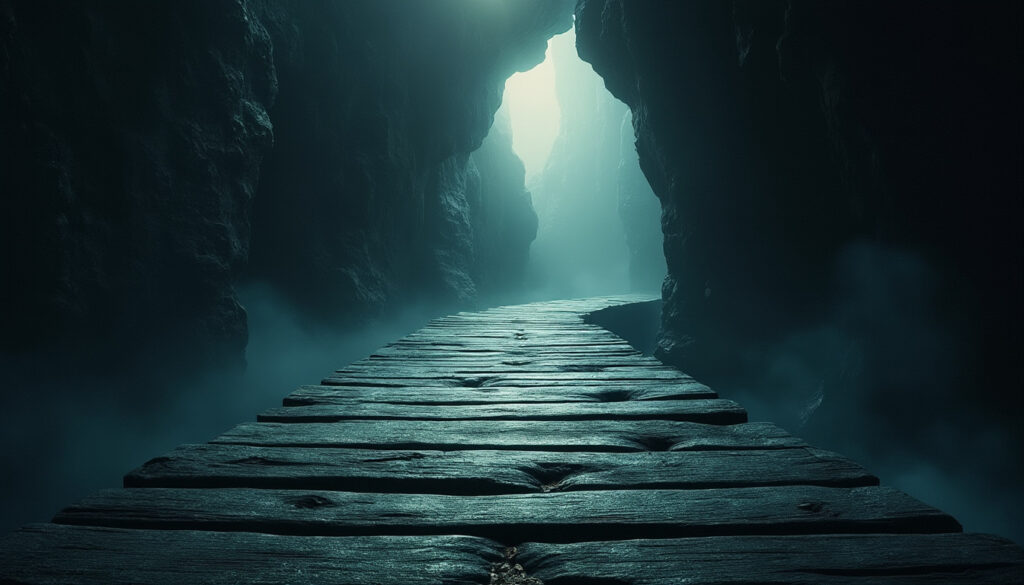
The retrospective of Derek Jarman plunges us into a universe where light and darkness intertwine, revealing a unique sensitivity in the face of the tumult of his time. Through a rich and nuanced work, Jarman explores the end of times with palpable anguish while celebrating the fleeting beauty of British landscapes and human relationships. His films, characterized by bold formalism, transform the trials of existence into poignant reflections, thus offering a glimmer of hope in a world in decay.
In the cinematic universe, few directors have captured the complexity of human experience with such intensity as Derek Jarman. His work is a delicate exploration of dark themes, navigating between light and shadow, creating palpable tension. Through a retrospective of his films, we dive into this duality where beauty and tragedy intertwine, revealing a universe where anger and hope exist side by side. This article aims to analyze his emblematic works as well as the recurring themes that stem from his unique vision.
The end of times: a recurring backdrop
In every creation of Jarman, the notion of finitude appears inevitably. His filmography, like a stroll through the ages, addresses various endings, whether it be that of the Renaissance, Antiquity, or the sexual liberation. For instance, in Caravaggio (1985), the end of the Renaissance unfolds before our eyes, while through Edward II (1991), it is the end of a world of freedoms that fades away. The images of destruction become visual metaphors for existential anguish.
His films respond to the convulsions of England, confronting the disillusionment and distress of a changing society. It is not merely a melancholic gaze at a bygone past but a true anguish at the collapse of systems that have long governed social life. Far from indulging in blind pessimism, Jarman challenges the viewer, inviting them to reflect on the fragility of our condition.
Images and nature: a double exposure portrait
A striking aspect of his work lies in the use of nature as a symbol of beauty and decline. In films such as Last of England (1987), the depiction of traditional British landscapes becomes a heartfelt cry against the ravages of neoliberalism. Even in a film as urban-focused as Jubilee (1977), the pastoral scenes exalt the beauty of England, through lush gardens and majestic cliffs, but also the desolation that gradually settles in.
Jarman maintains a critical gaze on the nature of his country while preserving a strong attachment. He succeeds in capturing both the gentleness and brutality of human existence. The confrontation between 35mm and super 8 thus becomes metaphorical, illustrating the passage of time and the intensity of the emotions felt. Images of rural life blend with those of the industrial, revealing lost beauties but also the scars of a world in peril.
A striking violence: between aesthetics and brutality
One of the constants in Jarman’s work is his exploration of violence within humanity. The way he approaches human suffering never leaves one indifferent. In works like Edward II and Sebastiane, Jarman does not merely represent pain; he inscribes it within a rich and complex cultural heritage, where the human body becomes a vector for powerful messages.
The violence in his films is both graphic and poetic, an example of contrast that transcends mere visual shock. Jarman screams his indignation through this brutality, questioning societal norms and injustices. His narratives tackle themes of oppression and rebellion, inviting viewers to a deeper reflection on their own experience.
Inspired by figures like Pasolini, his approach draws from current events to showcase a raw reality, where violence seems to emerge from nowhere, evoking a sense of nihilism. It is a violence that serves no other purpose than to provoke a reaction. Each image becomes a cry in the desert, a call not to forget the horrors of the past. This unique journey from pain to revolt reflects the power of cinema as a mirror of the world.
Between past and future: the quest for meaning
Derek Jarman does not content himself with exploring the present. He immerses us in the meanders of history, weaving connections between eras. His fascination with the Elizabethan past is revealing. It is a tribute to figures like Shakespeare and Marlowe, while questioning the values that prevailed in their time. Through this exploration, Jarman captures universal truths about the human condition, those that remain relevant despite the passage of centuries.
This incessant search for meaning, for light in the darkness, is at the heart of his work. His need to understand the struggles of History is palpable, as is his desire to project a message of hope to future generations. Thus, he manages to fuse art and tragedy, seeking that glimmer amid the chaos.
Derek Jarman’s cinema is not only concerned with his era but also explores timeless themes that preoccupy humanity. The artist’s voice rises, like music in the silence, to remind future generations of the importance of memory and past struggles.
Furthermore, the confrontation between 35mm and super 8 testifies to this duality. The grain of super 8 clashes with the sharpness of 35mm, a conversation between the past and the present. These different formats are not merely a question of aesthetics but a metaphor for the struggle between memory and reality.
Reflection on artistic activity and its impact
What might seem a simple entertainment in cinema can hold a far deeper meaning. Jarman reminds us that art has the power to awaken consciousness. Through his films, he tackles burning issues, from identity to ecology, including human rights. His engagement in controversial and often overlooked subjects gives him a unique voice within the cinematic landscape.
Jarman stands out as a precursor. At a time when divergent voices were stifled, he made his cry heard, becoming a symbol of freedom of expression and the importance of artistic authenticity. Beyond the film, he encourages reflection on issues that transcend the screen, urging the viewer to reflect on their own experiences. A stance that proves bold and realistic.
His legacy is still felt today. The glimmer that emanates from his work continues to shine, awakening consciousness and inspiring generations of filmmakers. Jarman’s narratives transcend their era, prompting essential dialogues about society, love, and suffering. In short, he has marked his time while also being part of an artistic continuity.
To learn more about similar works, discover for instance the analysis of John Sayles, or take a look at Borderlands 4, which also questions aspects of our society and our collective memory. Don’t miss the upcoming events, such as the perspectives on LUFF 2025 and L’EFFEST 2025.
The reflections elicited by his work invite us to maintain this devotion to what is singular and precious. It is this fragile balance between light and darkness that illuminates the path of our understanding. By exploring his films, we grasp his own journey, as combative as it is poetic, and rediscover, with wonder, the beauty of humanity.
To delve deeper into the subject, consider also discovering the reflections on William Peter Blatty and his mysterious universe through The Ninth Configuration.
The Jarman retrospective, focused on the cinematic work of Derek Jarman, reveals a complex artistic universe, where light carves its way through the shadows of a changing England. Celebrating the beauty of nature and the tragic moments of life, his work embodies a perpetual struggle between creation and destruction. By navigating from the Renaissance to contemporary times, Jarman dwells on the darkness that gnaws at his contemporaries, while retaining an unparalleled aesthetic sensitivity.
Through his emblematic films such as Caravaggio, Edward II, and Last of England, he questions the human condition, confronting the audience with heart-wrenching existential and social questions. The integration of varied techniques, notably super 8 and 35mm, reveals a desire to capture not only the image but also the soul of a nation at a crossroads. The contrast between the violence of the modern world and the gentleness of memories resonates with an audience seeking meaning in a chaotic landscape.
Draping the darkness like a cloak, Jarman becomes a lucid witness to an unglamorous reality, while nurturing a tenacious hope for cultural rebirth. His works, often marked by apparent pessimism, reveal in reality an unyielding struggle for the love of life and the preservation of a threatened nature. Through this retrospective, we are invited to reflect not only on Jarman’s legacy but also on our own relationship with our environment and our collective history.