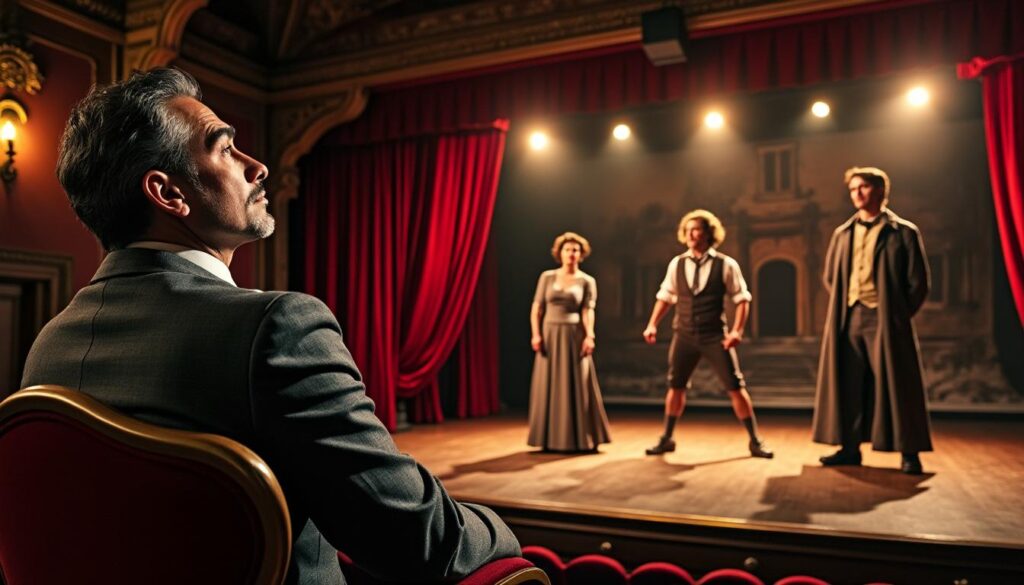
In his latest film As meninas exemplares (2025), filmmaker João Botelho explores the idea that theater has a unique ability to capture a deeper truth than that of cinema. Throughout his narrative, he emphasizes how theatrical elements, such as language and staging, transcend cinematic images and offer an unparalleled emotional and intellectual dimension. Botelho, true to his distinctive style, insists on the importance of performances and authenticity in cinematic creation, while paying homage to the theatrical and literary heritage that inspires him. This reflection on artistic identity and the quest for truth resonates deeply through every scene and dialogue in the film.
In his latest film As meninas exemplares, João Botelho explores the connections between cinema and theater, asserting that the latter captures a dimension of truth that the former struggles to reach. Through bold artistic choices and literary inspirations, he highlights the strengths of theater while respecting the essence of cinema. With an innovative approach, he demonstrates how theater allows for an immersion into the human nuances in a more authentic way.
The Alliance Between Theater and Cinema
João Botelho is interested in how theater and cinema can coexist. In As meninas exemplares, this fusion of arts manifests through scenes played with palpable intensity. The actors, embodying complex characters, navigate between deep emotions and lightness. The filmmaker uses this dynamic to create moments where the audience feels an authentic connection with the characters.
He insists on the importance of authenticity, stating that theater possesses a unique ability to represent humanity in its raw form. On stage, the actors communicate not only through their dialogues but also through their body language, which gives an unmatched depth to their performances.
The Poetic Nature of Theatrical Texts
The strength of a theatrical text often lies in its ability to evoke emotions through speech. Botelho, in his film, cites classic authors while adapting them to a modern context. This juxtaposition allows the audience to connect on different levels, leading them to reflect on the meaning of life, choices, and identity.
Thus, the dialogues intertwine with literary references, creating a rich and inspiring texture. The references are carefully chosen and bring a stronger emotional resonance. Words imbued with meaning settle in the audience’s mind, leaving room for contemplation, sometimes even a gentle melancholy.
The Staging and the Scenic Space
Botelho configures the cinematic space with the eye of a director. The sets and lighting come together to enhance the theatrical aspect of the film. In As meninas exemplares, the scenic choices are articulated in such a way as to immerse the viewer in the characters’ universe, encouraging identification.
The art direction plays a crucial role. It does not merely create a visually appealing environment; it must also translate emotions. Lighting, for example, becomes a character in its own right that accentuates feelings. The screen then becomes an extension of the stage, allowing actors to evolve in a space that echoes their emotions.
- Moving Through Space: every detail counts
- Materializing Movement: the actors’ bodies serving the art
- Coordinating Context: a set that speaks as much as the words
Performances as Revealers of Truth
The performances of the actors in As meninas exemplares perfectly illustrate the evocative power of theater. By choosing a diverse cast, Botelho shows that it is essential to reflect the complexity of human beings. The actors, of all ages and backgrounds, bring their own stories, enriching the common narrative. Each actor embodies a part of the truth unique to the human experience.
Their interactions on stage capture fleeting moments of truth. Sometimes, even a simple glance or gesture can tell a broader story than words alone. In theater, everything is a matter of presence. The subtleties of human performance are key elements that Botelho highlights. They confess so many dimensions of what it truly means to be human.
Conclusion: A Reflection on Art
Through his film, João Botelho aims to convey an essential thought about art. As meninas exemplares invites reflection on the relationship between theater and cinema. This cinematic journey demonstrates that the subtle theatrical modalities can be embodied in cinematic art. In defining a logic uniting these two forms of expression, the director urges us to reconsider our viewing habits and rediscover the depth of human emotion.
The Truth of Theater Compared to Cinema in As meninas exemplares (2025)
In his latest film, As meninas exemplares, João Botelho explores the relationship between theater and cinema, highlighting the depth of emotions and reality that the former can express. For Botelho, theater offers proximity to the audience, a kind of intimacy that fosters immersion in the story. Through his staging, he captures moments of truth where the live performance of the actors elicits an immediate and authentic emotional connection.
This quest for truth in theater is particularly evident through the use of powerful dialogues, a characteristic that establishes direct communication between characters and spectators. Through these interactions, the audience is prompted to reflect on profound themes such as society, family, and morality. Botelho thus emphasizes that text can be the source of an omnipresent poetry, bringing an emotional dimension that only the stage can convey.
Moreover, the director shows how cinema, although a powerful visual and narrative medium, can sometimes dilute this intensity through physical distance and manipulation of images. Actors, even when performing on screen, cannot always create that palpable chemistry present in a theatrical space. Thus, Botelho advocates for a return to these fundamentals of theater to regain that spirit of immediacy and emotional honesty, allowing the viewer to confront their own humanity.