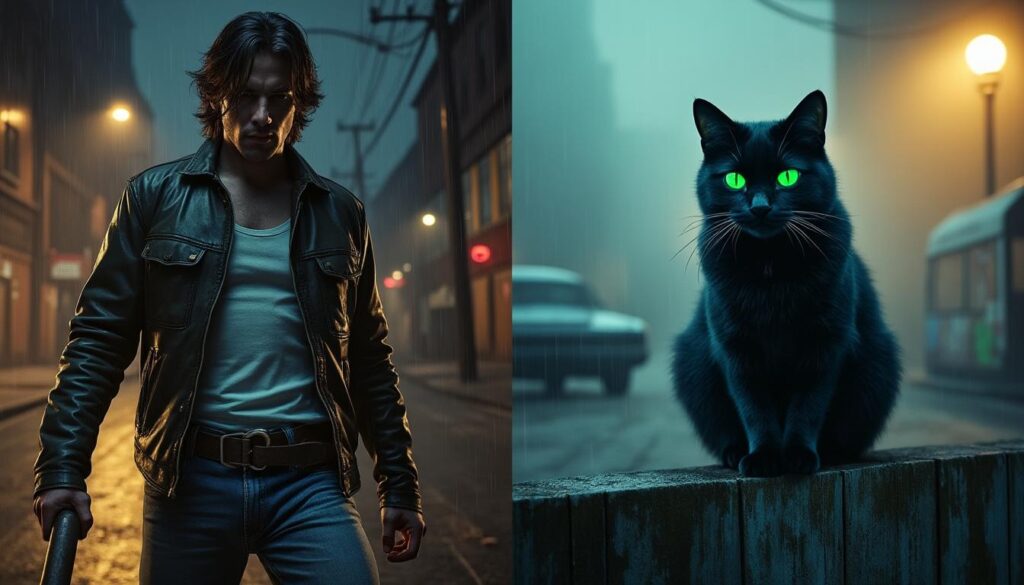
Lam Nai-Choi, iconic Hong Kong filmmaker, has left a lasting impression with works that are as varied as they are captivating. From his landmark film Her Vengeance in 1988, where the quest for vengeance intertwines with poignant tragedy, to the absurd and daring adventure of The Cat in 1992, he showcases unbridled creativity. These two films, although diametrically opposed in their narration and aesthetics, testify to the complexity and richness of Lam Nai-Choi’s cinema, which does not hesitate to explore profound themes while blending action, humor, and fantastical elements.
Lam Nai-Choi, emblematic filmmaker from Hong Kong, has made his mark with works that are as diverse as they are memorable. In this article, we will explore two of his iconic films, namely Her Vengeance (1988) and The Cat (1992). The themes of revenge and fantastical intrigue intersect uniquely in these productions, offering a fascinating glimpse into Lam’s creative vision. The way he has interwoven emotion and humor in his narratives remains captivating even today.
Her Vengeance: The Ruins of Resentment
The 1988 work, Her Vengeance, immerses us in a dark and tragic universe. The film tells the story of Ying, played by actress Pauline Wong, whose life turns upside down after a traumatic experience. Raped by a group of criminals, she turns to Hung, a former triad member, for help. This search for revenge leads Ying down a fatal path, exacerbating her inner demons.
A Poignant Representation of Human Suffering
The narrative is not merely a simple revenge film. It explores the depths of human pain, loss, and the struggle for redemption. Through rapid editing, Ying’s story unfolds as a poignant drama, where each fight scene is underscored by the tragedy of her journey. The venereal disease she contracts from her assailants further emphasizes her torment. Lam Nai-Choi manages to capture both the brutal action and the sensitivity of his heroine, creating a fascinating duality.
A striking aspect of Her Vengeance lies in its spectacular fight sequences. The director skillfully combines elements of martial arts and “rape and revenge,” challenging audience expectations. Although the film contains elements of humor, the visceral and uncompromising nature of its subject remains omnipresent. This allows the film to assert itself as both a classic and profoundly human achievement, whose impact still resonates today.
The Cat: A Hallucinatory Journey
In 1992, Lam Nai-Choi presents us with a radically different film, The Cat. This feature film stands out for its quirky style and playful approach. Adapted from the Wisely literary series, the film showcases fantastic and supernatural adventures. The story follows Wisely, a hero whose escapades lead him to cross paths with mysterious aliens. This eccentric universe, marked by elements of science fiction, reflects the overflowing creativity of its author.
A Bold Staging
The special effects are a playground for Lam Nai-Choi in this film. With puppets, stop-motion transformations, and creatures with unique designs, The Cat illustrates the ingenuity of pre-digital popular cinema. Its handcrafted approach gives the film a nostalgic flavor, captivating audiences across time. The gunfight scenes, peppered with gags and misunderstandings, add a playful dimension to the narrative.
Lam Nai-Choi succeeds in evoking profound themes where the anxiety of Hong Kong’s retrocession to China weaves into the narrative. The visual elements, paying homage to the artisanal image, compose a vivid tableau of the era. This film is a raw and joyous celebration of unbridled imaginations, genre-blending, and universal emotions. While some aspects may be excessive or approximate, Lam’s passion and vision make The Cat a work that is both entertaining and critical.
A Lasting Legacy
The films Her Vengeance and The Cat demonstrate the versatility of Lam Nai-Choi, oscillating between poignant drama and playful extravagance. Although these works may sometimes elicit mixed reactions due to their unique approach, Lam’s impact on Hong Kong cinema is undeniable. By weaving narratives that reflect the turmoil of his time, Lam Nai-Choi establishes himself as an essential craftsman of exploitation cinema.
Beyond simple stories of revenge and mystery, his films capture inner struggles and expressive landscapes. His ability to blend different genres while staying true to his visual style makes his creations a treasure for cinema enthusiasts. By reevaluating his works, audiences discover not only captivating stories but also a rich cultural heritage, an exploration of human emotions through a cinematic lens.
From Vengeance in 1988 to the Mystery of the Cat in 1992
Lam Nai-Choi, often overlooked by the general public, has established himself as a key filmmaker in Hong Kong’s filmography through his landmark works, Her Vengeance in 1988 and The Cat in 1992. These films illustrate not only his talent for intertwining martial arts and poignant narratives but also his ability to tackle a variety of themes ranging from human tragedy to the absurd fantastical.
Her Vengeance is a powerful film that follows the tormented journey of Ying, a woman determined to avenge the atrocities committed against her. The work effectively mixes a tragic narration with fast-paced fight scenes while offering a nuanced portrait of its heroine. Lam Nai-Choi transforms the theme of revenge, often treated in a black-and-white manner, into a psychological exploration of trauma and redemption.
In contrast, The Cat plunges us into a completely delirious universe, merging action, humor, and science fiction. Echoing the sociopolitical anxieties of the time, the film addresses themes of exoticism and identity crises through the misadventures of Wisely and the aliens he encounters. Here, Lam Nai-Choi breaks free from traditional cinematic constraints to offer a truly unique spectacle, merging his sense of aesthetics with a daring narration.
In summary, between the tragedy of vengeance and the madness of a fantastical world, Lam Nai-Choi demonstrates impressive versatility, leaving his mark on the landscape of Hong Kong exploitation cinema. These two films, while radically different, testify to the richness of his cinematic universe and his ability to resonate with the viewer’s emotions. With such a clear vision and distinct style, he has succeeded in creating timeless works that deserve to be rediscovered.