
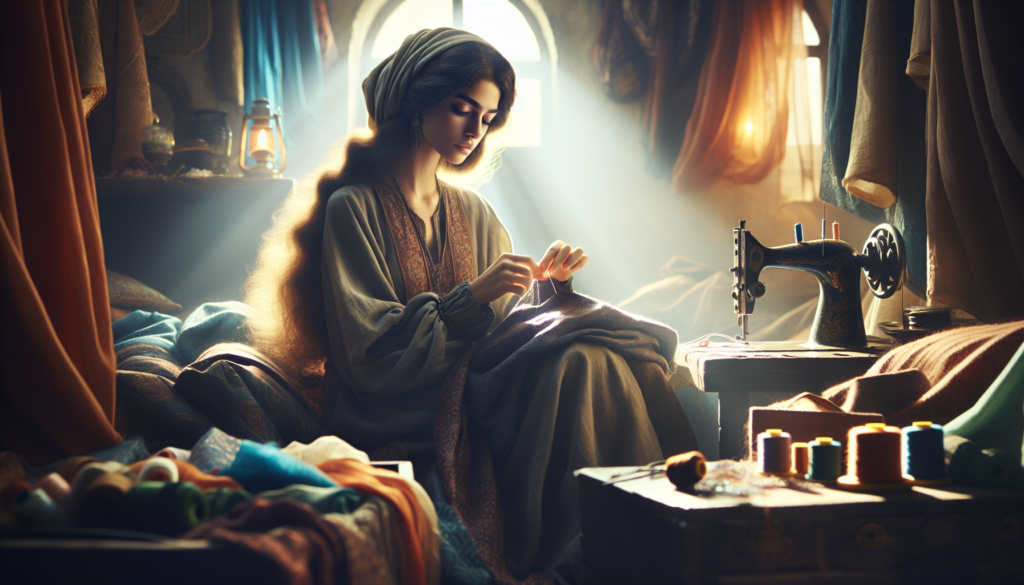
In « The Young Woman with the Needle », Magnus von Horn delves into the fractures of life, exploring how an individual distinguishes themselves in a destiny often predetermined. This audacious film highlights the journey of Karoline, a young factory worker in a textile manufacture, whose existence unfolds against a historical backdrop marked by the end of the First World War. Through a powerful black-and-white aesthetic, the director invites us to feel the trials and disillusionments that punctuate the life of his heroine, while echoing universal themes of injustice and resilience.
The new film by Magnus von Horn, titled « The Young Woman with the Needle », is distinguished by its poignant exploration of individual struggles within a painful historical context. This captivating drama follows the path of Karoline, a young worker, as she navigates the challenges of life after the First World War. This film, both aesthetically rich and narratively moving, is a true reflection on choices, disillusionments, and human resilience.
A Strong Female Portrait
The Danish director has already made a name for himself with powerful narratives, as evidenced by his previous film « Sweat ». With « The Young Woman with the Needle », he reaffirms his talent for portraying striking female characters. Karoline, played by the extraordinary Victoria Carmen Sonne, embodies the struggles of a generation marked by the deep scars of war. This complex figure navigates through tortuous paths, and her resistance to a fate often tragic is highlighted.
A Striking Aesthetic
The artistic direction of the film is impressive. The black and white, mastered by the talented cinematographer Michał Dymek, accentuates the psychological tension and the inevitability of Karoline’s fate. Each image seems to capture shadows and lights, transforming reality into a haunting dream. This aesthetic choice not only reflects the horrors of the era, but also reveals the internal emotions of the heroine.
It is interesting to note that this visual approach, both organic and brutal, recalls the works of Bela Tarr. The presence of misery is accompanied by a dark beauty, and the viewer is immersed in a universe where every detail counts. The film leaves no room for indifference.
A Multi-layered Narrative
As the story unfolds, Karoline is confronted with difficult realities. Her landlord refuses to grant her reprieve, while she tries to keep her apartment despite unpaid rents. This interaction, from the outset, highlights the precariousness of her situation. Karoline, an unofficial war widow, seeks a semblance of normalcy in an existence marked by absence and emptiness.
The relationships she forges, particularly with her boss, reflect class and power dynamics. Each encounter is an additional blow, marking her struggle for equality and recognition. The depth of the dialogues reflects the care given to the construction of the characters and their stakes.
A Determining Encounter
The meeting with Dagmar, a candy store manager and baby broker, is a crucial turning point for Karoline. Dagmar, played by the impressive Trine Dyrholm, embodies both hope and the complexity of women’s relationships in a survival context. Their lucrative interaction quickly transforms, lifting the veil on shared aspirations and sacrifices.
- Empathy and mutual support.
- Failure and despair.
- Tension-filled scenes revealing emotional fractures.
Their relationship illuminates the challenges of the era, while highlighting female solidarity. The duality between support and pain is revealed throughout the film, making the characters all the more endearing.
A Reflection on Memory and History
With « The Young Woman with the Needle », the director interrogates the very notion of collective memory. The reminiscence of the wounds of war, accompanied by themes of survival, disillusionment, and emancipation, is of great power. Karoline and her contemporaries, plunged into a difficult world, embody the echoes of a past that cannot be forgotten.
The Horrific Fairy Tale
The narrative structure resembles that of fairy tales, but here, transformed into a story where humanity confronts its darkest realities. Magnus von Horn succeeds in integrating a metaphorical dimension into an existential drama, allowing us to feel the pain of the characters while enveloping it in a unique aesthetic. As the story progresses, the film also questions our relationship with fairy tales and collective stories.
The poetic beauty of the words collides here with the horror of past events, giving the work a profound allure. The film ends on a note of hope but remains imbued with a persistent melancholy that touches the soul, leaving a lasting imprint on the viewer.
|
IN BRIEF
|
Magnus von Horn and « The Young Woman with the Needle »: A Powerful Exploration of the Human Condition
In his new film, « The Young Woman with the Needle », Magnus von Horn stands out for his ability to capture the pain and complexity of women’s journeys in a heavy historical context. The main character, Karoline, brilliantly portrayed by Victoria Carmen Sonne, embodies a desperate struggle for survival in a ruined world, just after the First World War. The staging, in black and white, enhances the contrast between the shadows of the past and the aspirations of the present, creating an atmosphere that is both oppressive and poetic.
Von Horn emphasizes the themes of misery, duplicity, and social injustice through Karoline’s tumultuous journey. His interaction with his boss, and later with Dagmar, a woman who is both caring and fragile, highlights not only female solidarity but also the internal struggles that inhabit them. The intertwining of these two richly nuanced characters reminds us that strength can sometimes be hidden behind a facade of vulnerability.
The way Magnus von Horn constructs his narrative, tinged with a horrific atmosphere while integrating elements of a tale, offers a deep reflection on the very nature of human narratives. He reminds us that the most beautiful stories often arise from the worst disasters. With « The Young Woman with the Needle », we are confronted with the beauty of pain, the strength of resilience, and the universality of the challenges each woman faces. This film is a work that, while being a poignant drama, is also a cathartic meditation on human existence, giving each of us the possibility to confront the darkest realities of humanity with hope and sensitivity.


