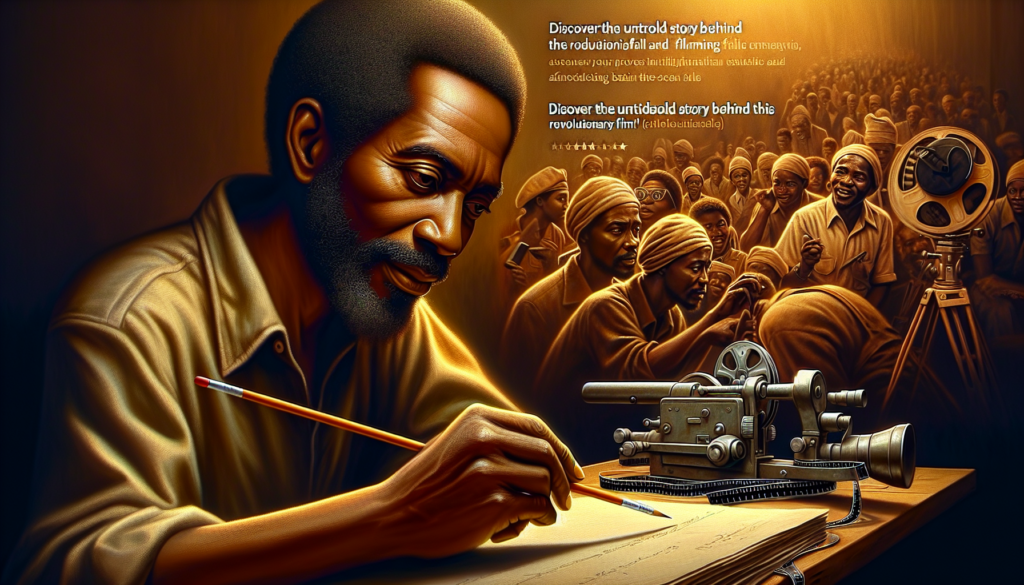
THE movie theater of Ousmane Sembène, emblematic figure of African cinema, stands out for its ability to explore the socio-cultural and political realities of the continent. With his first feature film, “The Black One of…”, made in 1966, he takes a powerful look at the cultural domination and the colonial violence. This film, both poignant and provocative, highlights the journey of Diouana, a young Senegalese woman, whose story resonates deeply within a society in search of identity and emancipation. Sembène’s work is not just an artistic representation; it also constitutes an act of resistance and denouncing the injustices that continue to affect the daily lives of many people.
Ousmane Sembène, an emblematic figure of African cinema, left his mark with his visionary work, notably the film “The Black One of…”, released in 1966. This feature film not only highlighted the socio-cultural realities of post-colonial Senegal, but also opened the door to harsh criticism of colonial domination. Through his protagonist, Diouana, Sembène depicts a poignant story that questions notions of identity and belonging.
A landmark work in the history of cinema
Directed by Ousmane Sembène, “The Black One of…” is considered the first feature film by a Senegalese author. This film had a significant impact not only in Senegal, but also internationally. Sembène knew how to capture the essence of his time, using his art to give a voice to those who were deprived of it. Indeed, his narrative and visual approach has contributed to redefining the roles and expectations of African cinema.
By exploring the life of Diouana, a young Senegalese woman, Sembène addresses themes such as emancipation and culture shock. The story begins when she is hired by a French family, which marks the beginning of a tragic odyssey. His experience abroad quickly turns into disillusionment, reflecting the daily struggle of Africans in the face of oppression.
A bold critique of colonization
The film highlights the colonial violence and the relations of domination which persist even after independence. Through the trajectory of Diouana, Sembène delivers a strong message on neocoloniality and the struggle for identity. The central character finds herself trapped between two worlds, that of her African roots and that of her new life as a governess. Sembène thus depicts a journey of despair and self-quest, exposing the contradictions and suffering of individuals faced with powerful and dehumanizing systems.
The production is accompanied by a carefully thought-out aesthetic. The use of bold cinematic language helps reinforce the film’s point. The tight shots on Diouana’s face, the play of light and shadow, as well as the symbolic settings accentuate the tension of her world. The choice of no music during certain sequences reinforces this feeling of oppression and solitude.
A lasting cinematic legacy
The success of “The Black One of…” had considerable repercussions on the African cinema scene. To this day, Sembène is considered a pioneer, the “father of African cinema”, having opened new avenues for contemporary filmmakers. His legacy is not limited to his work; he represents a generation of artists who seek to challenge dominant narratives of western cinema.
- Authentic stories : Sembène’s works evoke realities that are often ignored.
- Social struggle : Always from a perspective of resistance to inequalities.
- Narrative techniques : His style fuses African oral traditions and modern cinematic forms.
Finally, “The Black One of…” continues to be an essential reference in the study of engaged cinema. The film is often included in educational programs, in order to promote discussion around contemporary themes linked to identity, culture and collective memory. With this masterpiece, Ousmane Sembène’s voice still resonates, inspiring new generations of filmmakers and artists around the world.
|
IN BRIEF
|
Ousmane Sembène: A Cinematographic Exploration with “La Noire de…” (1966)
Ousmane Sembène, often considered the father of African cinema, made history with his first feature film “The Black One of…”. Made in 1966, this film poignantly illustrates post-colonial realities and the cultural domination which continues to affect African societies. Through the character of Diouana, a young Senegalese woman, Sembène immerses us in a narrative that is both personal and universal, revealing the expectations, hopes and disillusions that result from it.
The film depicts with great sensitivity the colonial violence and its consequences on daily life. By using Diouana as a symbol of Senegalese youth, Sembène highlights the challenges they face, including the quest for identity and the feeling of confinement. The production, although marked by financial limitations, succeeds in transmitting powerful emotions thanks to clever visual choices, such as settings which reinforce the feeling of alienation.
“La Noire de…” not only tells the story of Diouana, but also evokes a multitude of experiences lived by many Africans at that time. Sembène succeeds in conjuring a committed cinema which calls for reflection on the relationships between cultures and persistent inequalities. Its themes still resonate today, making the film a must-see world cinematography.
In short, Ousmane Sembène, through his first film, opened the way for future artistic and political explorations, placing the African cinema on the world stage and using the new as a means of resistance and claim of cultural identity.