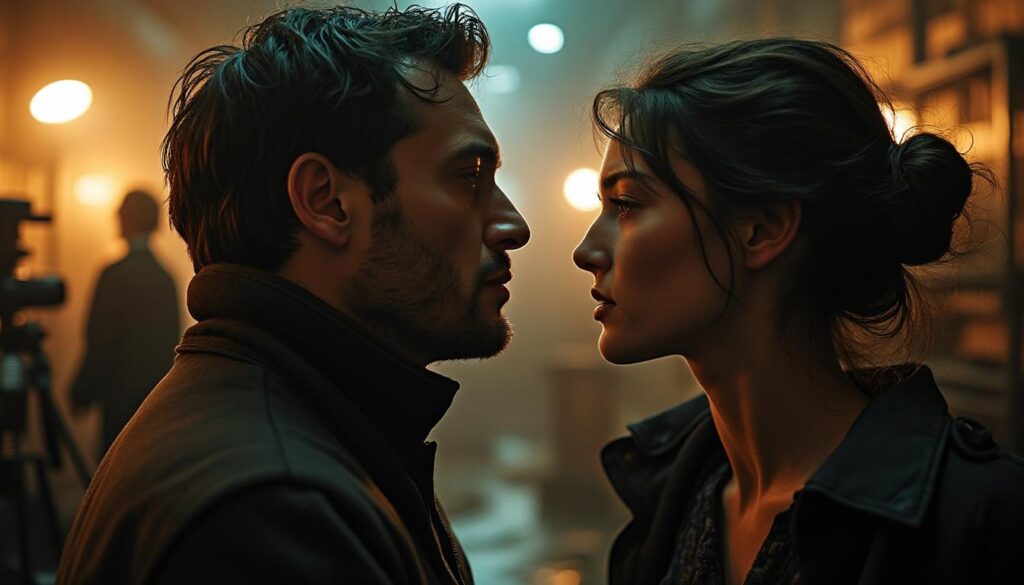
In the cinematic universe, Patrice Chéreau stands out for his ability to capture desire in its multiple forms and to interrogate the human condition. A colloquy between family drama, all-consuming passion, and historical memory, his work unveils narratives where the complexity of human relationships is expressed with poignant intensity. Chéreau, as a filmmaker, transcends genres, articulating a vision where desire becomes a driving force for escape and explosion of norms, inviting the viewer to explore the depths of the soul and the tumult of the human psyche. His cinematic discourse, both personal and collective, immerses us in a reflection on society while paying tribute to the perpetual struggle of individuals against their intimate demonstrations.
Patrice Chéreau, a name inseparable from French cinematic art, has illuminated the universal desire through his works. His unique approach to cinema blends theater, cinema, and deeply human themes, making a simplistic reading of his work impossible. This article examines various aspects of Chéreau’s work, exploring how his films reveal an almost mythological dimension of desire while incorporating reflections on family structures, female authority, and social dynamics.
Cinema as a Reflection of Family Tensions
At the heart of Patrice Chéreau’s films, the family is often highlighted as a complex entity. It represents both refuge and prison. In works like “The Wounded Man” or “Margot,” characters are often confronted with internal tensions that push them to break free from their home. Chéreau’s writing on this subject is nuanced, blending drama and humor with great skill.
Maternal figures, in particular, occupy a central place. Whether through their crushing authority or their unsettling presence, they shape their children’s destinies. Thus, the mother becomes a symbol of emotional oppression, a modern stepmother in a nascent universe. The protagonists attempt to escape, and this quest for freedom often conceals a burning desire for authenticity and recognition.
The Quest for Desire and Freedom
Through his art, Chéreau questions human nature and its deepest desires. This desire, often destructive, lies at the heart of many conflicts. In “Hotel de France,” for example, a character evolves to become a catalyst for family tensions. Desire acts as a chaotic force, shattering an already fragile family structure. This dynamic, where everyone seeks a form of freedom, sublimates the narrative.
The filmmaker interrogates the social norm through characters who dare to break free from traditional roles. In doing so, Chéreau reminds us that desire is not merely a question of passion, but a deeply social and societal act. All characters, whether heroic or miserable, are caught in the same whirlwind. Desire never remains in the shadows; it comes to the fore, unfolds, and permeates everything.
Recurring Themes of Authority and Subversion
In Patrice Chéreau’s work, female authority often appears, but not always in a positive light. Maternal figures can become tyrannical, imprisoning their children in impossible expectations. Paradoxically, some protagonists take on the role of benefactors, but are burdened by their own traumas.
This dichotomy is particularly explicit in films like “The Flesh of the Orchid,” where the stepmother is synonymous with suffering, and the stakes of desire become almost tragic. It is in this often oppressive context that characters from other generations attempt to distinguish themselves and claim their place, sometimes at the cost of unprecedented personal dramas.
A Dynamic Aesthetics
The visual aspect of Chéreau’s films is a perfect reflection of his concern to interrogate the established canon. His direction blends cinema and theater, creating an unprecedented fluidity that captivates the viewer. Transitions between scenes are often marked by bold tracking shots, capturing raw emotions.
Sequences, like those of meals or receptions, are living tableaux where every face tells a story. The attention to detail and movement gives the narrative a rare depth. The camera seems to capture not only the image but also the essence of desires, thus reworking the traditional cinematic framework.
An Indelible Legacy and Influence
Patrice Chéreau leaves behind an indelible mark. His exploration of family dynamics and the post-war period, his way of approaching universally significant themes like desire and freedom, makes him a unique filmmaker. Contemporary artists owe him much and continue to draw from his legacy. He influences directors in their narrative constructions and visual choices.
The new generations of filmmakers recognize his importance and many revisit the tensions on screen, appropriating his legacy while paying tribute to him. Chéreau figures among authors who not only define a style but also expand the possibilities of our understanding of humanity.
Quotes and References
- Gary Sherman and his cinematic journey
- Peter Newbrook and the exploration of fear
- Richard Linklater, a return to Cannes
- Gindou Festival: an unmissable event
- Omnium Film Festival: an event to note
Through his work, Patrice Chéreau managed to capture the very essence of the human realm, shedding light on the tensions and emotions that underlie interpersonal relationships. His aesthetics, which skillfully blend cinema and theater, pave the way for a deep exploration of the emotional complexities and desires that animate his characters. Each film presented by Chéreau plays on a striking contrast between the tearing apart of his protagonists and the tragic beauty of their actions.
At the center of his narratives, the family and its dynamics are often recurring themes, where Chéreau examines how the home can be both refuge and prison. This paradox fuels his characters’ choices, drawing them into desperate quests to escape the chains of a stifling existence. His camera, both as a gaze and an intruder, captures these moments of tension and revelation, resonating with the internal struggles of individuals facing unstoppable external circumstances.
The dynamism of human interactions, his use of flashes of desire and passion, as well as his treatment of marginalities, reveal a unique sensitivity. Chéreau challenges narrative conventions, abandoning the traditional scheme to offer more nuanced and realistic portraits of his characters. His filmography then becomes a vast territory that unfolds an inexhaustible reflection on their motivations, flaws, and aspirations.
Ultimately, Chéreau’s cinematic universe, while rooted in universal themes, manages to speak to contemporary audiences in a timeless manner. His art occupies the delicate intersection of the political and the intimate, thus posing essential questions about the human condition, and resonating powerfully beyond the mere screen.