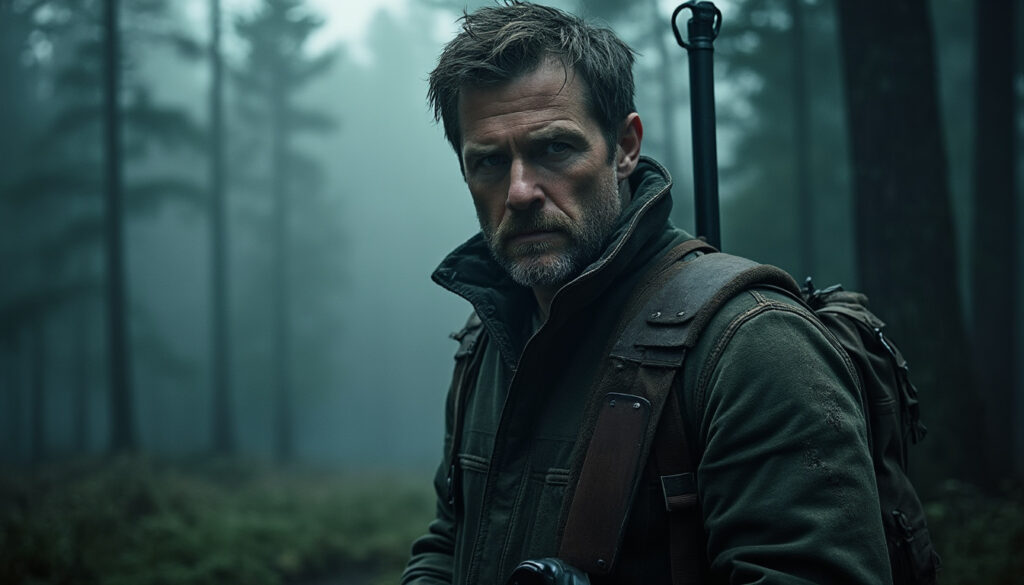
Peter Collinson, a multi-talented filmmaker, has left his mark on his time with his provocative work titled “The Blood Hunt”. This film, infused with an unrelenting intensity, plunges the viewer into a universe where violence and misogyny intertwine with a troubling depth. Adapted from the novel by David Osborn, the film does not merely evoke a hunting story but transforms into a sharp critique of human behavior, resonating with themes that remain relevant today. With bold direction and a remarkable cast, Collinson succeeds in creating an anxious and captivating atmosphere, offering a poignant reflection on moral and social decay.
The Blood Hunt, an unjustly overlooked film, reveals the talents of Peter Collinson, a director of exceptional abilities. With a unique vision, his approach to cinematic storytelling proves impactful and poignant. In this article, we will delve into Collinson’s universe and explore how his work captures the intensity, anxiety, and social critique inherent to this iconic film.
The Cinematic Journey of Peter Collinson
Before making his name with The Blood Hunt, Peter Collinson had already directed several notable films. His first feature, The Night of the Alligators, already showcases his penchant for suspense. This film initiates a career rich in emotions and reflections.
Over the years, he established himself as a bold director, capable of effortlessly juggling genres. His tragic death in 1980, however, interrupted his ascent. Nonetheless, his legacy endures through works such as The Hunter and Underground.
A Bold Direction
The direction of The Blood Hunt stands out for its boldness and originality. Collinson never succumbs to convenience, avoiding the typical clichés of the era. Notably, there is a clever use of framing and cutting that defies conventions. Each scene reveals a precise intention: to capture the essence of terror and tension without relent.
The moments of tension build gradually, creating an anxious atmosphere that grips the viewer from the very first minutes. This approach distinguishes the film from Hollywood productions at the same time. At times, he chooses unexpected angles to highlight characters and their psyche.
A Powerful Social Critique
In addition to its distinctive visual style, The Blood Hunt engages in a critical discourse that resonates with our time. Collinson directly tackles themes such as machismo, violence, and social hypocrisy. The main characters, Ken, Greg, and Art, embody the phenomenon of toxic masculinities, bearing witness to a society deformed by retrograde values.
Their insensitivity and behavior reveal a reality that is often ignored. It is a violent masculinity that recalls the excesses of a certain American lifestyle. In this film, he offers no respite to the viewer, showcasing the excesses of men who do not hesitate to parade on the backs of their victims.
A Mixed Reception and a Comeback
Upon its release, The Blood Hunt caused an uproar. Its bold content and pessimistic vision resulted in an X rating, shocking the public. Reviews were divided. Some praised Collinson for his audacity, while others saw him as failing in terms of morality.
Over the years, this film found a new momentum. Re-evaluations have restored its honor, highlighting the artistic side of the project. The recent restoration of the film in UHD, honoring its sublime photography, reflects the evolution of our perspective on past works.
Memorable Performances
To strengthen his message, Collinson surrounded himself with an exceptional cast. Richard Lynch and John Philip Law perfectly embody their sociopathic characters. Though detestable, their performances create a fascinating complexity.
Moreover, the presence of Peter Fonda, stepping into a villain role for the first time, adds an additional dimension to the film. His intense and unsettling performance underscores the duality of the human soul, enhancing the film’s impact. Through their performances, the actors infuse a captivating narrative life.
The Lasting Legacy of The Blood Hunt
Despite adversity, the film has managed to transcend time. Contemporary analyses place it back in the context of its making, highlighting its importance in the history of cinema of engagement. The ongoing debates about violence and masculinity show that the themes addressed are still relevant today.
By rediscovering The Blood Hunt and Collinson’s work, we realize that behind an apparent brutality lies a profound reflection on humanity. The power of the narrative increases, thanks to the skillful blend of tension, anxiety, and social critique that only a visionary like him could orchestrate.
The Unique Vision of Peter Collinson in The Blood Hunt
Peter Collinson, a talented director whose journey is often forgotten, has marked cinema history with his iconic work The Blood Hunt. This often-controversial film portrays a dark and disturbing reality of masculinity and violence. Through a bold visual style and a virulent tone, Collinson immerses us in a spiral of palpable tensions. By choosing to focus his narrative on a trio of malevolent characters, he manages to maintain an unrelenting intensity throughout the work.
What makes The Blood Hunt particularly impactful is Collinson’s ability to plunge the viewer into horror without resorting to excessive violence. Through original framing and clever editing, he creates an oppressive atmosphere that elevates the psychological experience of the characters. Group scenes within the cabin, for example, are laden with unbearable tension, where each interaction recalls the potential for latent terror, thus accentuating the deeply disturbing nature of the story.
Moreover, the meticulous casting choice, including impressive performances from Richard Lynch and Peter Fonda, reinforces the complex character of the protagonists. Collinson does not aim to make his characters sympathetic but rather to expose a raw reality of society, where the viewer is faced with a fallen humanity. Each scene serves as a social critique, diving into the abysses of racism, misogyny, and violence, which confers upon the film an unparalleled weight in the analysis of the human condition.
Thus, The Blood Hunt remains a bold testimony to the fears and tensions of its time while addressing contemporary issues. By re-evaluating this work, we pay tribute to the artistic genius of Peter Collinson, whose unique and powerful voice continues to resonate in today’s cinematic landscape.