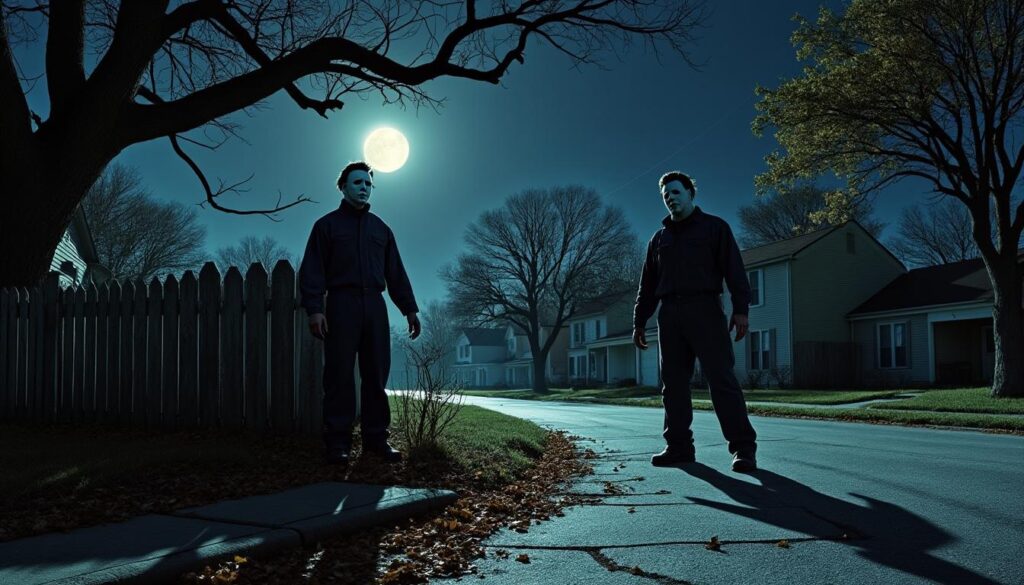
The reinvention of the Halloween myth by Rob Zombie in 2007 caused a real tremor in the world of horror cinema. By tackling the legendary legacy of John Carpenter, Zombie offers a daring vision that fuses his personal influences with the iconic saga. Through this terrifying return, he reexamines the nature of evil through the prism of a dysfunctional society, while affirming his own style in a sector often saturated by redundancy. This adaptation, marked by unprecedented brutality and deep sadism, sheds new light on the figure of Michael Myers, captivating generations of horror fans.
In 2007, Rob Zombie, known for his bold incursions into the horror universe, proposed a daring and personal version of one of the classics of the genre: Halloween. This film offers a disturbing and visceral rereading, diving deeply into the psyche of its famous antagonist, Michael Myers. With a new artistic approach, Zombie succeeds in redefining the standards of the slasher genre while paying homage to the original works. In this article, we will explore the various facets of this adaptation, its impact, and the elements that make it unique. Rob Zombie is a filmmaker who does nothing like others. His passion for horror cinema and his ability to reinvent the genre are undeniable. First a musician, he has always shown a penchant for the aesthetics of the macabre, as evidenced by his creations in the musical field. When he tackles Halloween, he does not just take on a classic; he envisions a reinvention. At the heart of this vision, the author focuses on the origin of Michael Myers. By diving into the character’s childhood, he reveals a past laden with violence and suffering. This return to the roots of this iconic killer brings a new depth, often overlooked by previous adaptations. To bring this story to life, Rob Zombie called on a charismatic cast. Among the actors is his partner, Sheri Moon Zombie, who plays the protagonist’s mother. Her presence adds an introspective method to the narrative. Other iconic figures of horror, such as Malcolm McDowell, glaze the film with their undeniable talent, delivering performances that leave a mark on the collective imagination. Each actor brings a unique note to this dark symphony. Their performance contributes to instilling an atmosphere that is both oppressive and captivating. This wise choice reinforces Rob Zombie’s staging. Rob Zombie’s direction stands out for its brutality and aesthetic. By contrasting the classic nature of scenes with a gritty graphic style, he creates an atmosphere that is both familiar and disturbing. Dark colors dominate, heightening the sense of unease in the viewer. The choice of shots is bold, mixing camera throws and varied lenses. This offers an intimate view of the tragic events and helps immerse the audience in Michael Myers’ world, in a perspective that skillfully plays with figures and shadows. The violence present in Halloween is stark. However, it is not gratuitous. Zombie uses shocking scenes to emphasize the despair and emotional destruction caused by trauma. Each murder pays homage to horror but also serves the narrative element. Horror thus becomes one of the story’s supporting pillars. The action sequences are both terrifying and captivating. They explore not only human nature but also highlight the moral dilemmas accompanying Michael’s actions. All these elements combine to make this entry a work that transcends the simple framework of the slasher. The film by Rob Zombie raises questions about the nature of Michael Myers: is he a product of his environment or simply a born monster? This reflection fuels the debate on social responsibility and generational violence, reinforcing the unsettling character of this adaptation. Fans of the original may have been perplexed by this approach, but the film finds its way by becoming a powerfully personal testimony of the author. The challenge of adapting a masterpiece like Halloween cannot be easily met. Yet, with a daring vision and a taste for the grotesque, Zombie demonstrates his talent by redefining a classic. This entry can well position itself not only as a mere rereading but as a valuable addition to the legacy of horror cinema. Through his film, Rob Zombie draws inspiration from several influences. References to cult films coexist with his own experiences, offering an unprecedented narrative richness. The use of symbols and the latent presence of modern American identity plunge the story into an intriguing sociopolitical context. Halloween is not just a horror film but a metaphor for contemporary struggles, transposing evil in multiple forms. The popular culture, which Zombie cherished so much, proves to be a constant source of inspiration. The dichotomy between the old and the new is ever-present. Longtime fans notice that while the form changes, the essence remains. Over time, this adaptation has gained appreciation in the eyes of critics and viewers, becoming more complex than it appears. Extensive research on the character of Michael Myers includes not only the manifest horrors but also his roots. Rob Zombie remains faithful to the essence of the original work while enriching it. Of course, narrative choices can be divisive, but the passion and commitment of a filmmaker who fights for the mythology of horror cinema are palpable. This filmmaker paves the way for a renewed interest in the genre. In summary, Rob Zombie’s adaptation of Halloween in 2007 is a reinvention that is both honorable and disturbing, successfully redefining the impact of the slasher in the cinematic landscape. The psychological depth supported by a clear artistic direction and a solid cast makes this version a must-watch.A visionary of horror
A memorable cast
A striking artistic direction
Violence, in service of the plot
A complex legacy
Literature and artistic influences
Between past and present
In 2007, Rob Zombie made a big splash with his much-anticipated adaptation of the horror classic “Halloween.” This film represents a daring and irreverent reinvention of John Carpenter’s original work, while preserving the essence that has thrilled generations of thrill-seekers. Far from settling for a mere copy, Zombie appropriated the mythology of Michael Myers to give it psychological depth and a human dimension, exploring the roots of evil through a lens that is both brutal and emotional.
What distinguishes Zombie’s adaptation is his desire to dissect the origins of the main character. By returning to Michael Myers’ childhood and placing him in a dysfunctional home, the filmmaker succeeds in evoking a form of empathy for a killer with a tragic past. By exposing the environmental influences that shaped him, Rob Zombie crafts a dark story that questions the very nature of violence and humanity.
Visually, the film is not to be outdone. Rob Zombie employs innovative filmmaking techniques, blending raw aesthetics with classical elements of the horror genre. The soundtrack, perfectly orchestrated and in tune with the film’s tone, enhances the oppressive atmosphere. The performances of the actors, particularly that of Malcolm McDowell as Dr. Loomis, add depth to the secondary characters, thus enriching the overall narration.
In summary, Rob Zombie’s adaptation of “Halloween” managed to redefine expectations for the horror genre during the 2000s. Despite the divided critiques, his film became an unmissable reference, proving that the slasher can evolve while remaining true to its DNA. Rob Zombie, by highlighting the duality of Michael Myers’ character, has paved the way for deeper reflections on human nature and evil, marking a terrifying and memorable return to the cinematic landscape.