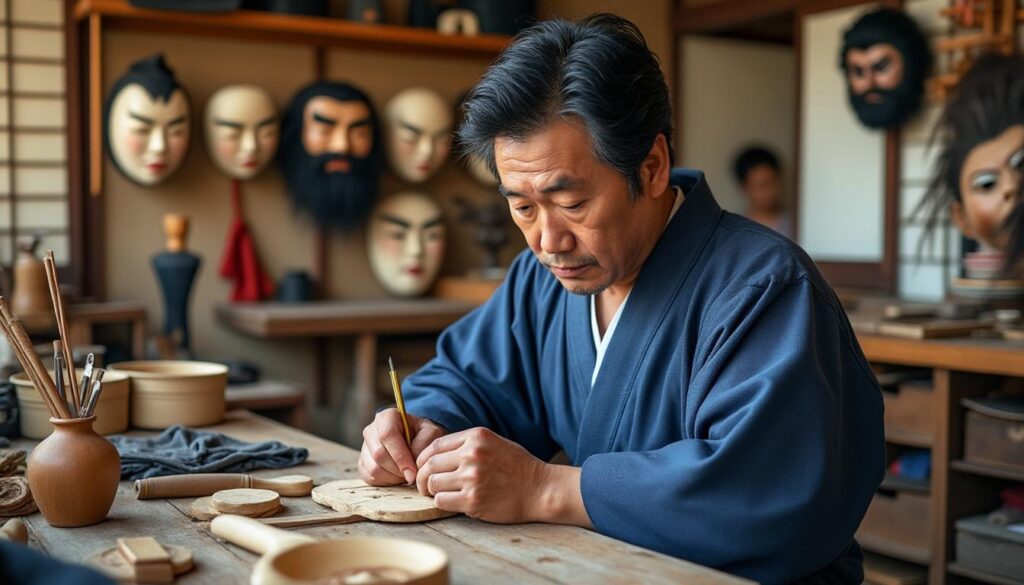
In the world of contemporary Japanese cinema, Sang-il Lee stands out for his fascination with the art of kabuki, a traditional theater that embodies an invaluable cultural richness. Through his unique artistic lens, the director highlights the complexities of this ancestral art, exploring themes of identity, filiation, and performance. His ability to weave touching narratives around the iconic figures of kabuki makes him an essential craftsman in this field, redefining both its protagonists and the audience’s expectations regarding this centuries-old tradition.
This article explores the phenomenon of kabuki through the prism of Sang-il Lee’s work. Renowned for his passion and unique approach, Lee has evolved this traditional Japanese art, making it accessible to a contemporary audience. Through his films, notably The Master of Kabuki, he questions and sublimates the beauty of this form of expression, while evoking the tensions between tradition and modernity.
Diving into the world of kabuki
Sang-il Lee has always been drawn to the world of kabuki. From a young age, he admired its cultural richness and emotional depth. His journey led him to study traditional techniques, observing and learning from the greatest masters, while incorporating his own inspirations, notably varied cinematic influences.
This passion ultimately led him to create The Master of Kabuki, a film that celebrates this art by paying homage to it while reinterpreting it. In his work, he highlights the onnagata, those actors who play female roles. Their presence is both fascinating and troubling, underscoring the complexity of gender within the representations.
The Master of Kabuki: a landmark film
In The Master of Kabuki, Sang-il Lee bridges tradition and modernity. He employs powerful narrative elements that immerse the viewer in the world of kabuki actors, while offering them an immersive experience. The film, a true success in Japan, goes beyond aesthetic representation; it also addresses the internal struggles of the characters.
It is interesting to note that the film is based on an adaptation of a literary work, the novel Kokuhō by Shūichi Yoshida. This clever choice deepens the complexity of the characters while maintaining a grounding in the historical reality of kabuki. Lee succeeds in honoring this art form while presenting it in a new light, away from conventional clichés.
The contribution of the director of photography, Sofian El Fani, is also crucial. His ability to capture the beauty of performances, costumes, and sets, while incorporating modern elements, gives the film a strong aesthetic. The Master of Kabuki then transforms into a work of cinematic art.
An exploration of human relationships
Beyond mere performance, the film illuminates the complex dynamics between the characters. The protagonist, Kikuo Tachibana, is torn between his family heritage and his passion for kabuki. Sang-il Lee challenges the viewer: what does true success really mean? Through this quest for identity, the film also questions the weight of legacies and traditions on individualities.
- The rivalry between Kikuo and Shunsuke Ōgaki,
- Complex mentorships,
- Personal sacrifices related to art.
These various dimensions of human relationships are reinforced by rich dialogues and eloquent silences. Each encounter is an opportunity for revelation and tension, positioning kabuki as a mirror reflecting essential human emotions.
The clash of genders and tradition
Sang-il Lee raises a fundamental question in his film: how can traditional art confront gender representations? By integrating female characters, the director echoes the necessity of reevaluating roles within a strict and codified Japanese society. Often, women find themselves in the background, relegated to a secondary status.
Lee then brings to the forefront the challenges faced by the onnagata. Their artistic talent is undeniable, but their existence is often overshadowed by a patriarchal structure. Thus, the film becomes a plea for the visibility and recognition of artists, regardless of their identity or gender.
This work on gender contributes to a necessary analysis of the different representations within kabuki. Through a subtle narrative, The Master of Kabuki blossoms into a reflection on the roles of men and women. The tensions are palpable, with each character evolving between tradition and the need for emancipation.
Sang-il Lee, a South Korean filmmaker, establishes himself as an essential figure in contemporary Japanese cinema thanks to his unique exploration of the kabuki universe. His film The Master of Kabuki demonstrates a profound understanding of this archaic art while brilliantly integrating it into the modern cinematic landscape. Through his work, Lee sheds light on the traditions and cultural values surrounding this dramatic art while confronting the contemporary challenges faced by Japanese society.
In The Master of Kabuki, Lee seems to delve into the complexity of human relationships and social dynamics that permeate this universe. By focusing on characters like Kikuo, who embodies the struggle between tradition and emancipation, the director manages to weave a narrative rich in emotion and symbolism. His nuanced approach to characters prompts reflection on the role of femininity in an art form largely dominated by male figures, raising crucial questions about identity and gender in kabuki.
Lee’s visual style, enhanced by a staging that is both lyrical and dynamically, showcases the splendor of onnagata performances, thus revealing the richness of this art. The carefully crafted shots, combined with an immersive soundtrack, plunge the viewer into a universe where every gesture and every glance tells a story, witnessing the multitude of meanings that kabuki can embody.
By reinterpreting this cultural heritage through his films, Sang-il Lee manages to amplify a new voice that transcends eras and conventions. His work invites us to rediscover kabuki, not only as a form of representation but also as a true mirror of the human condition.