
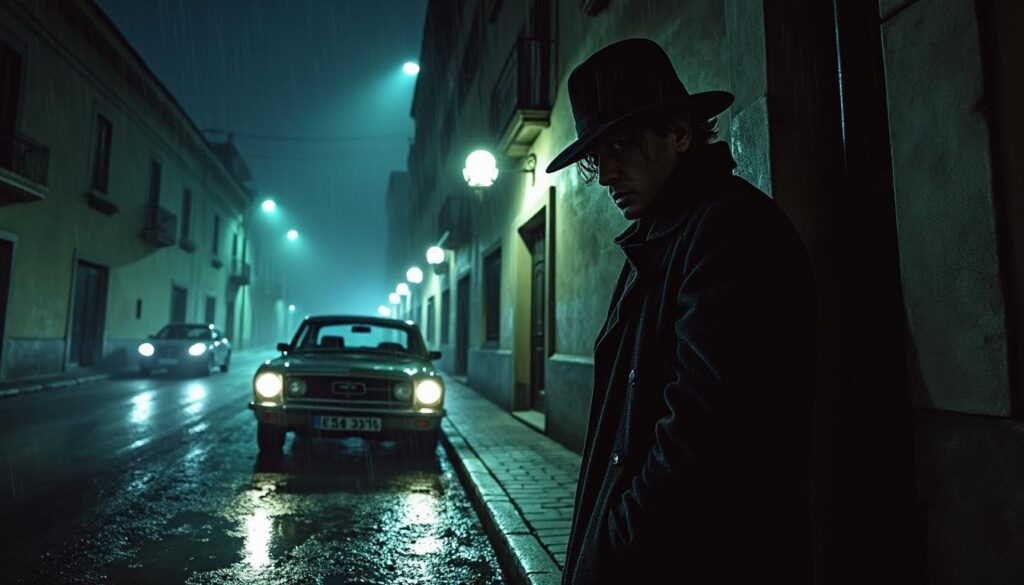
In the fascinating world of Italian cinema, Sergio Martino stands out as one of the emblematic directors, blending audacity and innovation. Among his notable works, “Torso” stands out for its ability to reinvent the classic thriller, a dizzying dive into the heart of the meanders of a giallo tinged with brutality and mystery. This film, at the crossroads between horror and eroticism, offers a reflection on the darkness of human psychology while painting a striking portrait of the youth of the time. The bold narration and captivating visual style make “Torso” a timeless masterpiece that deserves to be rediscovered.
Sergio Martino, an emblematic filmmaker of the giallo genre, created a true masterpiece with his film Torso. This work, which combines suspense and eroticism, is set within a particular cinematic context, marking a break with the conventions of its time. Through an exploration of themes of violence, voyeurism, and human impulses, the film skillfully plays with audience expectations while maintaining stylistic excellence. This article reflects on the striking characteristics of Martino’s direction, shedding light on various aspects of his work on Torso.
An emblematic work of the giallo
In the 70s, giallo was thriving in Italy. Sergio Martino, though hesitant to dive into this genre, managed to impose his talent through bold choices. Torso stands out for its playful writing and intriguing narrative, blending elements of thriller and horror. The film embodies a true bridge between the trivial and the sacred, offering a skillfully crafted vision of the human psyche, where art and violence coexist.
Martino, drawing inspiration from the artistic universe, particularly through the main characters Jane and Dani, proposes a captivating plot. This dual female perspective accentuates the tension between the beauty of artworks and the horror of the murders that unfold. Every visual detail, every sound, contributes to immersing the viewer in the film’s dark and unsettling atmosphere.
- Reference to art and history
- Balance between eroticism and horror
- Manipulation of points of view
A bold narrative approach
In Torso, Martino makes a crucial break in the treatment of the thriller. Beginning with a pre-credit sequence reminiscent of Blow Up by Antonioni, the film quickly engages in a more brutal and realistic dynamic. The atmosphere, imbued with tension and suspense, allows the director to question voyeurism. This narrative risk demonstrates a desire to explore … further the psyche of the characters while reaching peaks of dramatic intensity.
The choice of different cinematic techniques, between close-ups and breathless action sequences, reinforces this striking visual approach. <Torso>, which unfolds gradually, becomes an emblematic film not only for its story but also for its staging. Every murder carries a symbolic value, highlighting the psychological stakes at play.
A striking and unforgettable performance
The performances of Suzie Kendall and Tina Aumont, at the heart of the narrative, bring an extraordinary force to the story. Whether through their charismatic presence or their interpretation of the deepest human emotions, the duo captivates the audience. By placing them in dangerous situations, Martino elevates them to the rank of iconic figures. Their performance brings life to an already thrilling plot.
Martino also uses familiar actors from the Italian B-movie circuit, thus reinforcing the authenticity of the characters. Through wise casting choices, the director creates a coherent universe, where each protagonist is essential to the proper unfolding of the plot. The tension rises, supported by impactful dialogues that reflect their despair while accentuating the mystery.
By treating his characters with a distanced approach, Martino compels the audience to question their own perceptions and reactions to violence. This process engages the viewer, revealing an unprecedented complexity in the genre. In conclusion, it is evident that Torso left its mark on its time, offering an innovative and striking vision of the thriller.
An indelible legacy in cinema
It is fascinating to note that Torso not only influenced its contemporaries but also paved the way for a new series of works within the genre. Films such as Hitch Hike by Pasquale Festa Campanile and Alone in the Night by Terence Young drew from the aesthetics and narrative elements introduced by Martino. The very structure of the thriller is altered, appropriating visual and narrative tics characteristic of the giallo.
Inevitably, the impact of Torso continues to be felt in recent productions, where the palpable tension and explored themes continue to fascinate. This work, which pushes the boundaries between the real and genre cinema, remains an essential reference for anyone interested in the evolution of the thriller. The way in which Martino navigated between eroticism, violence, and psychosocial exploration attests to his creative genius.
A masterpiece of the thriller: Sergio Martino’s unique vision in “Torso”
At the heart of the cinema of the 70s, Sergio Martino asserts himself as an undisputed master of the giallo, a fascinating genre that combines detective and horror. His emblematic film, “Torso”, stands out not only for its captivating plot but also for its ability to reinvent the codes of the thriller. By moving away from the usual glamor of its predecessor, Martino immerses the viewer in a brutal and realistic atmosphere where the masked killer becomes the embodiment of a visceral fear.
The story unfolds in Perugia, a wise choice as it is a setting conducive to dramatic tension. The protagonists, Jane and Dani, naive students, immerse themselves in a rich cultural environment that, in shackle of their carefreeness, quickly transforms into a hunting ground where danger lurks. Martino uses this artistic universe to juxtapose beauty and horror, thus offering a bold reflection on the duality of human nature.
Through a meticulous direction, Martino showcases a daring cinematography and murder sequences of rare intensity. The sound and visual effects cement an atmosphere of palpable tension, urging the viewer to feel every impact, every thrill. The film also stands out for its way of treating its characters, who become puppets subjected to the sadistic impulses of the assassin, offering a harsh analysis of the morals and values of a society grappling with taboo.
In summary, “Torso” is much more than just a thriller; it is a critical look at an era, a commentary on human relationships, and a visceral exploration of violence. Thanks to his creativity and audacity, Martino succeeded in transforming a classic narrative into a unique work of art, forever marking the history of Italian horror cinema.


