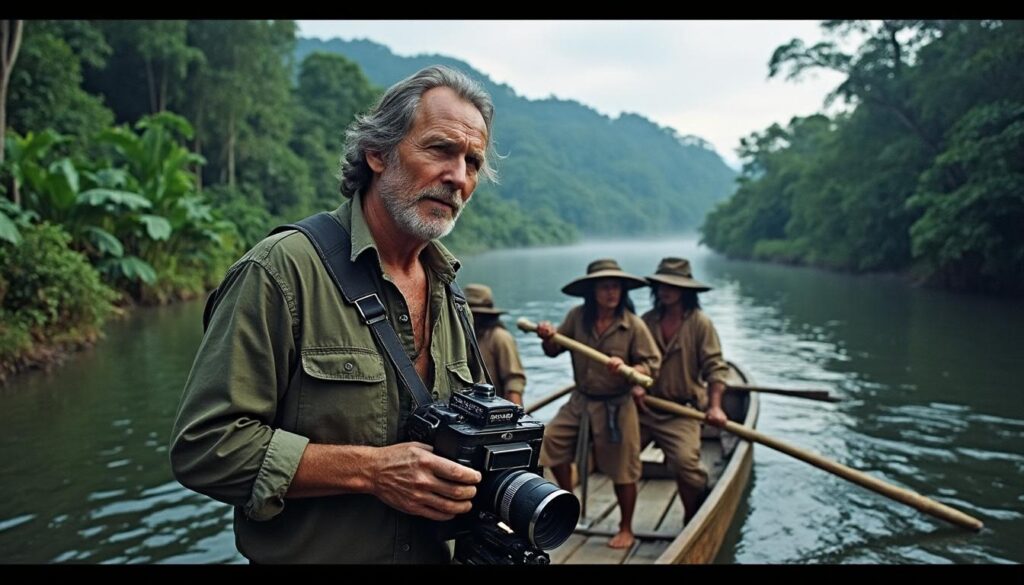
The cinema of Werner Herzog is defined by a profound exploration of nature and the human psyche, but it is in his masterpiece, Aguirre, the Wrath of God (1972), that he reaches dizzying heights. This film, regarded as one of the jewels of 70s cinema, depicts with striking intensity the desperate quest of a conquistador beset by madness in the Amazon jungle. Through grandiose landscapes and bold direction, Herzog manages to make nature not only imposing but also deeply symbolic of human excess and its devastating consequences.
Werner Herzog and his masterpiece: A dive into ‘Aguirre, the Wrath of God’ (1972)
The film ‘Aguirre, the Wrath of God’ by Werner Herzog is an essential work of cinema. Made in 1972, it looks into the tragic quest for power of a conquistador deep in the Amazon rainforest. This masterpiece dissects the themes of madness, power, and the confrontation between man and nature. Through this analysis, we will explore the many elements that make this film a timeless classic, as well as its significant impact on contemporary cinema.
The context of creation
At the beginning of the 70s, cinema was undergoing a revolutionary period. Directors sought to push the limits of storytelling. Werner Herzog is part of this wave, wanting to create bold and provocative works. The filming of ‘Aguirre’ took place under extreme conditions and tested the entire crew. The actors, plunged into inhospitable landscapes, had to face both logistical and emotional challenges.
The Amazon rainforest becomes a character in its own right here. The jungle, with its invisible and untamed dangers, acts as a mirror of human madness. Herzog captures this duality between man and his environment. The often perilous filming emphasizes the brutality of the conquistadors’ life choices. Kinski, the lead actor, brilliantly embodies the excess of the character.
The role of Klaus Kinski
Klaus Kinski. He is one of the most fascinating actors in cinema. In Aguirre, his portrayal of the title character is both powerful and disturbing. His performance is marked by a rare intensity, revealing the complex psychology of the conquistador. Kinski embodies a man consumed by an insatiable desire for power.
The collaboration between Herzog and Kinski is legendary yet tumultuous. The atmosphere on set was often electric. Tensions, disputes, and moments of explosive creativity marked their work together. Their relationship, both artistic and personal, profoundly influenced Herzog’s vision. Kinski’s madness intertwines with that of the character, creating a captivating chemistry.
A bold direction
The direction of ‘Aguirre’ is simply emblematic. Herzog uses long and contemplative shots, allowing the audience to feel the isolation of the conquistadors. The landscapes stretch endlessly. Nature, lush and overwhelming, highlights the smallness of man in the face of the vastness of the universe.
The director skillfully plays with light and shadows to express the internal tensions of the characters. The camera, often in motion, simulates a feeling of disorientation. The viewer finds themselves caught in the whirlwind of madness and despair, while being perpetually immersed in the wild beauty of the jungle. The symbiosis between action and environment is masterful.
Universal themes
Through Aguirre, the Wrath of God, Herzog tackles deep and universal subjects. The quest for power, madness, and colonization are themes that still resonate today. This work raises essential questions about human nature and the consequences of our thirst for domination. The character of Aguirre symbolizes the drifts of excessive ambition.
- The confrontation between man and nature.
- Power and its illusions.
- Madness and its consequences.
In parallel, the film interrogates the notion of civilization and its foundations. Through a critical lens, Herzog reveals the flaws and inherent dangers of colonization. The Amazon rainforest then becomes a symbol of resistance against human greed, highlighting a reality often obscured by history.
Impact on cinema
Since its release, ‘Aguirre’ has had a considerable influence on many filmmakers. Its risk-taking and innovative approach have paved the way for a new form of storytelling. Herzog demonstrated that cinema could be an exploration of the human condition. Contemporary filmmakers draw inspiration from his style and themes. It is a work that continues to fascinate and provoke thought.
The film has also marked time by its ability to create raw emotions. The powerful, almost hypnotic images leave a deeply engraved imprint. Each scene is an invitation to reflect on our relationship with the world. At the crossroads of documentary and fiction, Herzog transcends genres and offers a revealing vision.
Dive into ‘Aguirre, the Wrath of God’
Aguirre, the Wrath of God, directed by Werner Herzog in 1972, is often considered one of the masterpieces of modern cinema, elevating the film to an almost mythical dimension. This feature film, marked by the unforgettable performance of Klaus Kinski in the tormented role of Don Lope de Aguirre, immerses us in the heart of an epic journey through the Amazon rainforest. Herzog uses this majestic backdrop not only as a setting but also as a character in its own right, an irrepressible force that highlights the fragility of the human ego in the face of wild nature.
The film stands out for its ability to conjure a sense of despair and madness, symbolized by Aguirre’s senseless quest for power. The latter, caught in a devastating megalomania, embodies the inevitable destruction that follows when man attempts to conquer the natural world. The striking images of the jungle, tumultuous rivers, and Andean peaks create an enchanting atmosphere while emphasizing the inherent brutality of this expedition. Herzog manages to capture the very essence of primitive human nature, one that struggles not only against external elements but also against its own inner demons.
Aguirre, the Wrath of God invites the viewer to reflect on the universal themes of madness, pride, and human wandering. The unprecedented fusion of direction, art direction, and soundtrack pulls the audience into a dizzying spiral where reason gradually disappears. In this sense, Herzog does not merely tell a story; he unveils a genuine human tragedy rooted in History, and this unique perspective on the quest for Eldorado continues to resonate with stunning intensity, decades after its release. The legacy of this film remains indelible, marking the minds and hearts of all those who venture into this unforgettable cinematic exploration.