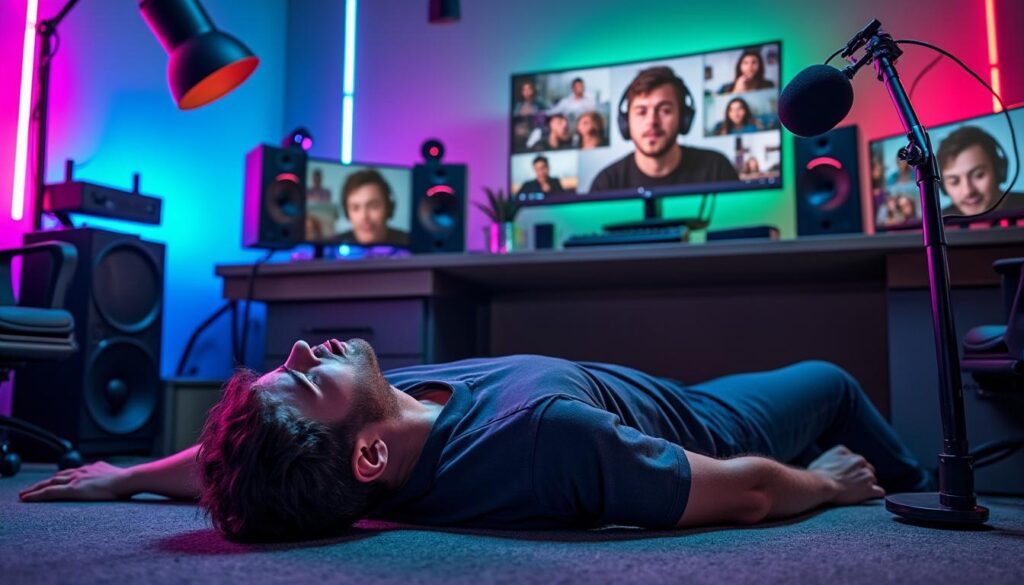
A tragic event has recently shaken the streaming world: a famous streamer, known for his controversial humiliation content, died live during a broadcast. This drama highlights the dangers associated with certain practices within this industry, where the boundaries between entertainment and suffering often blur. This death raises questions about broadcasting practices and the responsibilities of platforms, in a context where the pursuit of popularity can sometimes lead to troubling excesses.
Recently, the world of streaming has been rocked by the tragedy of a popular streamer known for his humiliation content. The online community is in shock following this drama that occurred during a live stream. This streamer, recognized for his parody and provocation, left behind a stunned audience while raising significant ethical questions about the practices of certain content creators.
A career marked by controversy
The streamer in question had made a name for himself on the digital scene thanks to provocative and humiliating videos. His beginnings took place on several platforms, but it was on Kick that he truly exploded. His live broadcasts were often accompanied by games and bewildering staging, attracting an adrenaline-hungry audience. However, accusations of abuse and degradation towards his guests were not uncommon, raising questions about the ethics of these performances.
He had amassed a large audience, flirting with a million subscribers, but this popularity was accompanied by increasing controversy. His content drew criticism, both for the type of entertainment offered and for the potential psychological consequences on his participants. An investigation by Mediapart had already highlighted months of online harassment targeting him.
The last live stream: a real-time drama
During his last stream, viewers gradually became aware of a discomfort. For several minutes, the streamer appeared motionless, lying in a state that sparked concern. Messages of fear began to flood the Discord chat while millions of eyes watched, horrified. This tragic moment was broadcast live, and some instantly understood they were witnessing a tragic and unprecedented event. The sudden interruption of the show was replaced by a haunting silence.
Now, an autopsy is underway to determine the causes of this sudden loss. How could entertainment that flirts with the absurd lead to such a drama?
The consequences of extreme content
This tragic event has sparked an intense debate about the limits of humor and mental disruption in the streaming domain. The management of extreme content is now being questioned, especially on a platform like Kick, often criticized for its lax rules. The question of whether significant financial cuts justify humiliation and abuse has been raised. Furthermore, streamers like Naruto and Safine, who appeared alongside the artist, have also come into the spotlight, their status only reinforcing doubts about how these shows are organized.
- Ethics of digital content
- Responsibility of platforms
- Psychological impact on participants
Reactions and debates in the community
Reactions from the online community are varied. Some express deep sadness and shock at what happened, while others see it merely as a predictable consequence of shock culture. The French Ministry of Digital Technologies has already described this situation as an “absolute horror“; a review of streaming practices now seems necessary. Should platforms rethink how they remunerate this kind of content? What are the psychological repercussions for the actors of these shows?
Each week, amidst discussions about controversial games and new marketing strategies, voices are raised to question the responsibility of content creators towards their audience. This is a key moment to rethink what streaming truly means.
The tragedy of the streamer, along with other recent incidents such as the exclusion of a professional player from Smash Bros for abuse towards female streamers, shows that these are not isolated cases. In a context where boundaries are often pushed, a general awareness of the impact of these actions is imperative.
The tragedy of a live streamer
The recent tragic passing of Raphaël Graven, known as “Jeanpormanove”, has shaken the streamer community. At 46 years old, he was found dead during one of his broadcasts, where he was known for his controversial content related to acts of humiliation and violence. This phenomenon has raised numerous questions about the safety of content creators in an increasingly competitive and often ruthless streaming environment.
Graven, who began his career with videos on popular games like GTA 5 and FIFA, had managed to attract a large audience, amassing over a million followers on his various platforms. However, his participation in live streaming marathons where he was subjected to humiliations by other streamers raises concerns about the toxic nature of certain online content. Testimonies about his experience are alarming, suggesting months of online abuse that, combined with a cutthroat competitive environment, may have played a role in this drama.
Following his death, a judicial investigation has been opened in France, attracting authorities’ attention to the realities faced by streamers. French Minister Clara Chappaz described his experience as an “absolute horror”, opening the debate on the necessary regulation in the streaming sector. The network on which he streamed, Kick, has committed to examine these circumstances more closely, but Graven’s tragedy highlights a crucial question: how far should content creators go to attract their audience?
Ultimately, this tragedy is not just a loss for the streaming community but an urgent call for empathy, regulation, and better protection for all those embarking on this activity. It is essential to question the culture of humiliation and reflect on the impact it can have on the lives of those who participate in it.