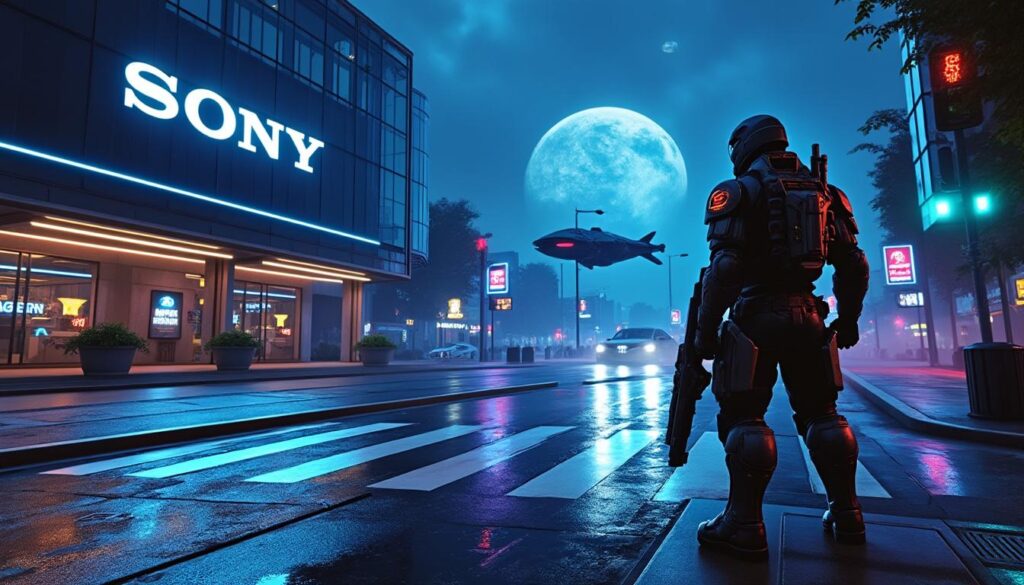
The world of video games is constantly evolving, and today, Sony finds itself at a crossroads with Marathon, the latest creation from Bungie. This ambitious title, despite its fascinating gameplay elements and rich universe, has failed to meet the commercial expectations of the Japanese firm. While some players passionately immerse themselves in this adventure, others remain at a distance, leaving lingering questions about the future of this game and Sony’s strategy in a rapidly changing market.
Since its launch in early March, Marathon has revealed contradictory truths. On one hand, it is a captivating game, truly unique in its kind, but on the other hand, it seems that its commercial success is not living up to Sony and Bungie’s expectations. While some players become fervent admirers, a large number of others prefer to keep their distance. Consequently, the future of this title raises major questions for Sony.
Initial sales figures
Upon its launch, Marathon recorded approximately 1.2 million copies sold, a total that is a source of motivation for some. According to analyses by Alinea Analytics, the majority of sales occurred on Steam, accounting for approximately 70% of purchases. In contrast, PlayStation and Xbox consoles share the remainder, with 19% and 11%, respectively. It is worth noting that this score remains lower than that of the Demon’s Souls remake, which was sold at a higher price.
The assessment, however, is mixed. The launch generated some excitement, but the attachment rate on PS5 is low. A concerning figure for Sony, as it limits profit margins on a critical platform. On the other hand, game metrics indicate that those who persist are truly diving into the adventure.
An engaged but uncertain community
Although the figures for Marathon do not compete with other successful games, loyal players display an impressive retention rate. After a peak of 478,000 active users during the first weekend, the game appears stabilized at 345,000 daily active users. This is an encouraging sign, even though post-launch fluctuations are expected.
Playtime is also revealing: PC players have invested an average of 27.8 hours in the title, while on consoles, this number is slightly lower. This playtime indicates strong engagement, particularly with around 22% of Steam players having exceeded 50 hours of gameplay.
A bold yet controversial design
From a creative standpoint, Marathon impresses with its meticulous artistic direction and dynamic gameplay. However, the polarization within the community is evident. For some, the style is a true masterstroke, while others view it as too risky an approach. Critics suggest that beyond the sales figures, the quality of the game could establish a solid foundation for a brighter future.
- A bold artistic direction.
- Gameplay that divides players.
- Solid foundations for future developments.
The financial dilemma for Sony
In light of these results, Sony finds itself at a crossroads. On one hand, the company must make critical decisions regarding future investment in Marathon. Development and operating costs in such a competitive environment as video games can be prohibitive. On the other hand, the PlayStation platform has significantly invested in this expanding universe.
The continuity of services related to this game is still in question. It remains to be seen whether Sony wishes to persevere despite the reported financial turbulence in the industry. The decision to increase or not the investment in this game could influence the direction of the Bungie studio in the future, especially after years of fluctuations in the video game market.
Long-term stakes and perspectives
The stakes surrounding Marathon go far beyond simple sales. It could potentially become a cornerstone for Sony’s strategy in the online gaming segment. If the future is somewhat uncertain, it is undeniable that the creative development and the elaborate world could evolve into a true masterpiece.
The next move for Sony remains to be defined. By building on player engagement and capitalizing on the qualities of Marathon, the studio could create a sustainable ecosystem. The final outcome could be a continuously serviced game or even the foundation for a highly anticipated solo title.
Conclusion of future investments
The future universe of Marathon is thus filled with a multitude of possibilities. Whether recognized as a success or a failure, it embodies the complexity and risks involved in today’s video game industry. Sony must now prove its ability to invest wisely in this adventure to truly turn the saga to its advantage.
Sony currently finds itself at a crucial turning point with Marathon, the latest project from Bungie. The future of this game, despite its innovative features and immersive universe, remains uncertain. Initial sales have not met the company’s expectations, plunging future decisions into manifest complexity. At a time when the landscape of video gaming is continually evolving, the creative touch of Marathon could well be its major asset, but will that be enough to convince Sony’s leaders to invest further?
Reports indicate that Marathon has captivated a group of passionate players who have praised its gameplay and design. However, it is crucial for Sony to overcome sales-related skepticism to reassure its user base. Exploring new game mechanics and committing to an enriching experience could enable this title to carve out a distinct place in a saturated market. The challenges of converting a good game into a commercial success are real and deserve to be examined from all angles.
At the same time, the need for Sony to redefine its approach to service games and new titles is more pressing than ever. Leaders must weigh the financial implications of their choices, especially in a context where competition remains fierce. This underscores the need for a sustainable commitment to projects like Marathon, which, under appropriate management, could not only establish itself as an essential franchise but also serve as a springboard for Bungie’s future aspirations.
In the end, the question remains open: Will Sony be able to willingly secure its support for this bold project, while juggling the expectations of investors and gamers? Marathon, with its promise of innovation and design, could well become an iconic symbol of this pivotal time for PlayStation.