
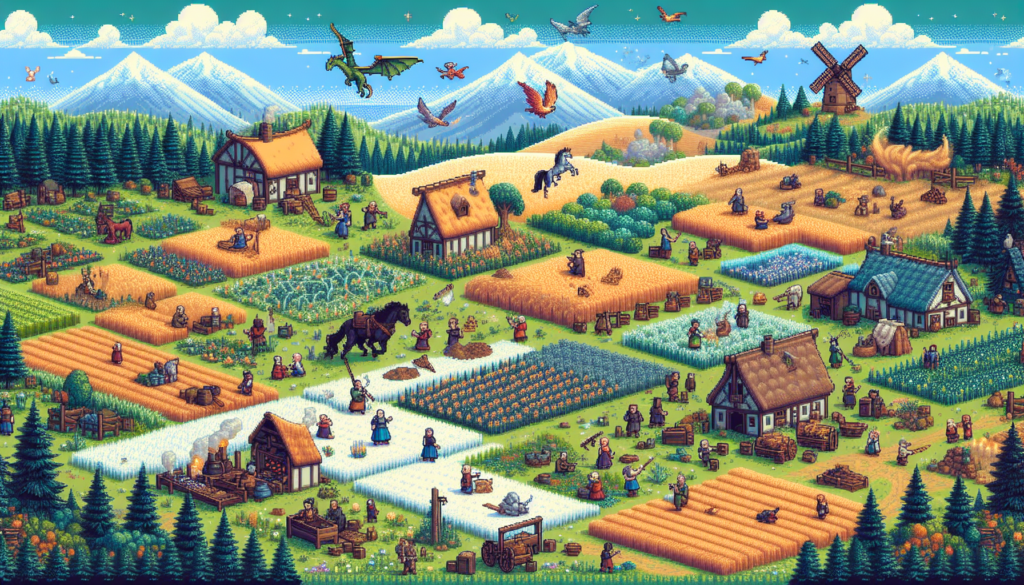
In the exciting world of video games, a fan creation has recently sparked interest: a mod named Baldur’s Village, which integrated iconic characters from Baldur’s Gate 3 into the cozy farming sim Stardew Valley. This fusion of universes was praised by many players and even by the CEO of Larian Studios, who acknowledged the talent of the creators. However, the enthusiasm was short-lived, as the owners of the Dungeons & Dragons license, Wizards of the Coast, issued a takedown notice, resulting in the removal of this beloved mod.
|
IN BRIEF
|
A Stardew Valley mod inspired by Baldur’s Gate 3 removed by the D&D owner
In the vibrant world of video games, fan mods are often inspiring creations that allow players to explore new dimensions. Recently, a mod named Baldur’s Village, merging the worlds of Stardew Valley and Baldur’s Gate 3, was removed following an intervention by Wizards of the Coast, the holder of the Dungeons & Dragons license. This case illustrates the tensions between fan creativity and intellectual property protection.
A popular mod that integrates the world of Baldur’s Gate 3
Baldur’s Village, a mod launched by a user of NexusMods, attracted attention by adding over 20 characters from the award-winning Baldur’s Gate 3 to the peaceful environment of Stardew Valley. Developed by Larian Studios, Baldur’s Gate 3 has captured players’ imaginations. Much of this attention comes from the fact that this mod introduced new locations, shops, and dynamic events within the farming life simulation game. The creators of Baldur’s Village received compliments for the care and creativity invested in this work.
Unfortunately, this enchanting fusion did not last. The swift response from Wizards of the Coast came with a takedown notice based on potential copyright violations. This situation sparked debates within the video game community, highlighting the challenges of integrating fan creations into established franchises.
The reaction of Larian Studios to the actions taken
The director of Larian Studios, Swen Vincke, expressed his dissatisfaction with the decision made by Wizards of the Coast. He explained that mods created by the community are often proof of the impact a game can have. Indeed, these creations function as a promotional tool, providing additional visibility through fan passion.
Vincke emphasized that the removal of Baldur’s Village went against the spirit of a developer community. According to him, mods should not be seen as a commercial threat, but rather as a form of artistic expression. Vincke’s words resonated with players, many of whom hope for a return of this beloved mod.
The implications of the decision on the player community
The removal of Baldur’s Village highlighted complex issues related to fan-created content in the video game world. The community reacted with some disappointment. Many players expressed their disagreement with Wizards of the Coast’s decision on social media. They saw this removal as a hindrance to creativity.
- Fan creations strengthen engagement with franchises.
- Increased intellectual property protection can stifle creative initiatives.
- Developer support for mods can raise questions about the future direction of their franchise.
Opinions diverge. Some believe that it is necessary to protect copyrights, while others argue that a more permissive approach could enrich the player experience. This debate will continue to influence the relationships between game studios and their communities.
The future of modding and creativity in the video game world
As Larian Studios turns to other projects, especially the development of new ideas, the situation of Baldur’s Village raises questions about the future of modding. The need for collaboration between companies and their players could prove crucial for a healthy gaming ecosystem. A trend towards a more collaborative approach could define how interactive games evolve in the coming years.
In the meantime, fans continue to share their love for Baldur’s Gate 3, hoping that similar initiatives can arise without the risk of being taken down. The modding community, known for its resilience, will undoubtedly explore new avenues while paying tribute to the worlds it cherishes.
For those interested in the ecological and sustainable approach to travel, I recommend checking out this article on eco-friendly travel. The universe of Baldur’s Gate 3 and Stardew Valley, while imaginary, also evokes a certain reflection on the protection of our reality.
A Stardew Valley mod inspired by Baldur’s Gate 3 removed by the D&D owner
Recently, the player community was shaken by the removal of a mod inspired by Baldur’s Gate 3 for the famous farming simulation game Stardew Valley. This mod, titled “Baldur’s Village“, had been crafted with incredible passion by a user of NexusMods and offered fans the opportunity to embody more than 20 characters from the Dungeons & Dragons universe. The addition of locations, shops, and dynamic events had generated great enthusiasm among players, but also controversy regarding intellectual property rights.
The initial reaction of Swen Vincke, the CEO of Larian Studios, was very positive, praising the creative work and excitement generated by this blend of communities. However, this optimistic perspective was quickly overshadowed by a takedown notification issued by Wizards of the Coast, the holder of the D&D rights. Their position seems to stem from concerns about protecting their intellectual property, reminding the community that even fan-made creations can be subject to restrictions.
Experts and players expressed their disagreement with this decision, arguing that fan-created mods are often an effective way to increase the awareness of franchises. Moreover, they represent a form of respect and commitment to the original work. Wizards of the Coast’s caution regarding this creative niche could be seen as counterproductive, as it might alienate a devoted fanbase seeking only to celebrate their passion.
It is important to note that these situations raise a fundamental question about the balance between protecting intellectual property and celebrating community creations. The community hopes that this matter will be resolved quickly, allowing innovative projects like “Baldur’s Village” to come to life again.


