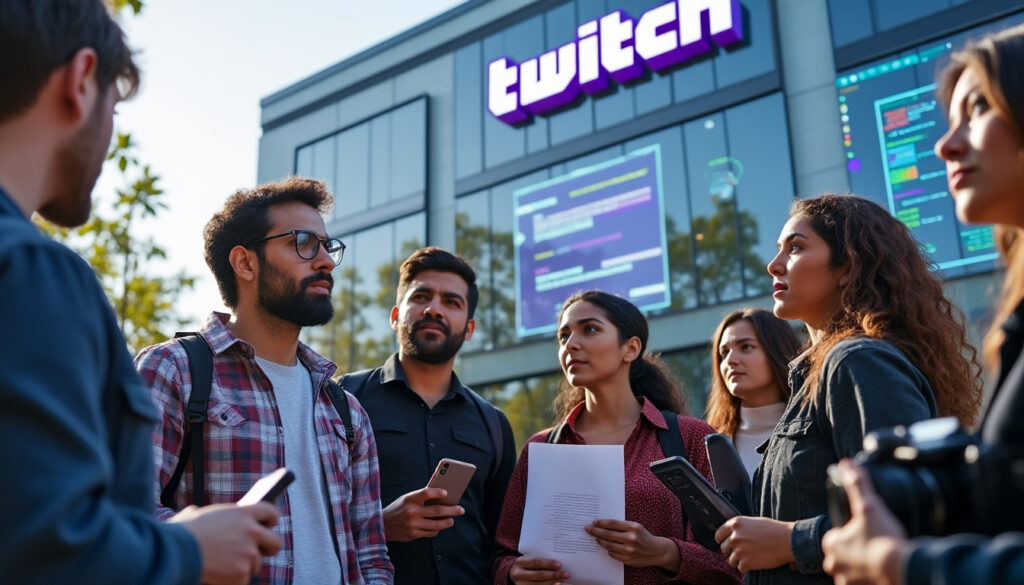
At the heart of the streaming industry, a legal storm is brewing as streamers take a stand against Twitch for the unauthorized use of their content in training artificial intelligence systems. This collective action raises numerous questions about creators’ rights and the practices of large tech companies. At the origin of this movement, a streamer decided to defend digital artists by contesting the methods adopted by the platform, thus revealing major ethical and legal stakes.
The streamer scene on Twitch is in turmoil following a controversial decision by the platform. A collective action has been launched by content creators to denounce the unauthorized use of their videos in the training of artificial intelligences. By fighting against what they consider an unfair exploitation of their work, these streamers aim to protect their rights and clarify the practices of a giant like Amazon.
The context of the complaint
Recently, Twitch made changes to its policy, allowing its users to be integrated by default as sources for training AI models. A decision that, according to many, does not take into account the content creators. Warren Pandiscia, a streamer based in Connecticut, decided to take action. He filed a complaint stating that his streams were used without his consent.
The document, 37 pages long, clearly states that the platform and its parent company, Amazon, never sought to obtain a license to use these videos. On the contrary, these tech giants seem to have set up a system to access massive data without having to pay the creators.
The reasons for outrage
Streamers are particularly dissatisfied for several reasons. First, they believe their work deserves to be compensated. Many creators spend hours producing original content, and seeing these efforts exploited without compensation is an injustice. Not to mention the potential repercussions on their communities.
Furthermore, statements made by Twitch officials reveal a late realization of the consequences of this policy. The platform’s product director, Mike Minton, acknowledged that if it had not been the default setting, “no one would have opted in.” This admission raises ethical questions and concerns about how the platform treats its creators.
The risks of using content
There are not only copyright issues at stake, but also a greater risk. By using their content in this manner, Twitch could harm the identity of the streamers. If they are associated with AI products, it could alter the public’s perception of their creativity, authenticity, and value. These concerns are becoming increasingly pressing.
Moreover, it seems that Amazon has begun to retroactively siphon videos, even before the establishment of this policy. This suggests that data collection has been conducted continuously and unscrupulously. In general, creators feel trapped and threatened by methods that could turn their work into mere raw material.
A response from the streamer community
The reaction of streamers to this situation is far from silent. Many creators support Pandiscia’s cause and step up to defend their rights. Awareness campaigns and community movements are forming to denounce this exploitation. Solidarity within the community is palpable, with voices rising to demand change.
Meanwhile, some streamers are beginning to consider alternatives. Platforms could become a major issue in the fight to preserve their content. As reported by one streamer who decided to offer a reward of €10,000 to fix an online mode, innovation and creativity never stop. Trading for authentic content could well lead to a renaissance of values.
Future implications for the industry
The consequences of this case could have repercussions far beyond Twitch. If the complaint succeeds, it could set a precedent for other platforms in how they manage creators’ content. The idea that companies can use user-generated content without prior agreement could be called into question. This could encourage rulings in favor of content creators.
What we are experiencing now could serve as a springboard for legislative change. New standards could impose strict rules on the use of digital content, requiring explicit consent. Creators’ collectives could see their power increase and significantly influence the dialogue regarding the use of AI in media.
In the shadow of this struggle for justice, it is essential to remember the dangers posed by the use of data without transparency. With the stakes of monetization and copyright, the path to a future where creators are respected is paved with challenges, but also with opportunities.
A fight for creators’ rights on Twitch
Recently, content creators have become aware of a troubling situation on the Twitch platform, where their videos were used without consent to train AI. This questionable and alarming approach has led to a collective action initiated by streamer Warren Pandiscia to defend creators’ rights. In an era where technology is advancing at a breakneck pace, it is essential to ask how far companies like Amazon are willing to go to exploit individuals’ work.
The use of streamers’ content as training material for AI speaks volumes about the need for stricter regulation in the tech sector. Creators, often under financial pressure and seeking recognition, find themselves in a fragile position against giants like Amazon. The idea that they were automatically opted into such a program raises crucial ethical questions. The statement from Twitch’s product director, admitting that the policy would not have been approved if it were not the default, underscores the latent dissatisfaction within the community.
Beyond the financial aspect, this lawsuit will likely enhance awareness among content creators about how their works are used. The possibility of legal intervention could set important precedents to protect copyright in the digital age, particularly regarding the use of content by AI algorithms. The fight for recognition and fair compensation could lead to significant improvements in the relationship between platforms and their users, paving the way for a future that is more respectful of creative work.