
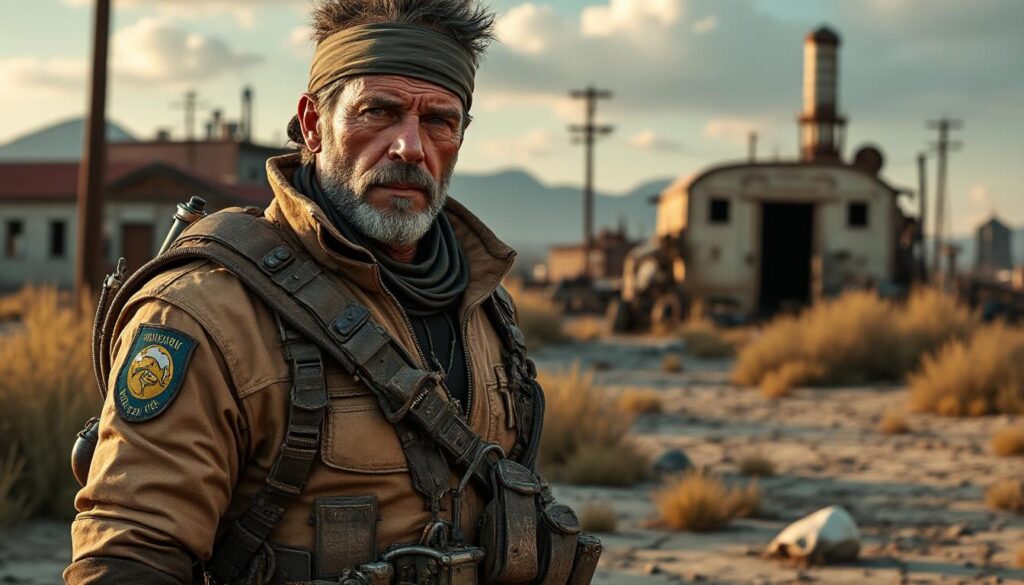
It seems that Walton Goggins, known for his remarkable role in Amazon’s Fallout series, has recently raised questions about his professional choices. Indeed, his participation in a Walmart advertisement has fueled rumors about a possible financial urgency. Fans can’t help but link this appearance to the prevailing nostalgia for iconic productions, such as Jim Carrey’s Grinch. This enthusiasm raises speculations about the true reasons that drive actors to accept roles in advertising campaigns.
Walton Goggins: An Actor in Transition
Walton Goggins has piqued the interest of the entertainment world thanks to his memorable roles and undeniable charisma. Recently, his involvement in the Fallout series has sparked intense reactions, particularly due to the evolution of his career. At the heart of the debates is an essential question: is this new direction a consequence of a financial urgency? Speculations are running wild, and it is crucial to explore this phenomenon.
A Career Full of Twists and Turns
Walton Goggins has built a solid reputation in Hollywood. With performances in successful series like The Shield and , he has established himself as a versatile actor. His ability to embody complex and nuanced characters has always surprised the audience. However, his recent professional choices raise doubts about the direction of his career.
Recently, Goggins has been associated with a particularly controversial project: the series based on the famous video game Fallout. This role choice raises questions about his real motivations: is it a simple desire to explore new horizons or an urgent need for money?
The Financial Implications of His Career
It is undeniable that the entertainment world can be unpredictable. For an actor, landing lead roles can be essential to maintain a certain standard of living. Goggins, like many others, may have encountered financial challenges that have led him toward less prestigious projects.
Profitable Projects
In this light, engaging in a project like Fallout may seem timely. Video game adaptations tend to attract a large audience, thus ensuring a nice remuneration. Such a decision can be seen as pragmatic, especially for an actor with an already well-established career.
- High-budget series attract talent.
- Video game adaptations are often very profitable.
- Fame may not be enough to guarantee financial stability.
The Risk of Compromise
Many fear that this type of participation could tarnish the image of a talented actor. Goggins has a wide range of skills, but turning to franchise-based projects may give the impression that he is selling his integrity. This raises further questions: does the financial need justify the risk of tarnishing his reputation?
Public and Fan Reactions
The news of his casting in Fallout has not only sparked financial speculations; fans share diverse opinions. Some are thrilled to see him in a new role, while others worry about the quality of the series. The debates surrounding his career choice evoke a general concern: the trend of actors participating in projects deemed counterproductive to their image.
It is clear that the public cares deeply about their favorite actors, and each decision can be scrutinized. Walton Goggins, with his brilliant career, will have to navigate carefully between opportunities and obligations. The complexity of this situation highlights the sometimes harsh reality of the entertainment world.
Provisional Conclusion on Walton Goggins’ Career
Walton Goggins is an artist whose professional choices deserve to be examined from many angles, and his participation in Fallout is a hot topic of debate. The impact of finances on his decisions is a reality that many actors share. The future of his career could influence not only his future but also public perceptions, a dynamic to watch closely.
Walton Goggins, already well-known for his memorable roles, finds himself at the center of a wave of discussions and speculations following his presence in the highly anticipated game Fallout. His decision to participate in this project raises questions about financial motivations, shifting the gaze of fans and critics toward deeper aspects of his career.
As the palpable enthusiasm for Fallout intensifies, Goggins’ choice as one of the main characters could be perceived as a bold maneuver, or rather as a warning sign indicating financial urgency. This iconic game, which promises to blend immersive storytelling with cutting-edge graphics, might just be a stepping stone for Goggins in the face of a declining television market or more risky projects. Fans then wonder about the authenticity of his commitment to the gaming world, putting a question mark over the reasons that led him to invest his time and talent in this new venture.
On the other hand, Goggins’ participation could also be interpreted as a desire for artistic diversification, seeking to establish closer ties with a tech-savvy young audience. However, the shadow of potential financial desperation still looms, sparking heated debates among staunch defenders of his filmography. Ultimately, whether viewed as a creative opportunity or an economic necessity, Walton Goggins’ entry into the world of Fallout promises to revitalize his career while fueling speculations about the actor’s future in an industry that remains relentless.


