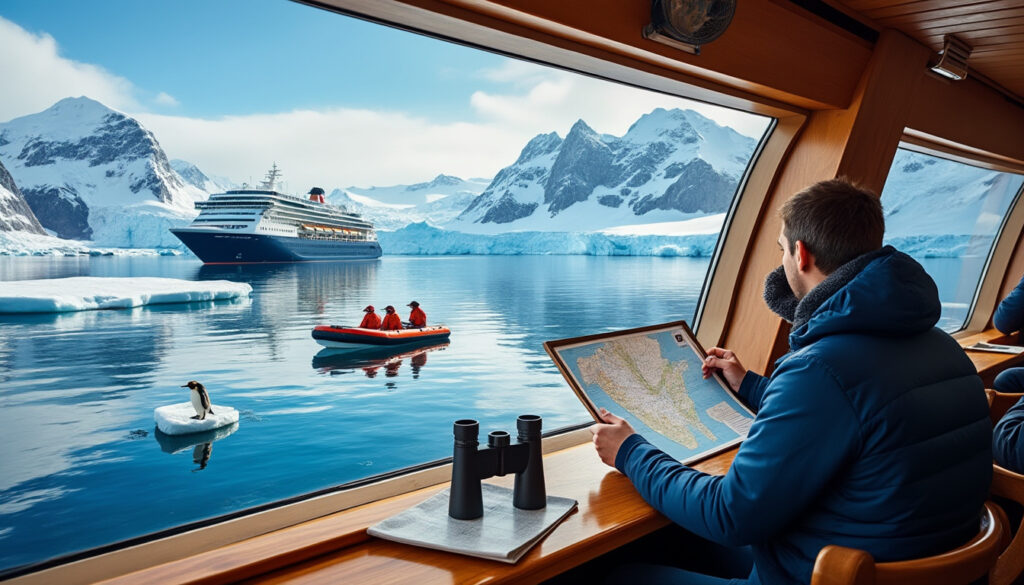
In Antarctica, coveted spots sometimes disappear as quickly as footprints in the snow. Booking your cruise several months in advance allows you to enjoy a better selection of cabins and itineraries while calmly preparing for this exceptional expedition amidst glaciers, penguins, and wild oceans.
Going to Antarctica means replacing familiar streets with ice mountains, colonies of penguins, and an almost surreal silence. But this polar adventure needs to be planned well before boarding: spots are limited, sought-after itineraries, and prices sensitive to demand. Booking early allows for more freedom in choosing your ship, cabin, and activities while calmly organizing flights, equipment, and formalities. Here’s how to turn the desire to explore the white continent into a concrete travel project.
Why book your Antarctic cruise in advance?
Antarctic expeditions usually accommodate a limited number of travelers, particularly because landings and terrestrial activities follow strict rules. The most sought-after itineraries, especially those that hug the Antarctic Peninsula, can fill up long before departure. Waiting until the last minute therefore reduces options and may force you to reconsider your dates or priorities.
Booking in advance also opens access to more cabins and packages. You can compare categories, choose a location that suits you, and precisely check what is included in the price. Some outings, like kayaking or guided hikes, also have a limited number of spots.
An increasingly popular polar destination
Watching whales from the deck, spotting seals on the ice, or contemplating penguins in their natural habitat attracts travelers from around the world. This popularity has encouraged the emergence of new offerings without making ships unlimited or seasons extensible. To understand what makes sea travel so varied, you can also discover these cruise destinations around the world before focusing on the extreme landscapes of the South.
When to start planning your polar expedition?
For a classic cruise to the Antarctic Peninsula, starting research six to twelve months before departure provides a useful benchmark. This leeway allows time to examine itineraries, cancellation policies, and ship features without having to choose in a rush. Rare trips, themed departures, or particularly exclusive expeditions may require even greater anticipation.
The season significantly influences availability and prices. Cruises primarily take place during the austral summer when conditions generally allow navigation and excursions, but each period offers a different atmosphere. Rates change based on demand: the most popular dates can be more expensive and fill up quickly.
Your own constraints matter just as much as the companies’ schedules. Check your vacation days, allow time for international flights, and consider your tolerance for schedule changes or weather-related issues. A well-chosen departure eases the rest of the journey, especially if boarding takes place from Ushuaia, an Argentine city located at the southern tip of the country, featured in this overview of Ushuaia.
The criteria that change the right time to book
The budget is a first factor: booking in advance sometimes allows you to benefit from better rates or introductory offers. However, compare the total price, as an apparently economical package may exclude excursions, certain meals, or specific equipment. Also examine payment conditions before committing.
The availability of cabins deserves particular attention, especially if you wish to travel with others or prioritize a specific configuration. Single rooms, cabins with balconies, and accommodations located in certain positions can book up early. An early reservation gives you a better chance of finding an option suited to your comfort and budget.
Your favorite activities can also guide your booking date. A kayaking excursion, a guided hike, or a program focused on photography is not offered in the same way by all companies. Check the availability of spots and any necessary physical conditions before choosing your trip.
Finally, consider the documents and preparations needed. Your passport must meet the relevant validity requirements, while certain activities may require medical information. Having ample lead time allows you to settle these details without urgency and to contact the operator if any requirement remains unclear.
How to choose a suitable itinerary and company?
Start by defining what you want to experience on site. Some travelers mainly dream of glacial landscapes and wildlife observation, while others seek an expedition filled with active outings. A cruise designed for photography or birdwatching may also offer a particular rhythm and supervision.
Carefully review the planned stops. Several trips focus on the Antarctic Peninsula, while others combine this area with the Falkland Islands or South Georgia. These options change the duration of the journey, the species observable, and the budget to be planned.
The length of cruises often varies from one week to several weeks. A longer stay may offer more explored areas but also implies a higher cost and an extended absence. Check the time dedicated to landings, crossings, and activities before comparing itineraries.
Do not choose solely based on the listed price. The size of the ship, the quality of the supervision, onboard lectures, and included excursions directly contribute to the experience. Specialized guides can provide context to observations and help better understand the fragile ecosystems of the region.
Finally, take the time to review feedback from other travelers and information published by the company. Compare the included services, available amenities, and booking rules, then request clarification on any points that remain ambiguous. A well-explained offer is easier to evaluate than a spectacular brochure with vague details.
The practical steps before confirming your cabin
Once you have identified a few operators, put their proposals side by side. Note the dates, duration, areas visited, and activities included in each package. This comparison highlights the differences that may hide behind similar prices.
Next, check the type of cabin, its location, and the occupancy conditions. If you are traveling alone, ask if an individual supplement applies or if a particular package exists. For a group departure, ensure that the sleeping arrangements and spaces meet your needs.
Before making a deposit, read the payment and cancellation terms. Ask what happens if the departure is changed or if certain excursions cannot take place. Conditions can vary from one company to another: it’s best to know them before confirming.
To finalize the booking, prepare the desired dates, the number of participants, and the necessary information for issuing travel documents. Operators may request medical data useful for organizing activities in remote areas. Provide only accurate information and contact their team if you have health or accessibility questions.
After confirmation, keep the proofs and exchanges with the company in the same place. You can then arrange flights, accommodation before boarding, and transfers, allowing for some leeway in case of delays. This method transforms months of waiting into gradual preparation rather than a race against time.
Preparing excursions, equipment, and travel details
Preparation does not stop at the choice of ship. Depending on the itinerary, passengers may disembark by zodiac, walk on uneven terrain, or spend time observing animals in the cold. Inform yourself about the level of effort required and recommendations from the expedition team.
Ask what is provided on board and what you will need to bring. Some companies lend or include suitable clothing, while others expect travelers to arrange part of their gear. Waterproof shoes, warm layers, and wind protection may be necessary, but the exact list depends on the chosen trip.
Optional activities may sometimes need to be booked as soon as you register or later, depending on the operator. If kayaking or a guided hike is a priority, specify this early and verify participation criteria. Limited spots make planning particularly useful.
Also plan realistically for flight connections. Arriving at the port the day before, or even earlier, can reduce stress in case of disruptions. Booking flights separately requires careful verification of each provider’s responsibilities and available protections.
Finally, keep in mind that the southern environment requires a certain flexibility. Wind, sea conditions, or safety decisions can alter planned outings. By informing yourself in advance about the program and rules of the expedition, you will know better what to bring and how to organize your days without expecting an unchanging itinerary.
Anticipating your expedition to Antarctica, from choice to preparation
A cruise to Antarctica is prepared well before the day of departure. By booking several months in advance, you can compare ships, itineraries, and cabin categories without having to choose from only the options still available. This maneuverability is particularly valuable for trips that cross the Antarctic Peninsula or offer highly sought-after stops. Some expeditions fill up quickly, especially during peak demand periods.
The booking timeline can also influence your budget. Prices change based on the season, availability, and the type of cabin chosen. An early decision allows more time to spot offers, study payment terms, and organize additional expenses, such as flights, hotel nights before boarding, or suitable cold-weather gear. Also consider checking cancellation policies and any associated fees before confirming your reservation.
The choice of cruise deserves equal attention. Travelers attracted by penguins and polar landscapes will not necessarily seek the same experience as those who wish to kayak, participate in land outings, or attend nature lectures. Examine the duration of the trip, planned stops, included activities, and the operator’s reputation. Feedback from other travelers can usefully complement the information provided by the company.
Once your spot is confirmed, you can organize the practical steps with more peace of mind: passport, insurance, any medical information, transport to the port, and suitable clothing. Since excursions may sometimes be limited in number of participants, selecting them early can also help you prepare a program that matches your desires. Thus, preparation begins well before the first ice appears on the horizon.