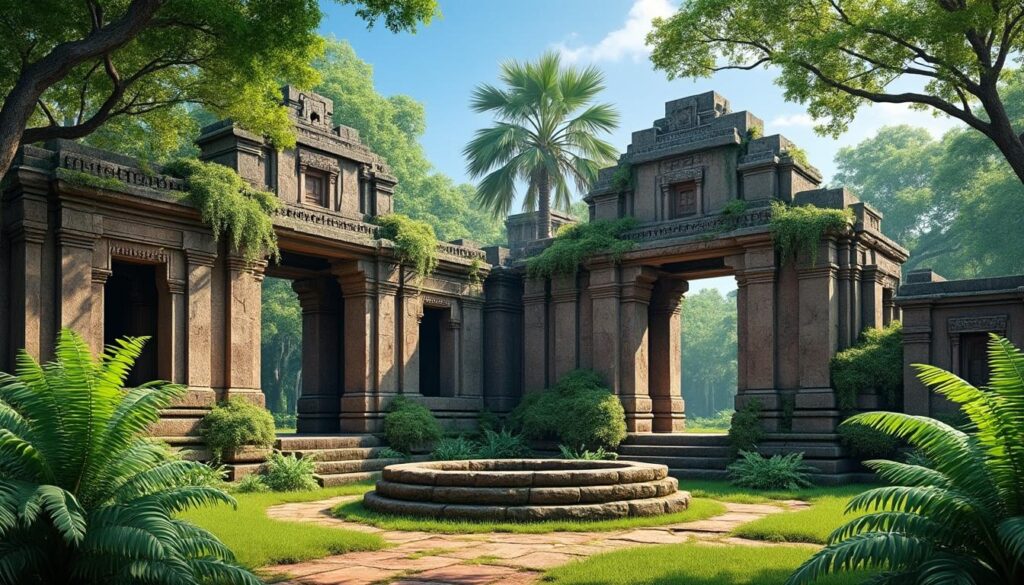
Dive into the fascinating history of Polonnaruwa, the ancient capital of Sri Lanka and a jewel of the Cultural Triangle. Renowned for its spiritual wealth and remarkably preserved archaeological remains, this ancient city spans over 120 hectares, offering visitors a stunning glimpse into Buddhist and Hindu heritage. From its giant Buddhas to the majestic structures of the Royal Palace, every corner of Polonnaruwa tells a story, enchanting those who venture there.
Polonnaruwa, the former capital of Sri Lanka, is a remarkable site that bears witness to a rich and fascinating history. Spanning over 120 hectares, this destination embodies the grandeur of Sri Lanka’s past through its well-preserved remains and deep spirituality, particularly with its monumental statues. In this article, we will explore the various facets of this city with unmatched charm, its location, rich history, main sites to visit, as well as practical tips to make the most of this cultural marvel.
Location and access to Polonnaruwa
Polonnaruwa is nestled in the northeast of Sri Lanka, within the North Central Province. Easily accessible, it is located about 45 km from Sigiriya and 80 km from Dambulla. This site is an integral part of the Sri Lankan Cultural Triangle, a region rich in cultural and historical heritage.
To explore this ancient city, it is recommended to rent a bicycle or a tuk-tuk. While walking is possible, it is often more practical to opt for these means of transport, especially considering the long distances between some sites. In general, the visit can easily extend over half a day or more, depending on the chosen pace.
A rich and fascinating history
Polonnaruwa was founded in the 10th century and thrived as the political, religious, and cultural center of Sri Lanka for over two centuries. Under the reign of King Vijayabahu I, the city was restored after suffering from the ravages of Indian invasions, marking the beginning of a period of great prosperity.
Under his successor, Parakramabahu I, various ambitious projects were initiated. Notable among them is the construction of vast irrigation reservoirs, such as the famous Parakrama Samudra. This impressive artificial lake played a crucial role in agricultural development. Over the years, Polonnaruwa became an important center of Buddhist learning, attracting monks and scholars from across Asia, making it a place of great educational significance.
Unfortunately, after the death of Parakramabahu I, the city gradually declined. Subject to conquests and conflicts, Polonnaruwa was ultimately abandoned, but the remnants of its glorious past continue to amaze visitors today.
The must-see sites of Polonnaruwa
Polonnaruwa houses several iconic sites that deserve special attention. Three places stand out in particular: Gal Vihariya, the Royal Palace, and the Quadrangle.
Gal Vihariya and its giant Buddhas
The Gal Vihariya site is undoubtedly the most famous point of interest in Polonnaruwa. It features three majestic sculptures of Buddha, carved from rock. The reclining Buddha, measuring 15 meters, is particularly impressive. Its beauty and serenity transcend even the most skeptical visitor.
The peaceful setting of the site invites meditation and contemplation. The other statues also exhibit significant postures. Whether it’s the seated or standing Buddha, each piece tells a deeply spiritual story.
The Royal Palace of Polonnaruwa
The Royal Palace is another major attraction. Although only ruins remain, the remnants evoke the grandeur of a bygone era. Only one wall still stands, but the intricacy of the sculptures and architectural details testify to the skill of the artisans of that time.
This royal complex included sumptuous apartments, reception halls, and meticulously maintained gardens. Visiting this place allows you to immerse yourself in the world of the monarchs who shaped Sri Lanka.
The Quadrangle of Polonnaruwa
Finally, the Quadrangle is another fascinating place to explore. It features several statues of Buddha as well as other deities, some unfortunately mutilated, but all imbued with beauty. A soothing atmosphere reigns in this historically rich site, enhanced by the presence of playful monkeys that add a special charm to the visit.
Practical tips for visiting Polonnaruwa
Here are some tips to help you plan your visit to Polonnaruwa. To start, it is best to explore the site by bicycle. This allows you to enjoy every nook and cranny while respecting the tranquility of the place. You can easily find bikes for rent near the entrance of the historical site.
If the heat or physical constraints prevent you from cycling, a tuk-tuk is an excellent alternative. Expect to pay about 3000 rupees for half a day of exploration. It is also possible to explore the site on foot, but this requires dedicating an entire day to it.
- Entry ticket: around $25 for adults, $12.50 for children.
- Opening hours: from 8 AM to 5 PM.
- Recommended duration on site: between 4 and 5 hours.
Where to stay and eat in Polonnaruwa
To fully enjoy this visit, it is advisable to stay nearby. The Tishan Holiday Resort offers good value for money, with a warm welcome. For those looking for a bit of luxury, the Ekho Lake House is ideal, with breathtaking views of the lake and quality service.
Don’t miss the chance to have lunch at Priyamali Gedara, a traditional restaurant serving a delicious curry with 20 different dishes. It is an authentic experience to savor in a sublime setting, a true haven of peace in nature.
Polonnaruwa is a fascinating destination that will immerse you in the heart of Sri Lanka’s history. Let yourself be enchanted by the magic of its landscapes, its majestic remnants, and the serenity that reigns there. A visit to Polonnaruwa is sure to leave an indelible mark on your memory.
Polonnaruwa, one of the ancient capitals of Sri Lanka, is a captivating destination that offers an invaluable insight into Sri Lankan history and culture. Spanning over 120 hectares, this ancient city is circular and easily accessible, allowing visitors to explore its wonders on foot, by bike, or in a tuk-tuk. The monumental statues, the remains, and the religious sites testify to the city’s prosperity during its golden age, making Polonnaruwa one of the essential stops of the Cultural Triangle of Sri Lanka.
Every corner of Polonnaruwa reveals architectural treasures such as the Gal Vihariya, known for its three imposing Buddha sculptures, which leave a profound impression on all who contemplate them. The Royal Palace, although partially in ruins, exudes a majestic atmosphere and allows a glimpse into the luxurious life of ancient rulers. Visitors will also be amazed by the Quadrangle, where sacred statues abound, offering a picturesque view steeped in spirituality.
Visiting Polonnaruwa is also an awareness of the challenges of the past. Although the city experienced a decline after its glory days, its ruins tell a fascinating story. The natural surroundings of the site, brimming with flora and fauna, enrich the experience and allow visitors to enjoy a serene and peaceful atmosphere.
Whether you are passionate about history, a lover of enchanting landscapes, or eager to explore Buddhist spirituality, Polonnaruwa has something to offer everyone. As you wander its paths, you will inevitably be captivated by the magic of this old capital, a true historical treasure of Sri Lanka.