Cape Town, or The Cape in French, reveals itself as a shining gem of South Africa, offering a breathtaking panorama of majestic landscapes, wild beaches, and a rich history. This vibrant metropolis harmoniously combines urban charm with stunning natural scenery, creating an environment where every street corner tells a fascinating story. While exploring the city, it is impossible not to feel the unique intensity of this place, where the modern world merges with sites of memory that resonate deeply in the hearts of visitors.
Cape Town, or The Cape, is undoubtedly one of the most magnificent destinations in South Africa. With its blend of nature, history, and creativity, this metropolis offers visitors a unique experience. From spectacular mountains to fine sandy beaches, and historic neighborhoods, Cape Town is a true gem waiting to be explored. This guide will invite you to discover its most beautiful sites, understand its urban workings, and uncover what makes the soul of this city.
A breathtaking landscape
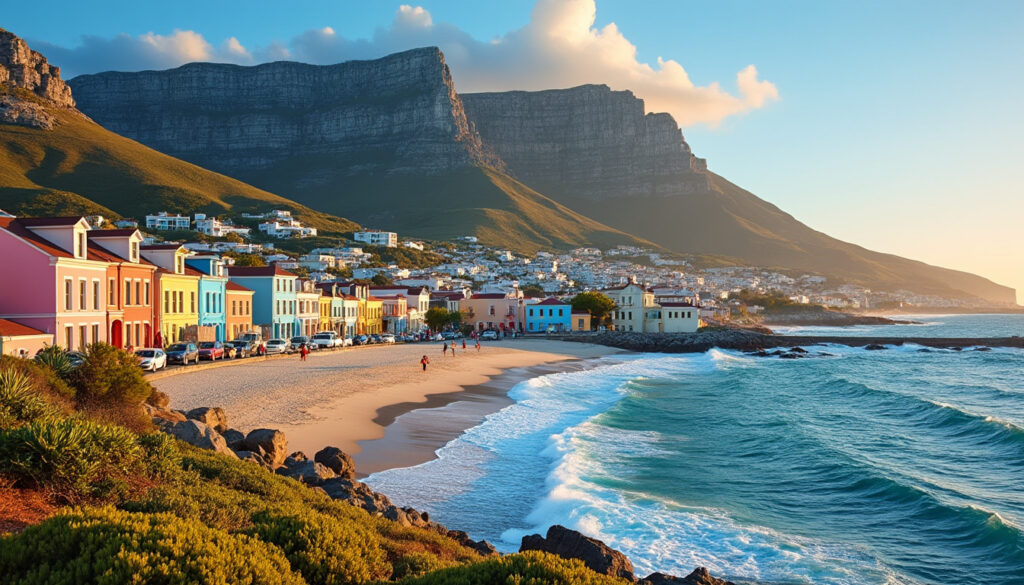
The geography of Cape Town is impressive. Bordered by the Atlantic Ocean, the city is dominated by the famous Table Mountain, an iconic mountain that attracts hikers and offers breathtaking views. The hiking trails here are varied, suitable for both amateurs and experienced walkers. Not far away, Lion’s Head offers a challenging hike with equally captivating panoramas. On the other hand, the Cape Peninsula majestically shapes itself with its steep cliffs and enchanting beaches.
The diverse landscapes are enhanced by the oceanic climate. This latter is often changeable, adding an element of surprise for travelers. The region experiences sunny days but also strong winds that sometimes send clouds over the mountain. Planning your visits taking this variability into account is essential to fully enjoy your adventures.
Discovering the colorful neighborhoods
City Bowl and its surroundings
The City Bowl is the vibrant heart of Cape Town. It is here that one finds a multitude of restaurants, bars, and shops. Long Street, with its historic and colorful facades, is one of the must-visit meeting places. The mix of locals and tourists creates a lively atmosphere, punctuated by discussions and bursts of laughter. The locals blend in easily, creating a warm and welcoming environment.
Nearby, the Bo-Kaap neighborhood is famous for its colorful houses, representative of the Malay cultural heritage. Vibrant alleys, full of stories, guide you through time and space. Stroll through these picturesque corners, respect Islamic traditions, and as a photography enthusiast, do not miss capturing this beauty.
The V&A Waterfront
The V&A Waterfront is another iconic place. By the sea, this area combines commerce, leisure, and the maritime history of the city. With fine dining restaurants and souvenir shops, there is something to please everyone. The walks along the harbor are also a delight. The harbor is the starting point to reach Robben Island, which hosted Nelson Mandela for many years. Visiting the island is both educational and moving.
The historical legacy of Cape Town
Cape Town is a city where history intertwines with modernity. The footprint of apartheid is still visible in some neighborhoods, highlighting the social evolution of the country. Visiting Robben Island is essential to understand the struggle for freedom and the sacrifices of many heroes. The tours are often led by former prisoners, giving an authentic insight into this period. It is an experience that will touch even the most stoic.
Additionally, several museums and monuments are dedicated to the memory of this struggle. Nobel Square, located at the V&A Waterfront, pays tribute to South African Nobel Peace Prize winners. It is a place for reflection and commemoration. The statues erected there remind us of the importance of peace and human rights.
Discovering local gastronomy
South African cuisine is a true reflection of its cultural diversity. Typical dishes, often stemming from the cultural heritage of various peoples, will allow you to explore unique flavors. In Cape Town, do not miss tasting potjiekos, a traditional stew, or bobotie, a meat pie made with lamb and spices. Markets like The Old Biscuit Mill offer a chance to taste dishes prepared by local chefs. South African wines are also world-renowned, thanks to the numerous surrounding vineyards, such as those in Stellenbosch.
Finally, seafood is also featured prominently, especially fresh oysters and fish dishes. Many waterfront restaurants, like those at the V&A Waterfront, allow you to taste these delights while enjoying the view. Evenings spent on the terrace, listening to the gentle sound of the waves, are unforgettable. Be sure to make reservations in advance to make the most of this experience.
Exploration of the surrounding landscapes
Outside the city, the Cape Peninsula offers beautiful landscapes. The Cape of Good Hope is a must-see for those wishing to experience the wild beauty of nature. The coastal road, Chapman’s Peak Drive, is ranked among the most beautiful in the world. With its cliffs plunging into the ocean, it is the ideal backdrop for spectacular photos.
Your days can be extended on the beaches of Camps Bay or Clifton, perfect for a quick swim or simply for relaxing. Inland, hikes through natural trails allow you to admire the local wildlife and unique flora. Remember to bring water and provisions, as some excursions can last all day.
Practical tips for a successful stay
To fully enjoy your stay in Cape Town, a few precautions are in order. Transport turns out to be a crucial question. Using Uber is recommended to easily navigate between different neighborhoods, especially at night. Renting a car is advisable to explore the peninsula or the vineyards. This provides you with more freedom.
It is essential to have a clear plan, as the city is vast and the distances between attractions can be misleading. Good preparation will allow you to maximize your time. Avoid trying to see too much in one day, as this can lead to fatigue. Balanced days between sightseeing and relaxation are often the most memorable.
Finally, remember that Cape Town is a city rich in diversity. Immerse yourself in the culture, respect the customs and traditions of the locals, and open yourself to all experiences. Whether it’s during tastings of the famous South African wines or participating in local celebrations, every moment counts.
When visiting Cape Town, it is hard not to be captivated by the breathtaking beauty of this city. Between the grand panoramas of Table Mountain, the golden beaches of Camps Bay, and the cultural vibrancy of the City Bowl, every corner of the city offers a new discovery. Cape Town is a true mix of stunning natural landscapes, rich history, and impressive cultural diversity that makes it a unique destination in South Africa.
The city is extensive and rich in contrasts, alternating between vibrant neighborhoods and protected spaces. The V&A Waterfront attracts tourists with its shops, restaurants, and lively atmosphere, while historical sites like Robben Island remind us of the legacy of the struggle against apartheid. Strolling through neighborhoods like Bo-Kaap, you can only admire its colorful houses and savor traditional dishes that reflect the mosaic of cultures present on site.
To optimize your stay, it is essential to plan your visits while considering distances and the specifics of the city. In an area where the landscape dictates the pace of strolls and where different neighborhoods are often separated by roads, understanding the local geography will allow you to fully appreciate all the facets of Cape Town. To appreciate this city as it deserves, a balanced approach between urban exploration and immersion in nature is crucial.
Finally, the warmth of the locals and the friendly welcome you will receive will make your experience even more memorable. Cape Town is not just about its landscapes; it is also about the life that pulsates there. It is this perfect combination of nature, history, and friendliness that makes Cape Town a gem of South Africa.