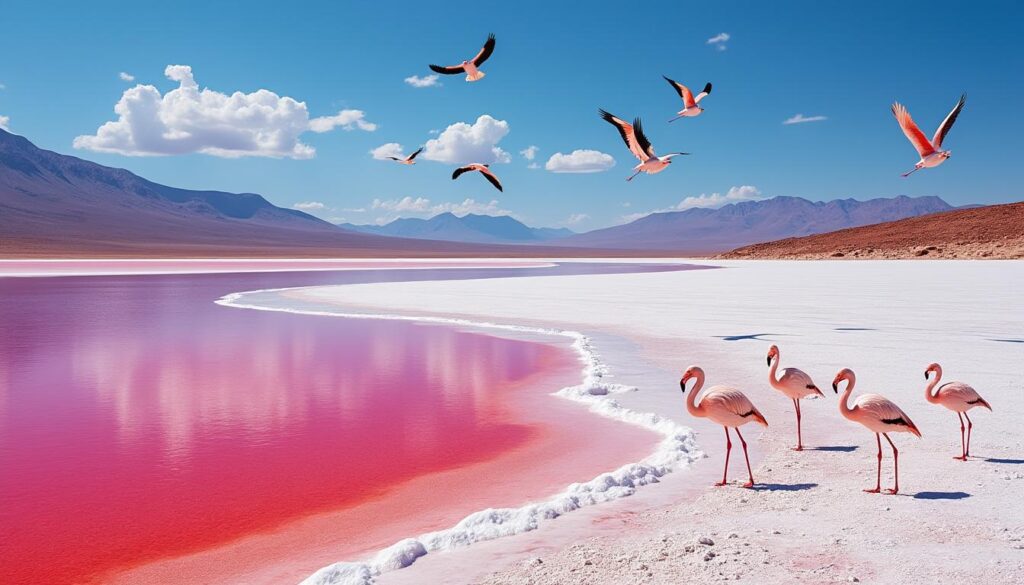
At the heart of Tanzania lies Lake Natron, a true natural gem that attracts enthusiasts of unique landscapes and biodiversity. Nestled in the Great Rift Valley, this astonishing lake is often adorned with vibrant hues that change with the seasons. Its extreme environment is home to a wealth of unforeseen life, particularly the lesser flamingo, which finds refuge in this fascinating ecosystem. In this article, embark on a captivating journey through the wonders hidden within Lake Natron and discover its exceptional features.
Lake Natron, a true jewel of nature, is nestled in the enchanting landscape of northern Tanzania. This body of water, often red and incredibly alkaline, fascinates travelers from around the world. In this article, we will explore the unique characteristics of this lake, its ecosystem, and the diverse experiences it offers to adventurers.
A lush panorama in the heart of the Great Rift Valley
Located in the Great Rift Valley, Lake Natron is surrounded by an impressive backdrop. It lies close to the Kenyan border, at an altitude of approximately 600 meters, and is dominated by the majestic volcano Ol Doinyo Lengai. This site is easily accessible from the city of Arusha, providing visitors with an unforgettable adventure. The roads leading to the lake cross preserved lands and breathtaking landscapes.
The shores of the lake present a variety of fascinating colors at sunrise and sunset. The red and pink hues created by salt deposits add a magical touch that few places can boast. The water itself is sometimes tinted red due to the microorganisms that thrive within it, creating a true work of natural art.
An astonishing color: why is the lake red?
The mysterious hue of Lake Natron can be explained by the presence of halophilic microorganisms. These organisms, such as cyanobacteria, thrive in an environment rich in sodium salts. During the dry season, the water evaporates, concentrating the minerals and intensifying the color of the lake. This phenomenon can transform the water into a breathtaking visual spectacle, particularly during the dry months from July to October.
It is important to note that this color is not permanent. During the rainy season, the lake may appear gray, muddy, or even pale green, unexpectedly altering the landscape. This variability is a fascinating characteristic that offers visitors a unique experience with each visit.
The lesser flamingos: thousands of feathered visitors
Another of Lake Natron’s natural wonders is its colony of lesser flamingos. Each year, millions of birds come to breed, attracted by the presence of spirulina, their preferred food. These graceful birds often gather on salt islands, creating an unforgettable visual spectacle, especially at sunrise when they take flight.
To witness this exceptional scene, an early morning visit is the best option. Indeed, the flamingos are more active and the chances of seeing them take off are maximized. However, it is important to observe these magnificent creatures from a respectful distance to avoid disturbing them.
Activities not to be missed around the lake
Lake Natron is not only about its fascinating colors and flamingos. Visitors can also explore various sites nearby. Here are some suggestions:
- Ngare Sero Falls: A hike well worth the trip. This trail leads to a hidden waterfall, offering a welcome respite in this arid region.
- Ascent of Ol Doinyo Lengai: For thrill-seekers, this climb is a must. Expect stunning views at the summit, especially at sunrise.
- Meeting the Maasai: Immersed in local culture, visitors can discover the traditions and ways of life of this fascinating people.
Every experience around Lake Natron is not just an adventure but a means to connect with nature and local cultures. A trip here becomes a true immersion in a unique world where calm and beauty reign supreme.
Be cautious of the extreme environment
While Lake Natron is exceptional, it also presents significant challenges. The water is highly alkaline and can reach extreme temperatures, sometimes exceeding 50°C. This combination makes swimming not only dangerous but also inadvisable.
It is crucial for visitors to respect these conditions by following the advice of local guides. These precautions allow for enjoyment of the environment without putting one’s health at risk. The intensity of the heat and the natural elements remains an essential characteristic of the area.
The myth of petrified animals
Lake Natron is often surrounded by myths, particularly the one about the petrification of animals. This legend is fueled by iconic photographs showing birds found on the shores of the lake. In reality, the alkaline water can cause severe damage to animals, but it does not instantly turn them to stone.
Dead animals may retain some of their features due to the chemical conditions of the water, but this should not be interpreted literally. The phenomenon is fascinating, but it is often an exaggerated perception.
Lake Natron is a true wonder of nature that fascinates with its beauty and unique character. Located at the heart of the Great Rift Valley, this lake offers breathtaking scenery, blending pink and red hues due to the presence of microorganisms and salt deposits. Leading its visitors into an almost unreal world, it is a must-visit for anyone wishing to explore the wilderness of Tanzania.
The surrounding landscape is just as impressive, with the Ol Doinyo Lengai volcano majestically looming at the lake’s edge. This sacred volcano for the Maasai also attracts adventurers looking to attempt its ascent, presenting a significant challenge but an incomparable reward at the summit: panoramic views of the lake and its colorful shores.
Lake Natron is also known to be the main breeding site for the lesser flamingo in East Africa. Observing these thousands of birds, often gathered on salt islands, is a magical moment that will delight nature lovers and photographers. The colors and movements of the flamingos create a lively, dynamic, and extremely photogenic scene.
Nonetheless, it is essential to respect this fragile environment and be aware of the extreme conditions that prevail in this region. The lake’s water, although captivating with its colors, can present dangers, making swimming prohibited. Therefore, a visit to Lake Natron should be carried out with caution and preparation, to discover this wonder while ensuring safety.