In the heart of Kenya, in the southwest of the country, lies the Masai Mara, one of the most iconic nature reserves in Africa. This fascinating wildlife sanctuary is home to spectacular biodiversity, where the famous Big Five share their space with millions of herbivores during the great migration. In this wild land, the grand landscapes and encounters with wildlife offer visitors an unforgettable experience. Beyond its natural riches, the Masai Mara is also home to the Maasai, an indigenous people whose culture, vibrant through the ages, is an integral part of this magical place.
The Masai Mara is undoubtedly one of the most captivating natural reserves in Africa. Located in the southwest of Kenya, this region is a true sanctuary for wildlife. Visitors have the opportunity to observe the famous Big Five and witness breathtaking natural spectacles, notably the annual migration of wildebeests. Associated with the fascinating culture of the Maasai people, the Masai Mara promises an unforgettable adventure in a wild setting.
A rich and diverse ecosystem
The Masai Mara spans approximately 1,510 square kilometers within an ecosystem of 2,500 km². This sanctuary is a true crossroads of biodiversity. With over 95 species of mammals and more than 400 species of birds, the richness of the wildlife here is exceptional. The varied landscapes, ranging from sunlit savannas to serene lakes, create an enchanting panorama for all who traverse its lands.
The coexistence of humans and animals is one of the most unique features of this region. Indeed, the Maasai have managed to preserve their traditions while living in harmony with nature. They share this space with wild animals, providing an authentic perspective on life in this reserve. Visitors can thus observe herds of cattle while admiring the majestic elephants and graceful leopards.
The great migration, a spectacle not to be missed
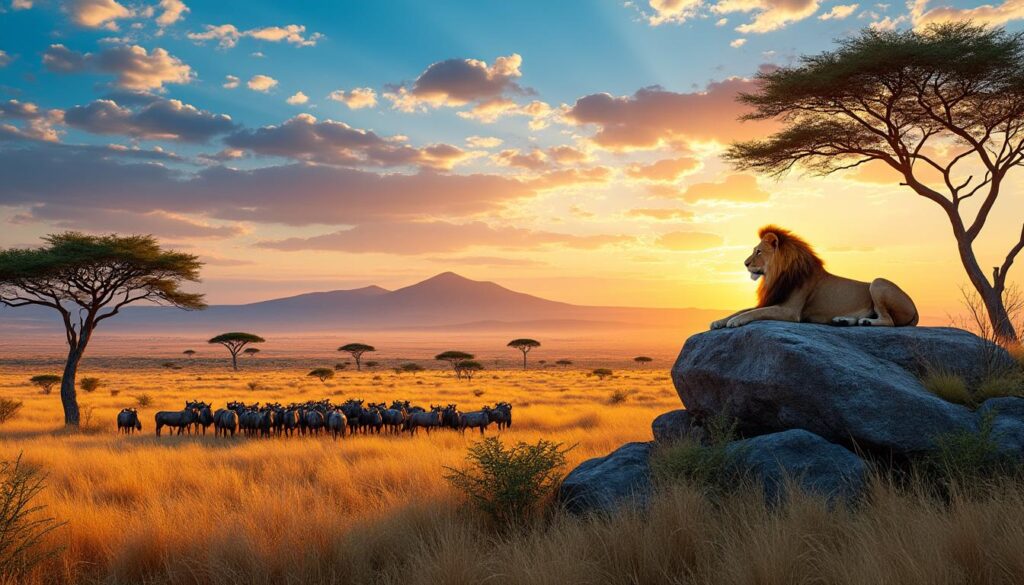
Every year, an incredible event takes place in the Masai Mara: the wildebeest migration. Millions of herbivores, such as zebras and gazelles, connect the Serengeti National Park to the Masai Mara reserve. This migration is marked by a dangerous crossing of the Mara River, where crocodiles and predators lie in wait for their prey. Visiting the Masai Mara between August and September allows one to witness this breathtaking spectacle.
- The river crossing is a perilous moment for the animals.
- Lions and leopards take this opportunity to hunt.
- It’s a true natural ballet that fascinates photographers and nature lovers.
Visitors also have the chance to observe this migration from privileged viewpoints. Whether on a jeep safari or a hot air balloon flight, every moment spent watching the herds in motion is a memory etched forever. The magic of the breathtaking panorama, along with the intensity of this spectacle, makes it an exceptional experience.
The cultural capital of the Maasai
The Maasai people, whose name means “the people of the Maa language,” are an essential component of the identity of the Masai Mara. They practice a pastoral lifestyle, primarily relying on cattle herding. Despite modern challenges, this people have managed to preserve their ancestral customs. The Maasai offer visitors a glimpse into their culture through dances, songs, and craftsmanship, thus creating an authentic bond between humans and nature.
The Maasai villages are often open to tourists, who can discover their traditional way of life there. Through these visits, a portion of the Maasai’s income comes directly from tourism. This economic model allows them to continue their way of life without losing their cultural heritage. A fascinating contrast between modernity and tradition, their presence in the Masai Mara is a major asset for the travel experience.
Tips for preparing your visit
Visit the Masai Mara ideally during the dry season, from July to October. This is when wildlife observation is most rewarding. It is recommended to book your stay in advance at one of the many lodges or camps that dot the reserve. Whether it’s luxury camps or more rustic tents, there is an option for every taste. Your experience will be much more enriching if you choose accommodation close to the observation points.
Finally, remember to bring essential accessories for a successful adventure, such as binoculars, a camera, suitable clothing, and sunscreen. For more information on preparing for a safari in Kenya, explore resources dedicated to this topic, like this link.
The Masai Mara, a gem of Kenya, stands at the crossroads between wild nature and authentic culture. As visitors traverse its vast expanses, they are witnesses to an unparalleled spectacle where wildlife thrives in its natural habitat. This sanctuary is especially known for hosting the Big Five – lions, leopards, elephants, buffaloes, and rhinoceroses – but it goes far beyond this fame.
The annual migration of wildebeests, zebras, and gazelles attracts thousands of enthusiasts eager to observe this unique phenomenon in the world. This perilous journey across the Mara River, where predators lurk, offers an unforgettable experience and evokes intense emotions. The landscapes, between golden savannas and tumultuous rivers, add to this enchanting picture, creating an atmosphere that is both wild and serene.
The contact with the Maasai people further enriches this experience. Their traditional way of life, combining pastoralism and respect for nature, represents a fascinating cultural heritage. The harmonious coexistence between wildlife and the Maasai embodies what environmental respect should be in a constantly evolving world.
Finally, whether on a jeep excursion or a hike, every moment spent in the heart of the Masai Mara is an invitation to rediscover the beauty of our planet. It is a journey that one never forgets, an immersion into an authentic, wild, and primordial Africa that will surely touch the hearts of all who venture there.