For a first trip to Norway, it is better to set the postcard aside for a moment: fjords, mountains, and winding roads extend the journeys much more than one might imagine. By choosing the right season, a region to explore, and an appropriate mode of transport, you will lay the groundwork for an unforgettable itinerary without chasing kilometers.
Preparing for a first stay in Norway means choosing a direction before getting swept away by the fjords, mountains, and roads that wind around the landscape. To fully enjoy the trip, it is better to create a realistic route rather than trying to see everything in a few days. The season, distances, means of transport, and budget form the essential landmarks of a well-thought-out adventure.
On a map, certain stages may seem close. On-site, the fjords to navigate around, the mountain passes, and the ferry crossings can considerably lengthen the journey. A successful itinerary therefore leaves room for unforeseen events, breaks, and discoveries that were not on the agenda.
Before booking your activities, lay the groundwork: how many days do you have, when are you leaving, and which region appeals to you the most? These answers will naturally guide your choices. They will also help you avoid turning your vacation into a race against time.
Determining the length of stay and the pace of the stages
With seven to ten days on-site, focus on a specific area. You could, for example, travel from Oslo to Bergen or explore a few fjords on the west coast, without multiplying the long driving days. For a stay of two or three weeks, it becomes easier to combine two distinct regions, as long as you keep reasonable transition days.
In Norway, kilometers do not tell the whole story. On secondary roads, speeds are often limited, and actual driving slows down with turns, narrow passages, and frequent stops. Add to this the wait for ferries, and a route that seemed simple can take up a good part of the day.
Allow for a comfortable margin between your stages. An average of 150 to 200 kilometers per day serves as a useful guideline for a driving trip, without being an absolute rule. It gives you time to enjoy a viewpoint, go for a hike, or change your plans if the weather turns bad.
Choosing the season based on your desires
The summer season, from late spring to early autumn, generally offers the greatest choice of open roads. The days stretch out, and north of the Arctic Circle, the midnight sun can sometimes give the impression that the evening will never end. It is a pleasant season for hiking, scenic crossings, and impromptu stops.
Winter reveals another Norway, made of snowy landscapes, long nights, and, in the north, opportunities to observe the Northern Lights. Conversely, some mountain passes and tourist routes close, while available light decreases significantly. It is then necessary to check road conditions and choose a vehicle suited to the season’s demands.
The weather remains changeable, even when the calendar seems promising. Plan to wear layers, have rain protection, and suitable shoes for the terrain. To find other ideas for European escapes off the beaten path, also discover these secret getaways in Europe.
Choose a region rather than trying to cover it all
Norway stretches from south to north across a vast territory, and its landscapes change with latitude. Crossing the country from end to end in two weeks is not impossible on paper, but it may leave little time for exploration. For a first trip, selecting a large region makes the journey smoother and more memorable.
Ask yourself what attracts you the most: the fjords, mountains, Arctic islands, or inland forests. Once you have chosen your priority, build your days around it. The detours will then make sense, rather than just adding up without providing any breathing space.
The west coast, between fjords and scenic roads
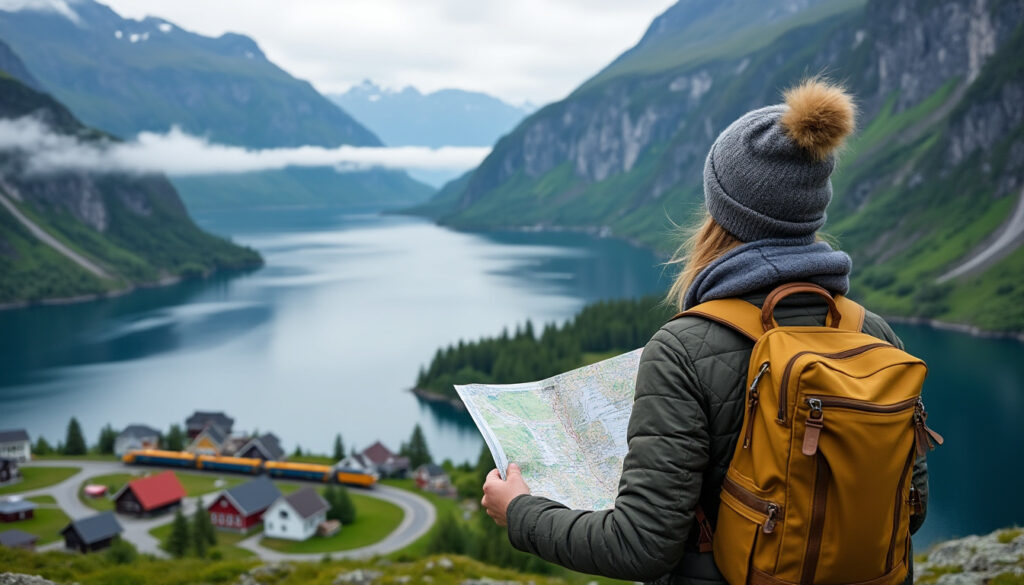
The western coast collects some of the most famous landscapes of the country, with its deep sea arms, villages, and steep reliefs. Bergen, Stavanger, and Ålesund can serve as practical starting points for organizing the stages. The roads there are sometimes winding, and ferries are an integral part of the journey.
Distances often seem modest, but travel times can be surprising. It is better to plan for fewer kilometers and allow for breaks near the fjords, rather than trying to rush through the sites. To add a spectacular stop to your inspiration, take a look at this presentation of the Atlantic Road in Norway.
In this region, a beautiful route can mix sailing, small roads, and walks by the water. However, be sure to check the ferry schedules before finalizing your overnight stays. A missed departure can change the rhythm of an entire day.
The Arctic north, for islands and wild horizons
Tromsø, the Lofoten Islands, Vesterålen, and Senja Island offer stunning panoramas, between steep peaks and open sea. The north is particularly well-suited for a stay focused on landscapes and outdoor activities. In summer, long days invite extended outings; in winter, darkness becomes part of the experience.
Services may be distant from each other, especially in the less populated areas. Anticipate the distances between gas stations, shops, and accommodations, and book your nights early when traveling in high season. This precaution also matters in winter, a period that attracts many visitors hoping to catch a glimpse of the lights in the sky.
The north is best discovered with a flexible itinerary. Keep some time slots free for a hike, a change in the weather, or a worthwhile stop. Patience is part of the journey here.
The east and center, between plateaus, valleys, and national parks
Far from the coastline, the eastern and central regions reveal forested valleys, high plateaus, and areas suitable for hiking. The national parks of Jotunheimen, Rondane, or Dovrefjell can become the heart of a stay focused on walking and nature. The roads there are often more direct than in the west, which facilitates certain connections.
This part of the country allows for varied atmospheres without systematically seeking the most famous panoramas. You can combine a day of driving with several nights in the same valley, then head out to explore the nearby trails. This is an interesting option for slowing down and reducing the changes of accommodation.
Select a mode of transport suited to your itinerary
The car offers great freedom, especially if you want to reach isolated villages or make several stops along the way. However, it requires staying alert on narrow roads, in tunnels, and when encountering large vehicles. Also, factor in tolls, ferry crossings, and parking in your budget.
The automated toll network, associated with the AutoPASS system, covers many routes, bridges, and tunnels. The fees can accumulate without immediate payment at a barrier, making it important to check the conditions applicable to your rental vehicle. In cities and near hiking depots, parking is often regulated and charged.
An electric car can be a practical solution: Norway has a well-developed charging network. To travel smoothly, identify charging stations on your itinerary and plan stops in less dense areas. Specialized applications facilitate this preparation.
If you prefer not to drive, the train serves cities such as Oslo, Bergen, Stavanger, Trondheim, and Bodø. Beyond the latter city, the rail network does not cover the north of the country. Sea connections then take over: the coastal express serves many ports between Bergen and Kirkenes, and can transform a transfer into a true stage of the journey.
Compose a road trip or prioritize the van
A road trip allows you to adjust the stages according to your desires, but you must accept that some journeys may take longer than expected. Book your vehicle early, especially during the summer season, and check the conditions related to that season. If you plan to sleep in a van, familiarize yourself with local rules and authorized locations.
The van provides appreciated freedom, provided you do not confuse autonomy with lack of preparation. You must anticipate where to spend the night, the services available, and the parking rules. This guide for planning a van road trip can help you structure the practical aspects before departure.
Prepare a realistic budget and comfortable nights
The cost of living is high and accommodation can represent a significant share of expenses. Hotels are not the only option: hytter, these cabins found in campsites, offer different levels of comfort. For several travelers, their equipped kitchen can also help manage the budget for meals.
Doing some shopping and preparing some meals yourself often reduces daily expenses. Restaurants remain a great way to discover local cuisine, but it is useful to include them in a predetermined budget. Also, consider tolls, ferries, fuel or charging costs, as well as parking fees.
Prices and access conditions can change depending on the routes and the time period. Before departing, check the official information about mountain pass openings, road conditions, and tolls with the Norwegian Public Roads Administration. This check allows you to adjust a stage before it becomes an unpleasant surprise.
Book at the right time without locking in every day
In highly sought-after areas, the accommodation supply is limited and demand can rise quickly in summer. Prioritize booking difficult-to-replace nights, especially near islands or popular natural sites. This way, you can maintain more freedom for the intermediary days.
Compare options based on their location, not just their price. A cheaper accommodation, but far from your next stage, can add travel time and costs. A kitchen, included parking, or flexible cancellation can also make a real difference.
To feed your list of ideas before selecting your stages, you can browse this selection of must-see places to discover. Use it as a source of inspiration, not as a checklist. The most valuable detours are sometimes those you choose on the spot.
Check your itinerary before departure
Review your route by checking driving times, ferry schedules, and reserved nights. If each day involves multiple long trips, remove a stage or add a night. A lighter program leaves more room for landscapes and unforeseen events.
Also check the seasonal conditions of the roads and activities you wish to undertake. In winter, a scenic route may be closed; in summer, construction or crowds may slow down traffic. Keep a backup solution for days when the weather does not cooperate.
Finally, prepare the equipment according to your mode of transport and your activities. Layered clothing, waterproof protection, and suitable shoes are often more useful than an overly packed suitcase. Also download the necessary maps and keep important apps handy for transport, tolls, or charging.
Maintain flexibility on-site
A well-prepared itinerary does not need to be locked in to the minute. Leave some slots open to extend a hike, stop in a village, or wait for a clear spell. Norway willingly rewards travelers who know how to slow down.
Before departure, do a final check of reservations, road conditions, and mandatory equipment. Confirm maritime routes and check the rules concerning your rental car. This way, you will have a solid foundation while retaining the freedom to adapt your days as discoveries unfold.
Prepare each stage methodically
Before booking your nights or plotting a long loop on the map, first establish the contours of your stay: dates, duration, budget, and priority desires. In Norway, these choices will determine the region to explore and the rhythm of your days. For a first discovery, it is better to dedicate a week to a specific area rather than trying to connect the south to the Far North. The fjord coast, Arctic islands, or East valleys each offer a different experience, to be chosen according to the season and desired activities.
Then evaluate your travels in travel time, not just in kilometers. A winding road, a closed pass, or waiting for a ferry can change the program for a day. Plan reasonable stages, allowing time for breaks, hikes, and changes in weather. Before departure, check road conditions, traffic situations, and crossing times. In winter, also inquire about necessary vehicle equipment and which routes remain accessible.
The choice of transport should correspond to your itinerary. A car provides flexibility, while trains and maritime connections allow for a route without driving every segment. Remember to factor in your budget for tolls, ferries, parking, and charging or fuel. To manage expenses, compare accommodations and consider hytter, often equipped with a kitchen. Booking in advance is particularly useful in highly frequented areas, where availability can diminish rapidly.
Finally, keep a margin in your planning: it will allow you to adapt a stage to the weather, extend a hike, or enjoy an unexpected landscape. A flexible roadmap, carefully prepared, leaves more room for discoveries without overlooking the realities of the terrain.