In the heart of Istanbul, the Hagia Sophia Basilica stands majestically, a living testimony to theinterconnection between theIslam and the Christianity. This exceptional monument, the masterpiece ofByzantine architecture, has crossed the centuries bearing the traces of its rich heritage. Originally built as a church in the 6th century, transformed into a mosque in the 15th century, then become a museum, Hagia Sophia embodies both the coexistence and the intercultural dialogue, making her a symbol of unity within religious diversity.
The basilica Saint Sophia, pearl ofByzantine architecture, is much more than a simple monument. Its history is a living testimony to the intercultural and religious exchanges that have marked Istanbul throughout the ages. Built in the 6th century, it has evolved from a Christian church to a mosque, and today, to a museum. This iconic building is not only an architectural masterpiece, but also a true symbol of dialogue between Islam and Christianity.
A History Dotted with Transformations
Built in 537 under the leadership of the Byzantine emperor Justinian I, Hagia Sophia first served as a church for almost a thousand years. This place of worship experienced a large religious influx. In 1453, with the conquest of Constantinople by the Sultan Mehmed II, the building was transformed into a mosque. This conversion involved significant architectural changes, such as the addition of minarets and the concealment of some Christian mosaics. Despite these changes, the spirit of the basilica remains intact.
A Spiritual Gathering Place
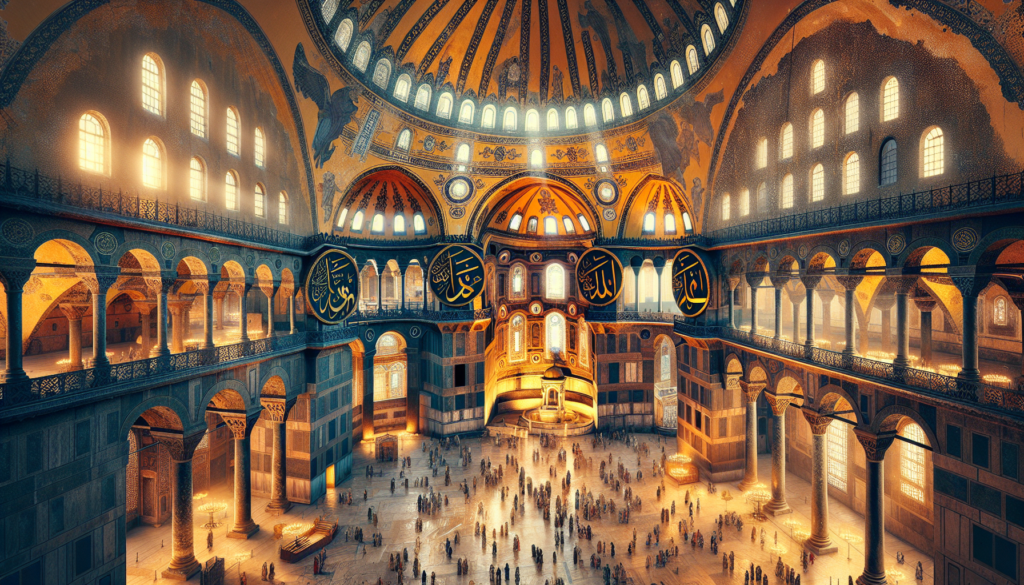
Over the centuries, Hagia Sophia has become a point of convergence for followers of the two great religions. Christian and Muslim faithful have found refuge in this sanctuary, making this space a symbol of peace. Through its walls, various religious traditions have coexisted, illustrating a sometimes rare harmony. The architecture itself tells this story of sharing: the vibrant mosaics alongside the Arabic inscriptions create a unique visual ensemble.
Moments of prayer and celebration have stood the test of time, allowing everyone to be inspired by the sacred atmosphere of the building. Whether for a Christian mass or a Muslim service, the spirit of devotion always inhabits the place. The basilica thus embodies the idea of a shared path, mutual respect and tolerance.
An Architecture that Brings Together
The Hagia Sophia is a true masterpiece of which combines Byzantine and Islamic styles. Its majestic and impressive dome is considered an architectural feat that has inspired numerous buildings around the world. This feat is distinguished not only by its dimensions, but also by its elegance: a symbol of the link between earth and sky, between the human and the divine.
Inside, Christian-style mosaics, with their depictions of saints and sacred scenes, contrast with commandments in Arabic calligraphy that highlight the Islamic heritage. This architectural marriage is a true testimony to the eventful history of the building. The light, which enters through the windows, plays an essential role in creating an atmosphere that invites meditation.
A Precious Cultural Heritage
Saint Sophia is also a tomb of history. Throughout the centuries, it has been a silent witness to major historical events. Its structure has supported reforms, wars, and socio-political developments. Today, it is listed as a UNESCO World Heritage Site, reflecting its inestimable cultural wealth.
By visiting this monument, tourists not only discover thearchitecture magnificent, but also the complexity of the stories that intertwine around this building. Every corner, every architectural detail, tells the history of the city of Istanbul and its inhabitants. This historical depth attracts millions of visitors each year, eager to understand the richness of a shared heritage.
A Reflection on the Future
Today, while being both a museum and a place of worship, the importance of Hagia Sophia also lies in contemporary discussions around cultural identity. The conversion into a mosque in 2020 has revived debates on the coexistence of traditions. How can this building continue to embody the values of tolerance and of respect ? This remains a topical question that challenges modern societies.
The need for peaceful dialogue between cultures and religions is more relevant than ever. It is up to each person to nourish this sacred space with wisdom imbued with humanity. Through a visit to Hagia Sophia, each individual can participate in this quest for unity, learning to celebrate diversity.
In short, the Hagia Sophia is a fascinating example of architecture that transcends barriers, an invitation to seek what connects us rather than what divides us.
|
IN BRIEF
|
Hagia Sophia, Istanbul’s iconic monument, represents a fascinating mix of histories and cultures. Construction of this masterpiece began in 537, marking the beginning of an unprecedented era that united Byzantine architecture and spiritual values. Initially designed as a Christian church, she became a mosque following the conquest of Constantinople in 1453. This journey demonstrates how the building was able to adapt to the different religious beliefs that have spanned the history of the city.
What truly sets Hagia Sophia apart is her ability to embody the intercultural dialogue. The golden mosaics of its interior, a heritage of Christianity, coexist with the elegant Arabic calligraphies, symbolizing the religious pluralism. Each architectural and artistic element bears witness to a rich history, where devotion and respect for religious traditions have blended harmoniously. The diversity observed in these settings recalls the possibility of peaceful coexistence between different beliefs.
By visiting Hagia Sophia, tourists not only discover a majestic building, but also a place full of meanings and reflections on humanity. This monument invites contemplation and offers a unique perspective for thinking about the future. The transformation from church to mosque to museum illustrates the many ways in which cultures influence each other over time.
Every step in this emblematic place is an encounter with history, encouraging a respectful and understanding look at the richness of cultural heritage. Saint Sophia remains a beacon of hope, offering a lesson on tolerance and harmony, in an increasingly interconnected world.