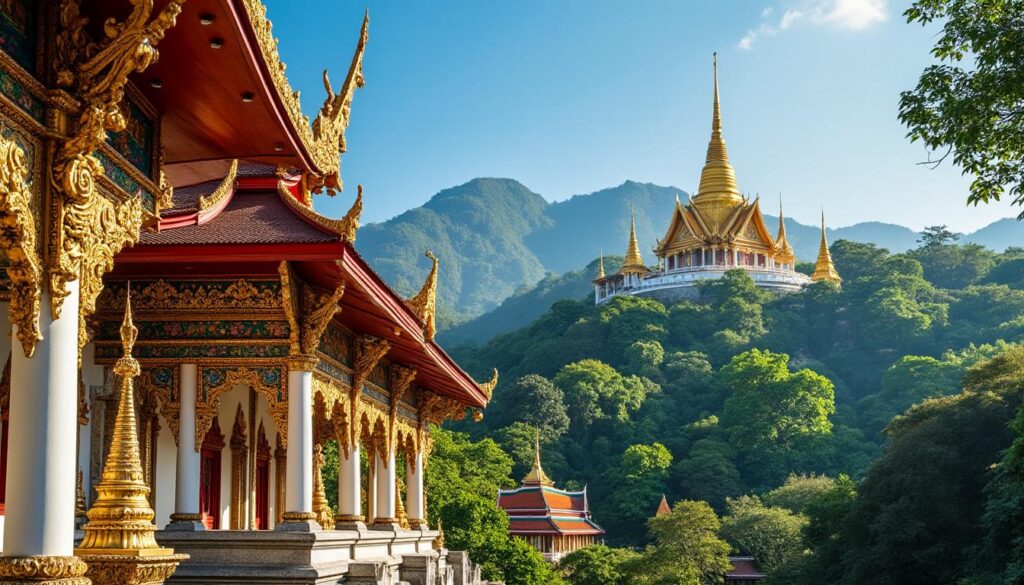
Dive into the heart of history and spirituality by discovering the must-see temples of Chiang Mai, a city that blends cultural wealth and spectacular landscapes. Each sacred structure, like a gem of ancient architecture, invites you to explore the soul of northern Thailand through its colorful murals, golden stupas, and peaceful atmosphere. No matter your path, you will be amazed by the architectural diversity and the fervor that emanate from these historical places of worship. Get ready to experience a unique spiritual journey and enrich your trip with unforgettable encounters.
Chiang Mai, a true gem of northern Thailand, is famous for its cultural and spiritual richness. The temples, or “wats”, are ubiquitous and welcome thousands of visitors each year. In this article, we guide you through the must-see temples to explore, introducing you to the fascinating architecture and captivating history that surrounds them.
The jewels of Lanna architecture
The traditional Lanna style, dominant in Chiang Mai, is reflected in the beauty of its temples. Each structure tells a story, blending cultural heritage and spirituality. Wat Phra Singh, for example, is a true masterpiece of architecture. It is a must for anyone interested in Thai culture. This temple is renowned for its superb murals and its peaceful ambiance that attracts both locals and tourists.
Wat Chedi Luang is another masterpiece. Built in the 14th century, it originally housed the famous Emerald Buddha. Unfortunately, it was damaged by an earthquake, but its majesty remains intact. The contrast between the old and the new, visible in its partially collapsed stupa, captivates history enthusiasts from all walks of life.
The perched sanctuaries
For those wishing to escape the urban heat, some temples are perched on hills. Wat Phra That Doi Suthep, at the top of the famous Doi Suthep, offers breathtaking views. Among the legends associated with this temple, it is said that a white elephant designated the location for the construction. The ascent to the temple, through its stairs adorned with naga motifs, is an experience not to be missed.
Its splendor lies not only in its golden stupa, which shines in the sun, but also in the spiritual atmosphere that reigns there. Pilgrims, dressed in Buddhist robes, add an authentic touch to this setting. Take the time to breathe in the pure mountain air while admiring the local craftsmanship that frames your path.
Local immersion through Monk Chats
For an immersive experience, allow yourself to participate in a Monk Chat at temples like Wat Suan Dok. These encounters provide a space for exchange between monks and visitors. You will have the opportunity to discuss various topics, ranging from Thai culture to monastic life. This will not only help you better understand Buddhism but also enable you to establish authentic connections.
These interactions are enriching and allow you to discover the daily life of monks while practicing your English. This type of fruitful exchange highlights the importance of community and sharing at the heart of Thai culture.
Less known yet equally captivating temples
Chiang Mai is not just a major tourist hub. Sometimes, it takes stepping off the beaten path to discover hidden treasures. Wat Umong, for example, is a unique forest temple, built in a calming setting. With its narrow underground tunnels and stone slabs adorned with statues, the zen atmosphere envelops you immediately. This place is perfect for those seeking tranquility.
Moreover, Wat Sri Suphan, known as the Silver Temple, is impressive to behold. Its façade, decorated with hammered metals, shines brightly at sunset. Local artisans spent years creating this work of art. Be sure to stop by during your visit, as it offers spectacular photographic perspectives.
Practical tips for visiting the temples
Before heading out to explore the temples, it is essential to take into account a few practical aspects. Here are some tips for a rewarding visit:
- Respect dress codes: It is advisable to wear clothes that cover the shoulders and knees.
- Plan your visits early: Morning hours offer a serene atmosphere and less crowd.
- Participate in events: Don’t miss the celebrations and festivals that take place in the temples.
Each of these elements will contribute to making your trip to Chiang Mai unforgettable and culturally enriching. Embark on a spiritual journey and let yourself be carried away by the magic of this fascinating city.
Must-see temples in Chiang Mai: which ones to explore?
Chiang Mai, the Rose of the North, is filled with architectural treasures that testify to its rich cultural and spiritual heritage. Each temple, or wats as they are called in Thai, has a unique story and offers an immersion into the local Buddhist fervor.
Wat Phra Singh is undoubtedly a must-see. Renowned for its architectural beauty and mural paintings, it attracts visitors seeking peace and contemplation. The serenity of its gardens and the elegance of its stupa make this place a true haven of peace.
Not far from there, Wat Chedi Luang impresses with its grandeur and fascinating history. Former guardian of the revered Emerald Buddha, this classified temple reflects a glorious past and invites visitors to reflect on the passage of time. Its impressive partially collapsed stupa adds a mysterious aura to the place, captivating the attention of novices and history enthusiasts alike.
For a more intimate experience, Wat Pan Tao provides a teak wood setting that evokes a warm and tranquil atmosphere. This temple, often overlooked by tourist circuits, allows visitors to soak up Thai culture away from the hustle and bustle of large crowds.
Finally, let’s not forget Wat Phra That Doi Suthep, perched on the heights of Chiang Mai, which offers a breathtaking view of the city. Accessible after climbing a thousand steps, it rewards the courageous with a spectacular panorama and a sacred place of worship steeped in legends.
Each temple in Chiang Mai tells a story, reflects Thai spirituality, and invites a journey that is both material and spiritual. These places are more than just tourist destinations; they are windows into the soul of a people and a culture deeply rooted in its traditions.