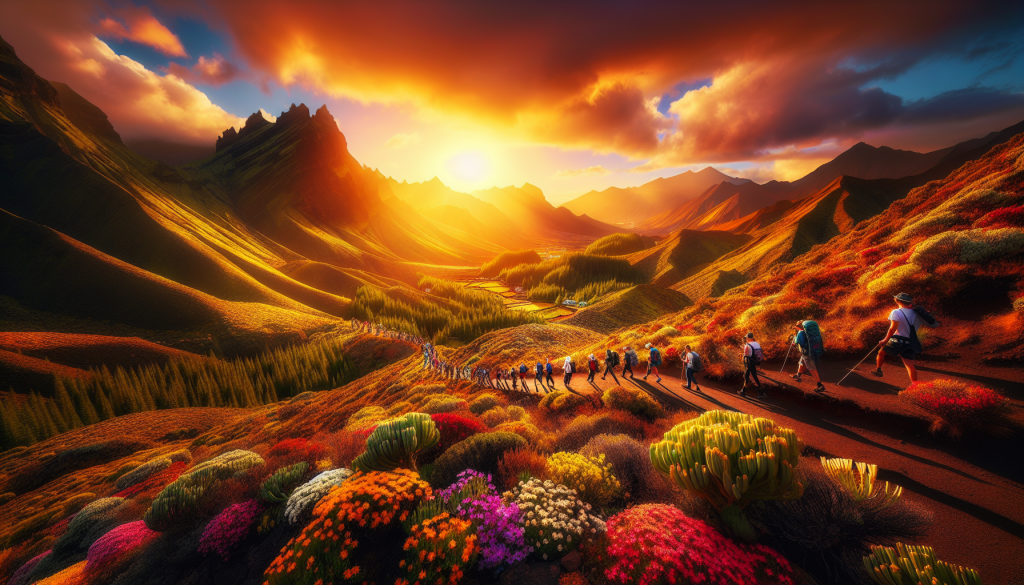
Off the coast of Africa, Canary Islands hide a rare pearl for lovers of hiking and spirituality: the pilgrimage of Santiago in Gran Canaria. Traced in the 15th century by Galician sailors and crossing the island from south to north over 66 kilometers in three stages, this path invites you to discover breathtaking volcanic landscapes and an exotic adventure in a pleasant climate. Let yourself be seduced by this xacobeo route unique in its kind, where each step is an ode to nature and history. A week of hiking in this sumptuous setting promises a total change of scenery and an unforgettable experience.
The island of Gran Canaria, well known for its golden beaches and pleasant climate, hides within it a treasure for lovers of hiking and spirituality: the path of Saint-Jacques. This unusual route crosses the island from south to north, offering grandiose landscapes and a unique immersion in the volcanic nature of the Canaries. Discover here the fascinating history of this path, the natural wonders it will introduce you to, and the essential stages of your pilgrimage adventure.
A little history: the Camino de Santiago in Gran Canaria
The astonishing story of Way of Saint James in Gran Canaria begins in the 15th century, when Galician sailors, inspired by the holy apostle, approached the coasts of the island. Eager to build a hermitage dedicated to Saint-Jacques, they traced a path which would become legendary. It was only in 1965 that Pope Paul VI officially recognized this path as an extension of the famous Camino de Santiago, making Gran Canaria the first place of pilgrimage outside the European continent.
A unique route under the Canarian sun
THE Camino Santiago Gran Canaria offers pilgrims a unique and exotic experience. With a length of 66 kilometers, it is recommended to divide this hike into three stages, allowing you to fully enjoy each moment. Starting from Maspalomas, walkers pass through stunning landscapes to finally reach Gáldar, on the north coast.
Breathtaking landscapes
Gran Canaria is often described as a “continent in miniature” due to the diversity of its landscapes. By taking the path of Saint-Jacques, hikers discover mountainous regions, green valleys and fine sandy beaches, while breathing the fresh and pure air of the Canarian heights. The views of the south of the island from the ridges are simply splendid and offer a unique perspective of this pearl of the Atlantic.
The significant stages of the route
Crossing the island by Camino Santiago Gran Canaria is done in several stages, each with its own charm and challenges. The first part of the trip often begins in Maspalomas, famous for its sand dunes and iconic lighthouse. From there, the trail gradually climbs toward the inland mountains, offering stunning views of the ocean.
From Maspalomas to Tunte
The section between Maspalomas and Tunte is full of contrasts: from arid dunes to pine forests, every kilometer has surprises in store. Tunte, also called San Bartolomé de Tirajana, is a picturesque village nestled in a fertile valley, perfect for a restorative break.
From Tunte to Cruz de Tejeda
The road from Tunte to Cruz de Tejeda is undoubtedly one of the most spectacular. Lined with breathtaking viewpoints, it offers panoramas of volcanic formations and steep valleys. La Cruz de Tejeda is a central point of the island, known for its stone cross and its craft market.
From Cruz de Tejeda to Galdar
The final stage takes pilgrims to Galdar, an ancient royal city with a rich past. En route, hikers pass through farmland and banana plantations, before descending towards the sea and concluding their journey on the magnificent beaches of the north.
An adventure not to be missed
THE pilgrimage of Santiago to Gran Canaria is much more than just a hike. It is a total immersion in the history, nature and unique culture of the Canary Islands. Whether you are looking for spirituality or outdoor adventures, this path will mark you forever. Benefiting from a pleasant climate all year round and varied landscapes, it offers a memorable experience that invites discovery and contemplation.