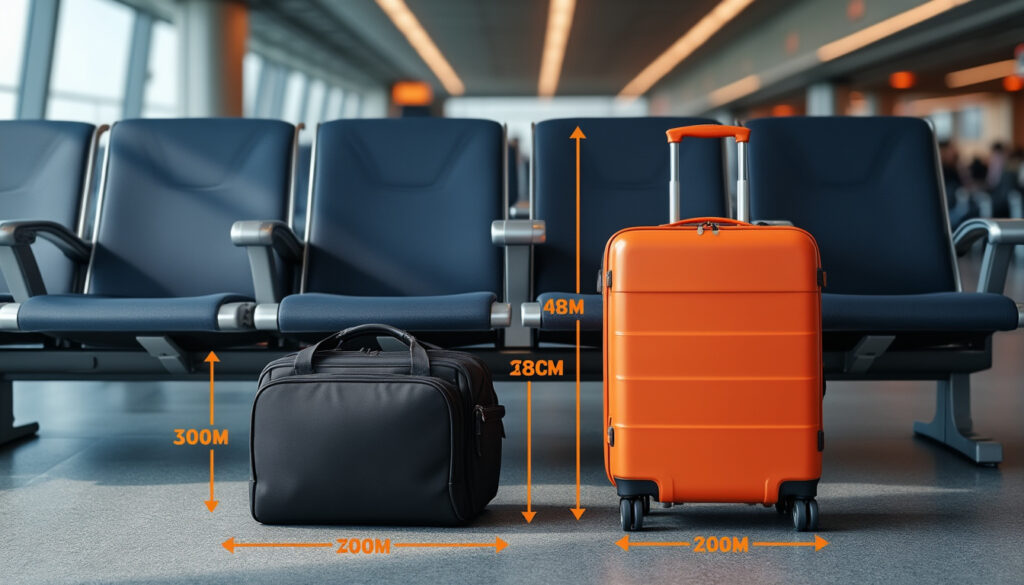
With EasyJet, the free cabin bag must measure no more than 45 × 36 × 20 cm, including handles and wheels. Larger bags require a suitable option: check the dimensions before departure to avoid fees at the airport.
With EasyJet, the free cabin bag must measure no more than 45 × 36 × 20 cm, including handles and wheels. A larger suitcase may be considered a large cabin bag, subject to a paid option, or checked into the hold at the airport for an additional fee. Here are the dimensions to check, the rules for each ticket type, and some useful tips for preparing your bag before departure.
The free size is more compact than that of many so-called standard cabin suitcases. Your bag must measure no more than 45 cm high, 36 cm wide and 20 cm deep. These measurements include any protruding parts, such as wheels, handles and exterior pockets.
This small bag must fit under the seat in front of you. Its shape makes no difference to the rule: a backpack, a sports bag or a small suitcase is subject to the same dimensions. Before you leave, check the actual measurements of your bag rather than relying solely on its commercial description.
The small cabin bag included with your ticket
With a standard booking, the fare generally includes just one small cabin bag. It can hold your personal belongings and travel essentials, as long as it meets the permitted size. A handbag or laptop bag carried separately may count as a second bag.
To avoid this issue, put small accessories in your main bag before heading to the boarding gate. This is particularly useful if you are carrying a laptop, a handbag or a pouch. The number of bags and their dimensions must be checked together, as an additional item may incur a fee even if it is small.
The large cabin bag: a size subject to conditions
The EasyJet large cabin bag can measure up to 56 × 45 × 25 cm, including accessories. This size is closer to that of a classic cabin suitcase, but it is not automatically included with the cheapest tickets. You generally need to add it to your booking or have a fare or benefit that allows it.
Depending on the conditions attached to your ticket, the option may be available with certain seats, a fare that includes priority boarding, or an EasyJet Plus membership. Benefits and prices may change, so check the conditions shown for your flight before paying. An option added in advance may cost less than a bag that is refused at boarding.
Why a standard cabin suitcase may exceed the size limit
The term “cabin suitcase” does not refer to a universal size. A typical suitcase designed to dimensions often accepted by other airlines may exceed the height allowed for an EasyJet free cabin bag. Sometimes all it takes is for the wheels or handle to make the suitcase exceed the size limit.
So don’t rely solely on the dimensions listed for the case itself. Measure your bag in its normal position, including rigid parts and exterior components. To compare different sizes and choose a model suited to your trips, also see this guide to choosing the right cabin suitcase for air travel.
Handles, wheels and pockets count
A suitcase may seem compliant when you measure only its body, then exceed the limit once the wheels are included. Fixed handles and full pockets can also increase its overall size. These details matter when your bag is checked using an airport sizing frame.
A soft bag can sometimes offer more flexibility than a hard-shell case, provided it is not overpacked. However, it must not be misshapen or compressed in an attempt to get around a limit. Check its dimensions once it contains the belongings you plan to take on your trip.
One bag or several accessories to take with you
The usual rule for a standard ticket allows one small bag to be placed under the seat. If you also want to take a handbag or laptop bag separately, first check whether your fare or option allows an additional bag. The conditions may depend on the seat you have booked or the benefits associated with your account.
Putting your belongings together in one compliant bag is often the simplest solution. Pack the items you usually keep close at hand in it, then make sure the bag as a whole meets the permitted size. The airline considers the bag as a whole, not each compartment as a separate item.
Bag checks at the airport
Your bag’s dimensions may be checked at the check-in desk or boarding gate, particularly if it looks too large. Staff may ask you to place it in a sizing frame to check that it fits within the specified limits. Wheels, handles and bulges are taken into account during this check.
If your bag does not meet the conditions of your booking, it may be checked into the hold and fees may apply. The amount depends on the rules in force for your flight and the circumstances at the time of the check; check the fee schedule provided by EasyJet, as prices may change. Even exceeding the limit by a few centimetres can therefore result in an unexpected cost.
Size and weight are two separate criteria
Meeting the size limits does not mean you can skip checking the weight rules that apply to your booking. Conditions may change and vary depending on the type of bag or option purchased. Before departure, refer to the official information for your flight.
In any case, choose a bag that you can handle and stow without difficulty. An overly heavy but compact bag can make boarding more difficult, even if it fits in the sizing frame. Distributing heavy items among your other bags can also help you organise your belongings more effectively.
Choosing between a backpack, suitcase or soft bag
A backpack that meets the size requirements is well suited to short trips and can easily fit under the seat when it is not too full. A soft bag may adapt slightly to the available space, while a small hard-shell suitcase offers better protection for certain items. The right choice depends on what you are carrying, how fragile it is and the level of comfort you want.
For a wheeled bag, pay particular attention to its overall height and exterior depth. The dimensions given by the manufacturer may not include all protruding parts. If you are buying a suitcase specifically for EasyJet, look for a model whose full measurements comply with the free size limit.
Preparing your bag before departure
Measure your bag once it is packed, then check its height, width and depth separately. Don’t just check the label or product description: accessories and contents can affect its actual size. Checking at home gives you time to choose another bag or remove a few items.
Also review your booking details to find out whether it includes only the small cabin bag or allows a larger size. If you have added an option, confirm the relevant dimensions in your flight confirmation. Keep this information handy when packing your belongings.
Checking EasyJet cabin bag dimensions
To travel with a cabin bag included in the basic fare, its dimensions must not exceed 45 × 36 × 20 cm. This measurement includes the wheels, handles and any part that protrudes from the bag. The bag must fit under the seat in front of you: this is not the suitcase size intended for the overhead locker.
The rule applies regardless of the type of bag you choose. A hard-shell suitcase, backpack or sports bag may be accepted free of charge if it fits within the size limit. A soft bag may be easier to compress, but it must still fit entirely within the permitted dimensions without forcing it or leaving a pocket, handle or wheel sticking out.
The larger size of 56 × 45 × 25 cm is for a large cabin bag. You can take one only if you have booked an option or fare that includes this allowance. Certain seats, such as Up Front or Extra Legroom seats, may also include an additional bag, depending on the ticket conditions. It is therefore worth checking the services associated with your booking before packing.
EasyJet may check bags at the check-in desk or boarding gate, including by using a sizing frame. If the free bag does not fit, it may be placed in the hold and fees may apply. It is therefore best to measure it once packed, as the fabric and pockets can affect its size. The information presented here states that the airline does not set a maximum weight for the small cabin bag, but passengers must be able to handle and stow it themselves.
Before departure, check your bag’s external dimensions and the options listed in your booking. This check helps you choose a bag suited to your ticket and avoid an expensive decision at boarding.