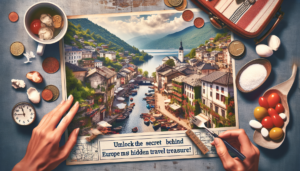
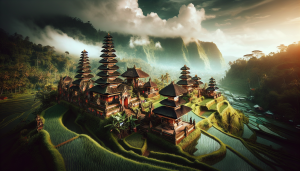
The edible landscapes of Carl Warner transform the way we perceive food by elevating it to the level of art. Enriching our imagination with stunning creations, he uses fruits, vegetables, and other goods to compose fairy-tale travel scenes. His works, known as “Foodscapes”, offer a breathtaking visual experience, redefining the boundaries between gastronomy and art while inviting us to explore a culinary world that is both delicious and inspiring.
In a world where art and gastronomy can often seem separate, Carl Warner succeeds in harmoniously bringing them together. Through his creations, he invites us to rediscover our food from a new angle, transforming fresh produce into true masterpieces. His enchanting universe, made of vegetables and fruits, transports us to extraordinary landscapes that delight the senses. This article explores the fascinating world of his foodscapes and the magic that occurs when food becomes art.
The genesis of a bold artist
Carl Warner began his artistic journey with a simple observation. While scrutinizing a market stall, he saw portobello mushrooms that inspired him to create his first work, “The Mushroom Savanna.” This bold idea marked the beginning of a series of stunning works that propelled him to the forefront of the art scene. The creation process relies on preliminary sketches, which allow him to meticulously plan every detail before embarking on the assembly of his landscapes.
For Warner, I cook when I create. Each piece requires particular attention to the selection of materials. The products must be fresh, and their presentation is equally important. His works often require several days of hard work, and every minute counts to capture the ephemeral beauty of the edible elements.
Breathtaking creations: a glimpse of the foodscapes
Carl Warner’s foodscapes are enchanting landscapes, each more captivating than the last. Here is a glimpse of some iconic creations:
- The Salmon Sea: a vast expanse of fish reminiscent of the oceans.
- The Cheese Pyramids: edible archaeological structures where cheese comes to life.
- The Broccoli Forest: a verdant backdrop where trees are replaced by vegetables.
Each of these works is made with carefully chosen ingredients. For example, in “The Celery Island,” celery stalks are transformed into idyllic landscapes. It’s a testament to Warner’s creativity, who reinvents the way we see food.
The creative process: beyond aesthetics
Creating a foodscape is a true artistic challenge. Most of Warner’s paintings require precise coordination between the arrangement of elements and lighting. Indeed, many ingredients wilt quickly, complicating the work. The artist must therefore demonstrate ingenuity and speed to immortalize his creations through the lens of his camera.
Moreover, each edible landscape tells a unique story. The Crab Cave, for example, evokes maritime adventures, while the Truffle Falls reveal the richness of flavors. Warner manages to establish an emotional connection between the viewer and his art, evoking wonder and curiosity.
A look to the future: projects and inspirations
Carl Warner continues to explore new creative horizons, even venturing into unprecedented projects. Recently, he unveiled his work on desserts by incorporating ephemeral nudes, a new approach that showcases the constant evolution of his art. The fusion between the human and nature, between gastronomy and beauty, opens up many possibilities.
If there is one takeaway, it is that Carl Warner’s creations are not limited to their visual aesthetics. They represent a call to appreciate our relationship with food, nature, and creativity. In a world where culinary and art often seem dichotomous, Warner brilliantly proves that there are bridges between these two realms.
The creations of Carl Warner offer a fresh perspective on culinary art, transforming food into extraordinary works of art. His concept of “Foodscapes” perfectly illustrates this fusion between food and creativity, where each iconic landscape is meticulously designed from fruits, vegetables, and other edible ingredients. Through breathtaking compositions such as The Mushroom Savanna or The Cheese Pyramids, Warner achieves the feat of transforming ordinary products into extraordinary visions.
Each creation of the artist begins with a thoughtful process, relying on sketches that allow him to determine the necessary ingredients to realize his visions. This process is a demonstration of his commitment to culinary art, as it requires hard work and meticulousness to implement pieces that are not only beautiful but also ephemeral. Humidity, light, and time are integral parts of the equation, adding a dimension of challenge to his work.
The growing success of his works has allowed him to expand his projects, creating increasingly monumental pieces. The Salmon Sea, the Crab Cave, and many others testify to his talent in capturing the collective imagination through flavors. By redefining what it means to “travel through food,” Carl Warner invites us not only to savor but also to appreciate the sculptural beauty of our food.
These edible landscapes are not alone but accompanied by a reflective process regarding our relationship with food and art. They raise questions about sustainable consumption and aesthetics in our daily lives. With his book “Foodscapes,” Warner succeeds in sharing this unique vision, where each page is an invitation to explore the infinite wonders of the culinary world from an artistic perspective.