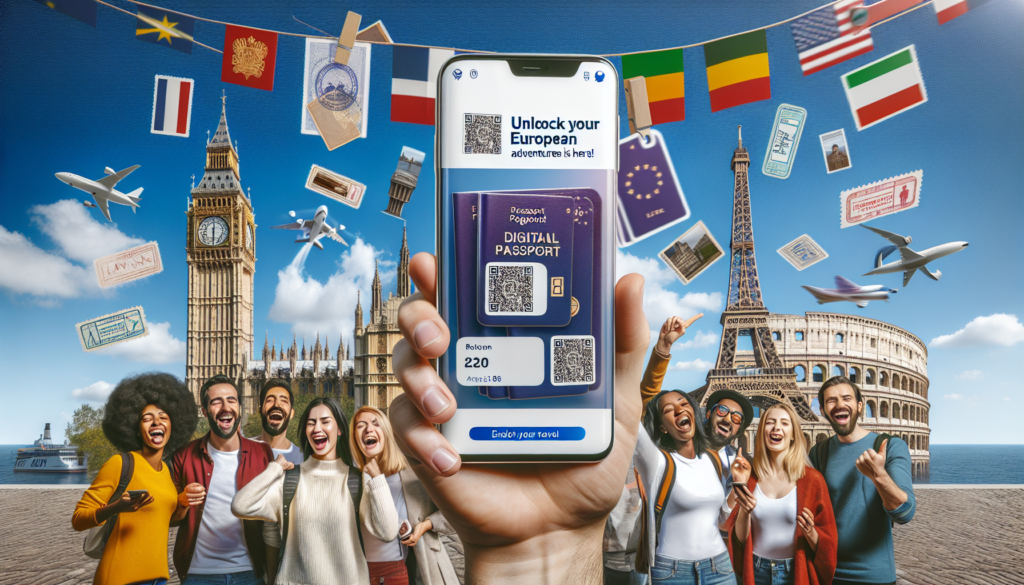
At the dawn of a digital age, the European Union is set to revolutionize the world of travel with the introduction of a digital passport on smartphone. From 2030, this initiative aims to simplify travel across Schengen area borders, providing a smoother and more secure travel experience. Travelers will no longer have to worry about long waits at checkpoints, as their travel information will be directly accessible via their mobile, promising a new era of hassle-free travel.
The European Union has announced a revolutionary initiative: the creation of a digital passport accessible on smartphone, designed to streamline travel within the Schengen area. Expected by 2030, this approach aims to improve the traveler experience while strengthening border security. Checks become faster, procedures simplified, and the objective is to offer one service at a time free and respectful of privacy.
Digital innovation for modern travelers
With the rise of digital technologies, the digitization of travel documents is essential. From now on, the information passports and identity cards can be stored on our smartphones. This innovative change will lighten the traditions linked to border controls. Travelers will no longer need to show their papers each time they pass, which will make the experience all the more pleasant.
The leaders of this project affirm that this development does not simply concern the comfort of travelers. It also aims to ensure a better security for all the countries of the Union. Technology is becoming an ally in the service of mobility.
In this approach, an essential element is the will of the European Commission to synchronize the project with the progress already put in place. In this way, users could benefit from a coherent set of digital solutions.
Reduce queues at checkpoints
The first benefit of the implementation of this digital passport will be visible to borders : clearly reduced queues. By allowing travelers to submit their information in advance via a application dedicated, the authorities will be able to anticipate flows.
This innovative system will allow police officers to focus on potentially more problematic cases, such as unlawful acts. In this way, a minimum dwell time can be guaranteed for the majority of people.
It should be noted that this approach is not limited to a quest for efficiency. By streamlining controls, the European Union is offering a concrete response to the challenges of safety while improving the user experience.
Harmonization with the new EU legal framework
Alongside this initiative, the European Union is preparing to set up a new entry and exit system by 2024. This system will consist of electronically recording the entries and exits of travelers, particularly those from outside Europe. This will complete the digital passport process.
This dual implementation reinforces the desire to create a modern and efficient security network. If this launch schedule is respected, travelers could greatly benefit from a smoother experience in Europe.
On the other hand, it must also be taken into account that certain countries, such as Ireland and Cyprus, will retain their traditional controls. This choice makes it possible to maintain cultural and security distinctions within the Union itself.
Accessibility and free: a service for all
One of the notable points of this project is that it will be voluntary and free. Travelers will not be forced to use this application for their travels. This choice should promote widespread adoption, attracting those who are already familiar with digital technologies. Everyone can then choose to participate in this revolution.
Furthermore, the European Union is banking on this attraction to modernize the travel experience. By modeling itself on the digital habits citizens, the initiative intends to offer a service in line with current expectations.
It is hoped that by 2030, travelers from all walks of life will be able to enjoy a streamlined and secure process. This could in particular contribute to thetourist attraction of Europe, making the continent even more accessible.
A promising future for travelers
As expectations grow for this breakthrough, it is important to evaluate its impact through multiple lenses. The combination of digital storage and upstream controls represents a paradigm shift in the management of travel in Europe. The watchwords: secure while streamlining.
The first planned tests should help refine the process, ensuring that security concerns remain at the forefront. With a homogeneous environment and automation, the European framework is preparing to welcome a new era of mobility.
Until official implementation, there are resources, such as 9 essential tips for flawless travel organization, which can already prove useful for those who plan to venture beyond borders.
|
IN BRIEF
|
The
European Commission is moving resolutely towards an era of modernization of the travel experience by introducing the concept of the digital passport accessible on smartphone. Planned by 2030 , this initiative marks a decisive step towards simplifying border crossing, integrating a digital approach to the movement process within the Schengen area.The use of this digital passport is a suitable response to the expectations of an increasingly connected generation of travelers. By digitizing
passports and identity cards , users will benefit from a smooth control process, thus reducing the waiting and stress often associated with customs clearance. It will now be possible tosubmit travel information in advance , which will allow security officers to focus on potentially risky cases, thus ensuring an improvement ingeneral security while streamlining checks. Beyond simplifying travel, this project also underlines the European Union’s commitment to adopting digital solutions to meet contemporary challenges. By offering a free and voluntary service
, the Commission hopes to encourage the adoption of this technology by as many travellers as possible, thus making Europe more attractive to visitors from all over the world. In short, the introduction of the digital passport and its integration with the futureentry and exit system
heralds a real revolution in the way we travel. This innovation, although still in the planning phase, looks promising, combining security and ease , and redefining the standards of international travel in the years to come.