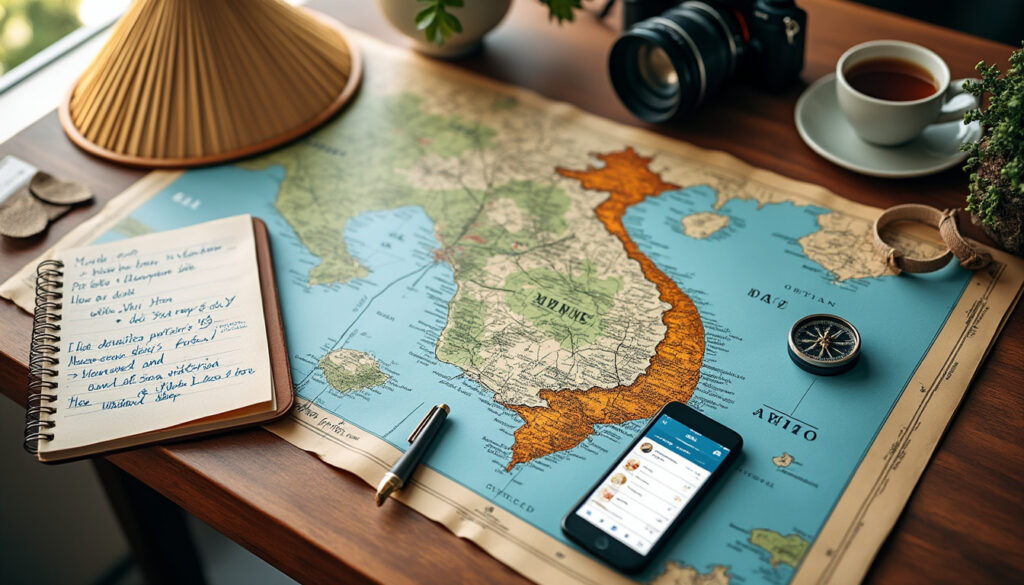
The Vietnam, a true gem of Southeast Asia, captivates with its stunning landscapes and captivating culture. If you are considering a trip lasting 2 to 3 weeks, it is essential to prepare your itinerary well to make the most of this adventure. With its majestic mountains, lush rice terraces, and delicious cuisine, Vietnam offers an authentic experience combining discovery and wonder. We will guide you through the key steps to create a balanced and unforgettable itinerary.
Vietnam is a destination rich in contrasts and adventures. For those planning a trip of 2 to 3 weeks, it is crucial to organize an optimal itinerary. This article offers suggestions for balanced itineraries, covering natural and cultural wonders while ensuring you manage your budget. Whether you are an adventurer in search of breathtaking landscapes or a culture enthusiast, Vietnam has something to offer every type of traveler.
Establishing the ideal budget for your trip
First and foremost, a successful trip begins with appropriate budget planning. In 2026, prices in Vietnam remain very affordable, but it is vital to inform yourself about the expense categories. For a two-week stay, expect to spend between €1,500 and €2,200 per person. This includes accommodation, food, transportation, and activities.
A small budget of €23 to €32 per day is achievable, amounting to approximately €650 for two weeks on site. However, these figures do not include international flights. Remember that choosing an adventurous travel style can save you even more.
The best destinations for your itinerary
Vietnam is a land of contrasts. Depending on your length of stay, here are some destination suggestions to explore.
For a 14-day trip, focus on the North and the Central regions. Start in Hanoi, soak in its vibrant culture, then head to Ha Long Bay to admire its spectacular landscapes. Ninh Binh is also a must-see, with its rice fields and karst formations. You can then go to Hue, the former capital, before heading to Hoi An, a popular place for its lanterns and cuisine.
If you have three weeks, add Ho Chi Minh City in the South and the Northern mountains, like Sapa. It’s a chance to discover the terraced rice fields and other hidden treasures!
Three sample itineraries: 2 weeks in depth
A balanced itinerary between North and Central
A 14-day stay should prioritize the key highlights. Hanoi, the capital, is a must-visit. Stroll through the Old Quarter and enjoy a phở on the street. Then, set out to discover Ha Long Bay with its majestic rocks. Ninh Binh awaits you for biking through bucolic landscapes.
Continue your journey in Hue, where you will visit its Citadel and enjoy the Perfume River. Finally, make a stop in Hoi An to admire its romantic atmosphere and talented artisans.
A complete adventure from North to South
For nature-loving adventurers, choose the North after exploring Hanoi. The rice fields of Sapa or the Ha Giang loop are top choices. Renting a motorcycle to traverse breathtaking mountains offers an experience and opportunities to meet local communities.
This immersion continues with a discovery of Ho Chi Minh City. Explore its museums and markets. The Mekong Delta completes the picture, with its floating markets and peaceful boat rides. Don’t forget to look for small local agencies for good deals.
Practical tips to lighten your expenses
Saving while traveling is possible! Follow these practical tips for a worry-free stay in Vietnam.
- Accommodation: Choose hostels or homestays at around €10-15 per night. The contact with the local population is invaluable.
- Food: Street food offers delicious dishes for €2-5. Try the markets for tasty fresh fruits.
- Transportation: Prefer local buses for long distances. The Grab app is a valuable ally.
- Activities: Entrance fees to temples are often low. Compare excursion prices and negotiate.
By incorporating these tips, you will maximize your experiences while sticking to your budget. Every saved cent will be an opportunity to discover a new place!
Unique experiences not to be missed
Beyond the classic visits, Vietnam is full of gems to discover. For example, the Ha Giang loop is a must for nature lovers. The Ban Gioc waterfalls and Ba Be Lake offer sublime landscapes, far from the crowds.
In the Mekong Delta, don’t limit yourself to floating markets! The flooded forest of Tra Su is a fascinating ecosystem to explore. For beaches, Phu Quoc and Con Dao are ideal. These places will help you endure a small budget.
Practical information: visa and best time to visit
In preparation for your trip, know that most nationalities must obtain a visa to enter Vietnam. Between the cost and the validity period, check the specific requirements.
For a successful trip, choose your timing. From February to April and October to November, the climate is favorable, offering pleasant conditions in all regions. Avoid the rainy season to make the most of outdoor activities.
By following these practical tips, you will be ready for an unforgettable adventure in Vietnam, filled with discoveries and emotions.
Conclusion: The ideal itinerary for your trip to Vietnam
The Vietnam presents itself as a fascinating destination full of contrasts, offering a multitude of experiences that will delight travelers. Whether you have two or three weeks, it is possible to effectively explore its breathtaking landscapes and enrich your understanding of its unique culture. With adequate planning, you can balance cultural, natural, and relaxation discoveries without exceeding your budget.
For a two-week itinerary, focus on the North and Central regions, visiting must-see cities like Hanoi, Hue, and Hoi An. Enjoy every moment to savor the local street food and explore iconic sites such as Ha Long Bay. If you have an extra week, don’t hesitate to head south and discover Ho Chi Minh City as well as the wonders of the Mekong Delta.
Whatever your choice, money-saving tips like opting for homestays or using transport apps can greatly facilitate your travels while keeping costs in check. This will also allow you to enjoy authentic experiences, meeting locals and discovering hidden treasures away from usual tourist circuits.
In summary, a trip to Vietnam is a rewarding experience that will awaken your senses. With the right preparations and a well-structured itinerary, you can be sure to have a memorable stay in this vibrant country.