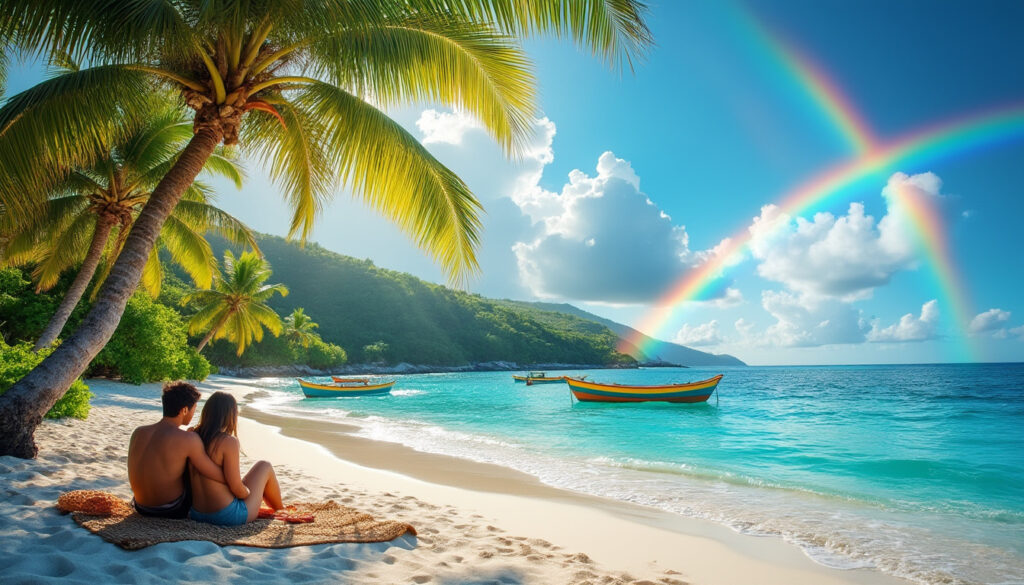
Bright beaches, warm sea, and tropical rain showers: the Caribbean can be visited year-round, but the chosen time can change the experience. From December to April, the dry season offers the most reliable sunshine, while May, June, and November attract with their balance between weather, crowds, and budget. Before booking, it’s best to also consider the rainy season and the risk of hurricanes.
The Caribbean can be explored year-round, but the weather, prices, and crowds change significantly depending on the months. To enjoy the most consistent sunshine, prefer the period from December to April, while May, June, and November often provide a good compromise. In summer and autumn, rain showers, sargassum seaweed, and the risk of hurricanes deserve more attention before booking. The Caribbean arc stretches over several thousand kilometers, from Cuba to northern South America. Despite this vast expanse, most islands experience a warm tropical climate, with temperatures generally ranging from 25 to 32 °C. The heat varies little across the seasons; it is mainly the rain, winds, and disturbances that influence the choice of dates. In the French Antilles, this period is often called Lent. The trade winds provide a welcome breeze, the sky is frequently clear, and rain showers are generally short. January, February, and March are particularly appreciated for alternating swimming, hiking, and boat excursions. The sea is often calmer on sheltered coasts, making catamaran outings and diving very pleasant. It’s also an excellent season to explore the islands: you can discover different Caribbean islands, also called Antilles, depending on your desires for nature, culture, or relaxation. However, plan for a higher budget and advance reservations. From June to November, humidity increases and rain becomes more frequent. It doesn’t necessarily last all day: a heavy shower can be followed shortly after by a bright spell. The heat remains prevalent, and the water is still suitable for swimming. This period is less uniform than one might think. Some islands receive more rainfall than others, and the terrain can trap clouds over part of the territory. Days can thus alternate between sunshine, cloudy skies, and rain. In exchange, accommodations and flights are sometimes more affordable, especially during the less sought-after months. Flexible travelers can enjoy quieter beaches and a less frantic pace. A light raincoat and modifiable reservations make for a more serene stay. From January to March, days are often bright and temperatures pleasant, generally between 25 and 29 °C. This is a highly sought-after period, especially in the French Antilles, the Dominican Republic, and the Virgin Islands. Tickets and hotels cost more during this peak season. In April, the weather often remains dry, even though the heat gradually rises. Easter holidays cause a spike in demand at several destinations. Booking early is wise if you wish to travel on these dates. May and June mark a transition: the first rain showers appear, without preventing the enjoyment of many beautiful days. Prices are often more moderate, and sites are less crowded than in mid-winter. These weeks represent a good balance for travelers looking to manage their budget. July and August are warm and more humid, with showers sometimes concentrated at the end of the day. School holidays attract numerous visitors and drive up prices. On some coasts facing the Atlantic, sargassum can also alter the appearance of beaches. September and October correspond to a wetter period, as well as the peak of hurricane risk. Prices can be particularly low, but it’s better to choose flexible booking conditions and monitor forecasts. In November, rainfall generally decreases as the dry season approaches, while December is highly sought after around the holidays. The official hurricane season in the Atlantic runs from June 1 to November 30. The risk is generally higher between August and October when the ocean is particularly warm. This does not mean that a hurricane will necessarily hit your island: most trips occur without incident, but it is important to stay informed. Before departure, regularly check the bulletins from Météo-France Antilles or the National Hurricane Center. Insurance that covers weather disruptions and cancellations can also be useful. On-site, follow the instructions of local authorities in case of alerts. Sargassum is brown seaweed that can wash up on certain beaches, particularly between April and September. Its presence varies greatly by island, currents, and winds, and can change from week to week. The sheltered coasts of the Caribbean Sea are often less affected than the shores exposed to the Atlantic. If beach quality is a key criterion, check local information before choosing your accommodation. Tourist offices and authorities sometimes publish recent reports, while on-site establishments can inform you about the coastal situation. Sometimes a short trip to a less exposed coast is enough to find clear waters. Don’t assume that all islands are exposed in the same way. Their geographical position, terrain, and orientation influence both rainfall and the effects of marine phenomena. Comparing several destinations before booking allows you to tailor the trip to your priorities. To seek maximum sunshine, opt for January, February, or March. These months are particularly suitable for travelers who wish to enjoy swimming, sightseeing, and excursions without relying too much on forecasts. However, plan for a larger budget, as demand is high. To find a better balance between weather and budget, consider May, June, or late November. These transition periods often see fewer visitors and can offer softer rates. You simply have to accept somewhat less predictable weather. Diving enthusiasts often prefer the dry season, from December to May, when the sea is frequently calmer and underwater visibility can be excellent. Conditions vary, however, from site to site and depending on currents. Consult with the diving centers on the chosen island before fixing your dates. For experiencing the rhythms of carnivals, February features major events in Guadeloupe and Martinique, while Trinidad celebrates its carnival at another time of the year. These festivities bring a strong cultural dimension to the stay but also attract many people. Book transport and accommodation as soon as your schedule is set. A summer stay can also be planned by reducing exposure to hurricane episodes. Aruba, Bonaire, and Curaçao, the ABC islands, are located south of the usual hurricane path and enjoy a generally dry climate. Trinidad and Tobago form another option to consider for summer travel. Finally, choose your destination based on the experience you seek, not just the temperature. For a getaway between beaches, restaurants, and sunset strolls, you can notably explore Negril, Jamaica. Hiking, diving, or cultural discovery enthusiasts will also find very different atmospheres from one island to another. For year-end festivities and winter holidays, booking four to six months in advance helps maintain more choices for flights and accommodations. The most sought-after establishments can book up quickly, especially in popular beach areas. In mid or low season, two to three months often suffice, although prices vary depending on the destination. From Paris, plan for about eight and a half hours of flight to the French Antilles, and around ten hours to reach the Dominican Republic. Durations vary depending on connections, layovers, and available schedules. Compare departure days as much as the airlines: shifting your trip by a few days can sometimes change the price. In your suitcase, pack light clothing, a hat, and sun protection suitable for coral reefs. A windbreaker can be handy during breezy evenings or boat crossings. Between June and November, add a compact raincoat that can easily withstand a tropical shower. Also, keep some flexibility in your schedule if traveling during the rainy season. A boat excursion may be postponed, while a cultural visit or a sheltered lunch can occupy a rainy day. Planning several options turns weather changes into simple adjustments rather than annoyances. Before confirming accommodation, check its location regarding beaches, roads, and useful services. A protected coastline might offer a calmer sea, but a mountainous island can sometimes provide different conditions just a few kilometers away. Advice from locals and local weather information usefully complement climatic averages. Finally, check cancellation terms and your insurance guarantees before payment. A flexible offer might cost a little more, but it provides a valuable cushion during hurricane season. Also, keep the contact details for your accommodation and airline to quickly find information in case of changes. The sea temperature remains warm all year round, often ranging from 26 to 29 °C depending on the month and the island. Even when clouds pass, swimming remains generally possible, provided you follow local guidelines and the state of the sea. The right timing thus depends as much on your desires, your budget, and your tolerance for the unexpected as on seasonal averages.Understanding the Caribbean climate
The dry season, from December to April
The rainy season and its tropical showers
What weather to expect month by month?
Hurricanes and sargassum: precautions to know
Which months to choose according to your desires?
Reservations, flights, and luggage: preparing for departure
The right timing according to your travel style
In the Caribbean, the best time to go depends as much on your desires as on your tolerance for heat, showers, and crowds. From December to April, the dry season unfolds its bright sky: the days lend themselves to walks, boat outings, and swimming in often calm seas. In return, this popular window attracts more travelers and drives prices up, especially during the holidays and school vacations. Booking several months in advance can make all the difference.
If you prefer a quieter atmosphere and softer rates, consider May, June, or November. These transition months often offer an interesting balance: the weather remains pleasant, showers are generally temporary, and beaches are less crowded. This is a period to consider for exploring the islands without chasing every ray of sunshine or exceeding your budget.
Between June and November, the rainy season gradually sets in, and hurricane season requires a bit more flexibility. The risk is particularly marked between August and October, without meaning that every trip will be disturbed. Appropriate insurance, modifiable reservations, and monitoring weather bulletins allow for a more peaceful journey. For a summer stay with less exposure to hurricanes, Aruba, Bonaire, and Curaçao, located south of the usual trajectory zone, are options to consider.
Finally, remember to check the specific conditions for your destination: sargassum can affect certain coasts, while local festivals, like carnivals, add a different color to the journey. Choose your dates based on the activities that attract you, the available budget, and the desired pace: the Caribbean does not offer a single season but several ways to discover it.