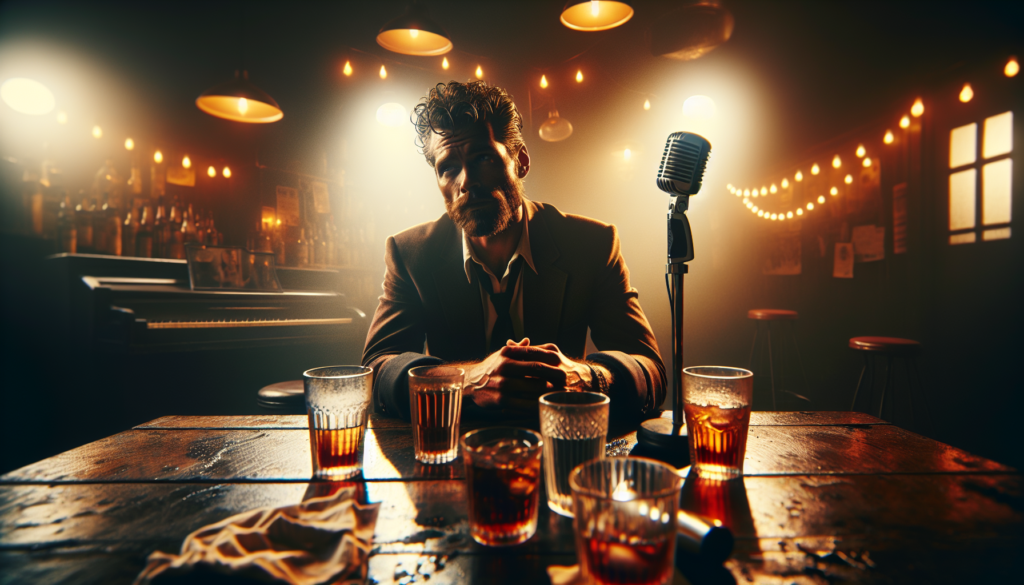
In the world of cinema, certain films emerge as iconic works, transcending simple narratives to become profound explorations of the human soul. Barfly, directed by Barbet Schroeder in 1987, is one of these gems. Adapted from the literary universe of the poet and writer Charles Bukowski, this feature film immerses us in the tumultuous life of an anti-hero, Henry Chinaski, vividly played by Mickey Rourke. The film reveals the depths of an existence consumed by alcohol and the quest for love, while capturing the essence of Bukowski’s brutal and poetic prose. Through this chronicle of debauchery and unfulfilled desires, Schroeder offers us a bold and poignant vision of contemporary life, inviting viewers to reflect on the existential dilemmas that shape our humanity.
Barbet Schroeder: Diving into the world of “Barfly” (1987)
In this article, we delve into the heart of the cinematic odyssey of Barbet Schroeder through his iconic film “Barfly”, released in 1987. This feature film, taken from the poetic universe of Charles Bukowski, reveals both autobiographical aspects of the writer and the artistic vision of its director. We will explore the genesis of the film, the challenges encountered during its production, as well as the dynamic between its lead actor and its director. The artistic and cultural impact of this work will not fail to be highlighted.
Genesis of Barfly: a unique project
Barfly finds its roots in an improbable meeting in San Francisco. Barbet Schroeder, making his documentary Koko, the talking gorilla, sees himself confronted with the charismatic figure of Bukowski. This collaboration, nascent but full of promise, is gradually transforming into a film project. Surprisingly, Bukowski, initially skeptical, agreed to write the screenplay, despite his shortcomings and his inexperience in this art.
Through this adventure, the two men forged extraordinary bonds, nourished by a common passion for writing and the intoxication of bars. The film highlights the character of Henry Chinaski, Bukowski’s true alter ego. This introspection becomes an essential milestone for the author’s creative journey.
Production and challenges: a journey strewn with pitfalls
The path to achieving Barfly does not happen without obstacles. The production, initially entrusted to Cannon, encountered financial difficulties. This company, seeking to diversify its productions, struggled to raise the necessary funds to shoot the film. A certain Francis Ford Coppola then intervened by offering his help with his company American Zoetrope, thus spreading the wings of the project in full flight.
The years pass, around seven, and the exploration of this poetic world takes shape in a setting of debauchery and wandering. Meanwhile, Schroeder and Bukowski develop an unexpected friendship as they spend many evenings together. These moments of abandon and authenticity become sources of inspiration for the work.
Artistic choices: a singular vision
When casting, it was crucial for Bukowski to see his story faithfully brought to life. He hoped that his friend Sean Penn would play the role of Henry Chinaski. Nevertheless, the director opted for Mickey Rourke, whose performance resonates with the character’s turmoil. At her side, the talented Faye Dunaway adds dramatic depth to this alliance of anti-heroes, creating a chaotic picture where love and violence intertwine.
The choice of settings, each more authentic than the last, accentuates the raw texture of the story. Schroeder, with assistance from the cinematographer Robby Muller, gives birth to a visual universe that depicts the melancholy of a nocturnal Los Angeles. The bars, symbols of perdition, become characters in their own right, a true reflection of souls in search of escape.
Reception and legacy: a timeless film
Upon its release, Barfly received a nuanced critical reception. Despite the homage paid to Bukowski, the film did not meet with the hoped-for success. Nevertheless, it found its place throughout the years following its release, becoming a reference work. The magic of Barfly lies in his ability to capture Bukowski’s creative essence, while still managing to stand on his own two feet. This adaptation rubs shoulders with autobiography and cinematographic art, provoking a powerful reflection on artistic identity.
A lasting legacy: impact on cinematic culture
The recent reissue of Barfly, equipped with a quality master, allows you to rediscover this gem in high definition. Enriching extras, such as dialogues between Schroeder and other filmmakers, complete this immersive experience. Barbet Schroeder was thus able to make his film a vibrant spectacle, the echoes of which still resonate in contemporary cinematic culture.
In short, the world of “Barfly” remains a poignant testimony to the life of an iconic writer, while testifying to the bold vision of its director. Over the years, the work has anchored itself in the pantheon of cinema, revealing the complex beauty of the human soul.
|
IN BRIEF
|
Dive into the world of “Barfly” (1987)
Barfly, directed by Barbet Schroeder, represents a fascinating work that transcends simple cinematic storytelling to become a profound exploration of the human condition. Adapted from a screenplay by the writer Charles Bukowski, the film features the character Henry Chinaski, an alter ego of the author himself, wandering through a Los Angeles teeming with nightlife, alcohol and despair. The way in which Schroeder sublimates Bukowski’s pen through his visual and narrative approach allows us to feel the intensity of solitary wandering and the search for meaning in pain.
The chemistry between Mickey Rourke And Faye Dunaway is palpable, offering a brutally honest depiction of destructive relationships. Their interaction recalls both the beauty and tragedy of love, where intoxication and violence mingle in an emotional whirlwind. This portrait of life on the margins, carried by powerful dialogues and a poetic atmosphere, allows us to discover a universe where internal struggles and personal battles are explored with nuance.
The film’s aesthetic, carefully crafted with the talented cinematography of Robby Muller, reinforces the visual impact. Each frame is designed to capture the essence of an existence in disarray, from empty bars to dark alleys. The subdued lighting helps create an atmosphere that is both melancholy and vibrant, paying homage to Bukowski’s singular vision.
In short, Barfly rises beyond an autobiographical story. It is a work that questions creativity, love and the need for authenticity in an often alienating world. Schroeder’s artistic direction, combined with Bukowski’s incisive writing, remains an inspiration to all who aspire to understand the beauty of human imperfections.