When it comes to cinema, Christopher Nolan is undoubtedly one of the most audacious directors of his generation. With his latest project, he presents an adaptation of The Odyssey by Homer, a foundational text from the 7th century BC. While stories of military conquests have long dominated the epic genre, Nolan invites us to explore timeless themes such as return, memory, and guilt, redefining what it means to be a hero in a world where the echoes of the past resonate with troubling modernity. This work does not merely offer a retelling of a classic epic; it also raises pertinent questions about our humanity and the challenges that accompany each return home.
Christopher Nolan, renowned director and screenwriter, has made a mark on contemporary cinema with innovative and captivating works. Through his films, he explores a variety of themes while skillfully playing with concepts of time and memory. His ultimate adaptation of Homer’s work, “The Odyssey,” is no exception. This film serves as a reflection on the past and the repercussions of human conflicts while drawing from the richness of this foundational text of Western culture. In this article, we will dive into Nolan’s universe, his unique storytelling approach, and the relevance of his adaptation of a millennia-old text.
An exceptional cinematic journey
Since his beginnings with “Following” (1998), Nolan has captivated an ever-growing audience. His mastery of storytelling and bold use of visual effects are now well-known.
He tackles universal themes, notably time, memory, and human existence. Films like “Memento” and “Inception” are perfect examples of his innovative approach. His filmography is a subtle mix of complex narratives and stunning visuals, where each film seems to echo a deeper questioning of our reality.
A captivating plot full of mystery
Nolan’s plots are not limited to linear storytelling. On the contrary, they often offer several layers of interpretation. For example, “Interstellar” takes us on a space-time journey while exploring human emotions such as love and loneliness. Each of Nolan’s films possesses a unique narrative architecture that encourages reflection.
The secrets of the narratives lie in the details. Viewers are often invited to revisit the story to uncover new facets. The performances of the actors, combined with exquisite artistic direction, intensify the cinematic experience. This aesthetic choice, far from being trivial, enriches the message of his films.
The Odyssey: a foundational text revisited
Nolan’s adaptation of “The Odyssey” does not merely recount the adventures of Ulysses. It primarily focuses on his return, memory, and the guilt that accompanies him. Far from simple epic battles, the film addresses internal questions that anyone can feel after a traumatic experience.
- Return home: Ulysses’ journey here becomes a metaphor for the quest for identity.
- Burdens of memory: How do the atrocities experienced impact the individual?
- Time and memory: Nolan plays with the narrative structure, evoking the architecture of the passages of Homer’s work.
Moreover, the richness of Homer’s work is perceptible through the visuals, blending sobriety and power. The artistic direction, in contrast to the extravagance of some recent epics, evokes Antiquity with striking realism. The landscapes, props, and costumes shape a Greek world of incredible credibility.
An echo of contemporary conflicts
By subtly evoking modern wars, Nolan does not create a simple allegory of our time. He offers a more complex reflection. Human experiences such as going to war or coming back home traverse the centuries, testifying to a troubling permanence.
The mythical creatures are not depicted as mere monsters. Rather, Nolan chooses to show them as manifestations of internal struggles. They question the soul of Ulysses, unleashing a narrative power that resonates deeply with the viewer.
A mastery of temporality
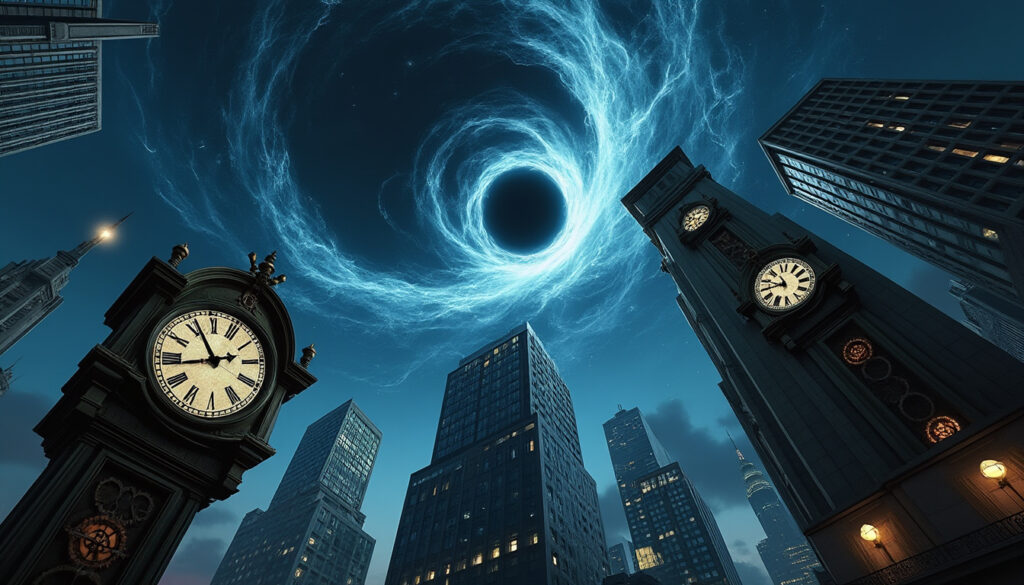
The manipulation of time is one of Nolan’s signatures. Rather than simplifying the story into a linear adventure, he respects the very essence of the Homeric narrative. The invocation to the muse in the introduction is a beautiful way to reconnect with the epic roots of the work.
The rhythm of the film mirrors that of the original, accentuating the notion of time passing, of memories intertwining. This immersive approach allows viewers to feel the fatigue, the wandering, and the quest for identity of an aging Ulysses. Each maritime crossing is experienced with palpable intensity, vividly capturing the journey, both emotionally and physically.
Memorable performances
The casting of “The Odyssey” plays a crucial role in the film’s success. Matt Damon, as Ulysses, embodies a tormented man, marked by his past choices. His portrayal resonates with the humanity of the character, highlighting his fragilities and emotions.
Zendaya, in the role of Athena, brings a spectral dimension to her character. While Robert Pattinson portrays an intriguing Antinous, these performances add depth and fluidity to the narrative. Secondary characters, like Penelope, make palpable the inner war they endure. Her resistance, far from being passive, constitutes a complex struggle between hope and despair.
Through his audacious work, Christopher Nolan revitalizes a classic of literature with The Odyssey, offering a profound exploration not only of the physical challenges of war but also of the inner struggles that follow the battles. With this film, Nolan does not seek to layer another version of a well-known story but rather focuses on the burdens of memory and the complexity of human relationships in the post-conflict context.
Far from merely reconstructing events, Nolan pays homage to the foundational text of Homer, preserving its complex narrative structure while adapting it to our time. He invites us to reflect on what it truly means to return home, a return often fraught with pain, failures, and uncertainties. The character of Ulysses, portrayed with nuance, is less a triumphant hero than a man marked by his experiences and confronted with the ghosts of his past.
This choice to narrate the return rather than the conquest reflects a genuine shift in the perception of epics. Nolan manages to capture the essence of this timeless struggle for self-reconciliation and reintegration into a changed world, a theme of heart-wrenching relevance. The mythical creatures and landscapes, filmed with striking aesthetics, immerse the viewer in a universe where the sublime meets the tragic, rendering each image laden with meaning.
Beyond entertainment, Nolan’s The Odyssey is a true reflection on the human experience, resonating with those who struggle to find their place after turmoil and trials. Thus, this film is not just a tribute to an ancient tale; it is a meditation on humanity and the echoes of the past resonate in our modern lives.