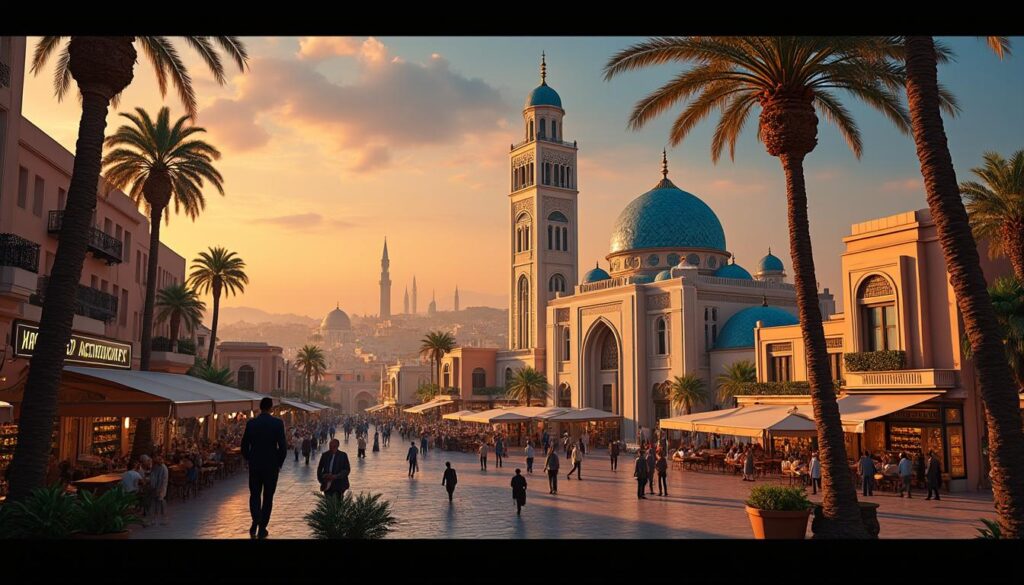
Dive into the heart of Casablanca, a metropolis whose charm and modernity have captivated filmmakers from around the world. With the book CinéCasablanca, authors Roland Carrée and Rabéa Ridaoui offer you a rich and varied panorama through one hundred iconic films that pay homage to this fascinating city. As you turn the pages, you will explore the multiple facets of the white city, revealing its contrasts and cinematographic complexity. Each work unveils the richness and paradoxes of a city whose identity oscillates between the East and the West, while painting a vivid picture of Morocco’s history over the years.
In this article, we invite you to delve into the fascinating universe of CinéCasablanca, a work that traces the cinematographic identity of this Moroccan metropolis through nearly one hundred films. Authors Roland Carrée and Rabéa Ridaoui help us discover the paradoxes and modernity of this uniquely aura-filled city while highlighting the wealth of cinematic narratives unfolding there. From colonial heritage to contemporary times, the analysis of each film allows for a better understanding of the complex dynamics of Casablanca.
CinéCasablanca: a journey through time
The work CinéCasablanca is not just a simple list of films. On the contrary, it is a true exploration of the historical and cultural evolution of the city. The authors invite the reader on a captivating journey where the history of cinema intersects with that of Morocco. Casablanca, often described as a contemporary and dynamic city, is brought to light through works that reveal its contradictions and transformations over the decades.
Directors from various backgrounds, whether Moroccan or foreign, have managed to capture diverse facets of this city. This also allows us to observe how different perspectives interpret its landscapes, its inhabitants, and its atmosphere. The book is divided into categories, with films ranging from Hollywood productions to lesser-known local works, further enriching the perspective.
The paradoxes of Casablanca on screen
One of the most intriguing aspects of this book is its analysis of the cinematic paradoxes related to Casablanca. For example, some films are set in Casablanca but were shot elsewhere. The famous film “Casablanca” by Michael Curtiz, which made a lasting impression, perfectly illustrates this notion. Although not filmed on site, it shaped the romantic image of the city and left a lasting legacy.
The authors also emphasize that, while Casablanca is known for its modernity, it is often represented from nostalgic or fictional angles. This prompts filmmakers to feel the need to complement reality with elements from their own imagination, creating an interesting contrast with the present-day city. Films thus contribute to creating an urban mythology.
Architecture serving the narrative
By visiting Casablanca through films, viewers discover how the city’s architecture is integrated into the storytelling. The streets, iconic buildings, and even urban landscapes become fully-fledged characters in the narratives. Each street corner reveals stories that oscillate between tradition and modernity.
The modernity of the infrastructure coexists with the tradition of souks and typical markets. This play of duality is found in many films, reinforcing the idea of a city always in motion. Thus, the reader is not merely an observer; they become an actor in a constantly evolving narrative.
A rich and varied cinematic panorama
- American blockbusters: “Mission Impossible: Rogue Nation”
- French classics: “Le Grand Jeu”
- Contemporary comedies: “OSS 117: Cairo, Nest of Spies”
- Moroccan films by renowned directors: Nabil Ayouch, Maryam Touzani
The cinematic mosaic offered by CinéCasablanca is among the most fascinating. The book presents a range of productions that go beyond common clichés. For instance, some films explore themes like social inequalities, while others dive into humor and fantasy.
The diversity of genres and styles allows for an approach to the city from various angles. Be it through light-hearted comedies or poignant dramas, each film adds another piece to the complex puzzle that is Casablanca. The repercussions of these narratives range from social critique to reflections on Morocco’s cultural identity.
A reflection of Moroccan identity
Finally, CinéCasablanca stands as a true mirror of contemporary Moroccan identity. Through the exploration of films, one understands how Casablanca sits between the East and the West. This city, while rooted in centuries-old traditions, also knows how to look toward the future. The book highlights this quest for harmony between the past and the future, illustrated by the artistic choices of various directors.
By observing the cinematic journey, an astute reader will realize that these works do not simply tell stories. They are situated within a broader socio-political context and reflect the aspirations and struggles of a country in full transformation. Casablanca, with its history and culture, provides an ideal backdrop for this nuanced exploration of cinematic narratives.
CinéCasablanca>, a work by Roland Carrée and Rabéa Ridaoui, offers a fascinating exploration of Casablanca through the lens of cinema. By presenting a panorama of one hundred films, the book highlights the multiple facets of this emblematic Moroccan metropolis. Each film, whether a blockbuster or a local production, features the city from various angles, thereby revealing its composite identity, oscillating between tradition and modernity.
This book stands out for its ability to navigate through the cinematic paradoxes of Casablanca. While some films claim to be set there without ever being filmed on-site, others use the city as a backdrop for narratives rooted in other locations. This highlights the duality of a city that is perceived as an exotic fantasy by Westerners and as a complex reality characterized by social disparities.
The authors manage to balance a didactic approach with fine cinematic analysis, offering the reader reflections on how directors appropriate the city in their works. The introductions to the different sections of the book enhance this understanding, enabling a total immersion into the history of Casablanca through the ages and influences.
Finally, CinéCasablanca does not simply provide a portrait of cinema but also examines the evolution of Morocco itself, playing an essential role in documenting the cinematic and social history of the country. Undoubtedly, it is an indispensable work for anyone wishing to discover Casablanca through the cinematic lens, resonating with the history and contrasts of a city in perpetual evolution.