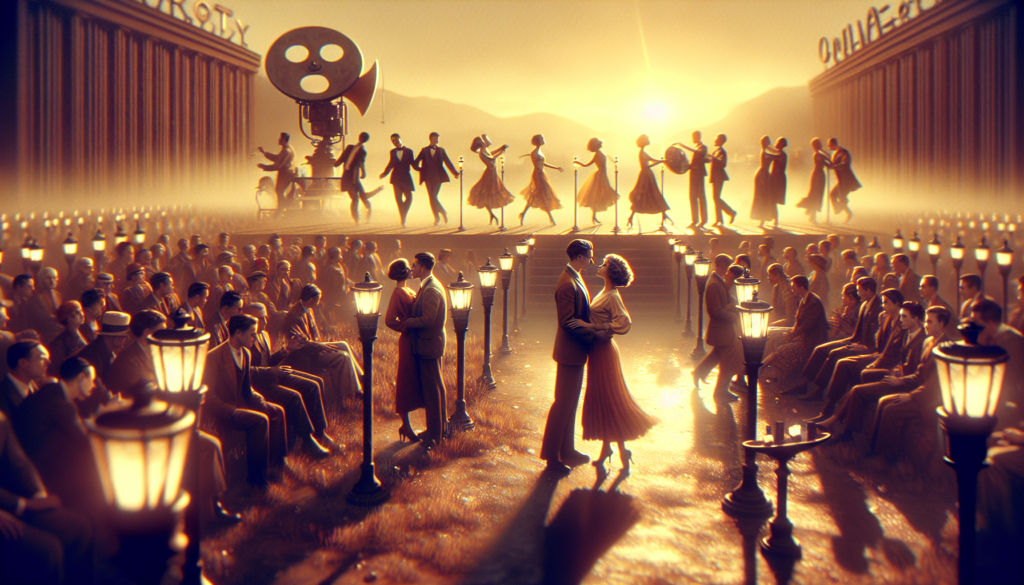
In the modern cinematic landscape, Luca Guadagnino establishes himself as a daring director, capable of capturing the nuances of identity queer. With his latest project, Queer, he is tackling the adaptation of an emblematic novel by William S. Burroughs, diving into the heart of the lives of American expats in the Mexico from the 1950s. Through carefully crafted aesthetics and sensitive storytelling, Guadagnino invites us to explore universal themes such as love, the quest for identity and unfulfilled desires, while shaking up traditional cinematic conventions.
Luca Guadagnino, emblematic figure of contemporary cinema, invites us on a fascinating journey through the queer universe. With notable works like Call Me by Your Name, he knew how to capture the essence of human emotions and complex relationships. His latest project, Queer, promises to strengthen its reputation. This article explores the evolution of his cinematic style, his influences, and how his productions celebrate diversity and identity.
The beginnings of Luca Guadagnino
Born in Italy, Luca Guadagnino was interested in cinema from a very young age. His career will lead him to projects that announce him as a director to follow. Indeed, his first works, marked by emotional depth, already laid the foundations for his future work. Notably, these are films where themes of love and loss are omnipresent.
Over time, Guadagnino developed a unique aesthetic, strong in colors and poetic images. This allows him to transform it into a real experience where spectators let themselves be carried away. He regularly explores themes linked to identity, and his broad knowledge of human dynamics gives a unique strength to his stories. Intense intrigues unfold under the gaze of a passionate director.
A queer universe in the light
Guadagnino doesn’t just make films. He creates worlds where each character has a voice, a story, and an identity to explore. Her stories often feature LGBTQ+ characters, but more than that, it’s an exploration of the nuances of love and sexuality. By adapting works like Call Me by Your Name, it allowed a wide audience to discover perspectives that are often ignored.
In his latest film, Queer, it adapts the work of William S. Burroughs, exploring the lives of American expatriates in Mexico in the 1950s. This choice reflects a desire to pay homage to marginalized voices. The result? A captivating blend of literary heritage and cinematic inventiveness. The public is invited to feel the love, the pain and the beauty of encounters.
Introspection and staging
In his films, Guadagnino demonstrates a keen sense of introspection. He uses stylized visions to evoke deep feelings and memories that haunt the characters. His artistic approach always seems intertwined with their internal struggles, especially when queer themes come into play. The melancholic scenes speak to the struggle for identity.
- Exploration of human emotions.
- Authentic life stories.
- Importance of acceptance.
A colorful and bold aesthetic
Guadagnino leaves nothing to chance. Color, light, and sound are essential elements for him. In Queer, each shot is meticulously designed to provoke emotions. These aesthetic choices make it possible to highlight important themes. Thus, the viewer not only sees a story, but also feels the vitality of love represented by its characters.
This sense of aesthetics, combined with powerful performances, makes his films remarkable works. Daniel Craig, who plays the lead role in Queer, brilliantly embodies his character’s emotional dilemma. The latter, in search of authenticity, explores his place in an often rigid and indifferent world.
Reviews and receptions
Like any artist, Guadagnino has his fervent admirers, but also his detractors. At the time of the release of Queer, the criticisms were trivial. Some highlighted its boldness, while others criticized the use of a style considered excessive. This duality raises a pertinent question: to what extent should art provoke or shock?
Despite this, its willingness to address neglected and controversial subjects deserves to be praised. The reception of Queer sparked a broad debate on LGBTQ+ representation in cinema. Many viewers felt a deep emotional connection with the narratives, bearing witness to a reality that many have experienced.
Guadagnino takes us into a universe where love, emotions and identity intertwine to form a vibrant whole. His work with Queer remarkably illustrates his ability to touch on complex subjects. Thanks to his passion and commitment, he continues to inspire many generations of filmmakers and spectators. To appreciate his art is to plunge into an adventure where each image and each sound resonates with a profound human truth. Don’t hesitate to discover his latest project, which still promises to leave an impression and open hearts.
|
IN BRIEF
|
In the current cinematic landscape, Luca Guadagnino stands out for his ability to explore deeply human themes with heightened sensitivity. His latest project, Queer, is a bold adaptation of the famous novel by William S. Burroughs, first published more than 70 years after it was written. This film, which stars Daniel Craig in a new role, takes us to Mexico in the 1950s, where we discover the complexity of sexual identities and desires through the eyes of an American expatriate.
Guadagnino is recognized for his unique aesthetic vision, and in Queer, he delivers a work where each image seems charged with intense emotions. His distinctive style does not hesitate to play with the elements of queer imagery, which offers a visual richness that can sometimes be perceived as provocative. Far from being a simple literary transposition, the film offers a poignant reflection on love, loneliness and identity struggles.
The performance of Daniel Craig transcends the traditional framework of its iconic character, James Bond. In Queer, he plays a man in search of meaning, navigating through the gay bars of Mexico City, thus revealing the gray areas of masculinity and its fragility. This bold casting choice raises questions about established norms and offers a new perspective on male sexuality.
In short, thanks to his creative outlook and his passion for authentic stories, Luca Guadagnino manages to capture the quintessence of the queer experience. Queer does not just entertain; it challenges us to think, feel, and question the limits of our own understanding of human relationships.