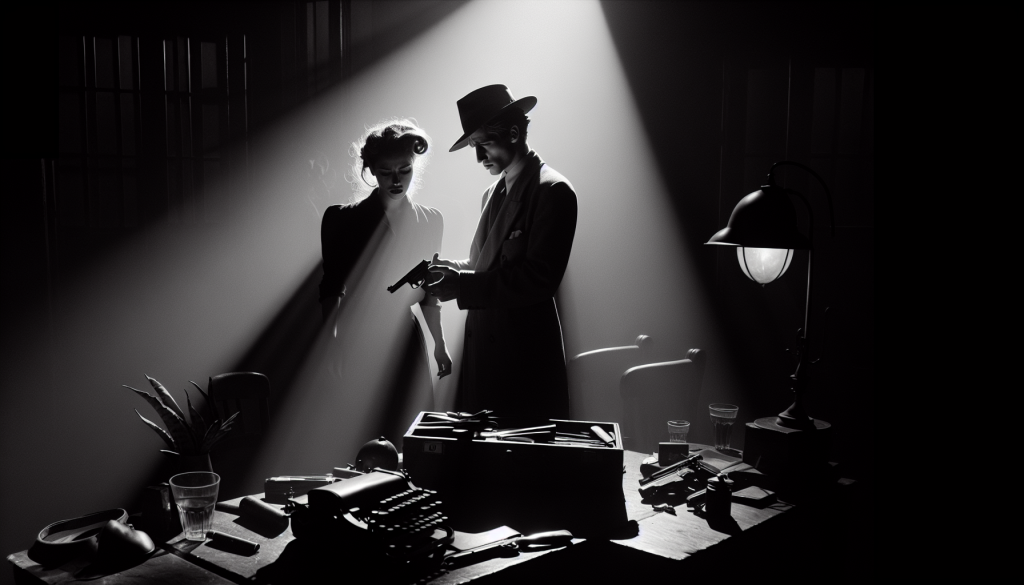
In this retrospective of Argentinian film noirs, the timeless 1956 classic directed by Fernando Alaya, A Murder for Nothing, stands out for its captivating plot and complex characters. Let’s dive into the dark and captivating world of this masterpiece of Argentinian cinema noir.
Rediscovery of a Jewel of Argentine Cinema
Sometimes cinema has this magical ability to resurrect forgotten treasures. This is the case with A murder for nothing (1956), one of the pearls of Argentinian film noir directed by Fernando Ayala. Little known in France, Ayala contributed to the history of cinema with an impressive filmography of 36 films. Today, a retrospective highlights his major work, bringing this little-known masterpiece back to life.
A Protagonist Prey to His Demons
The main character, Alfredo Gasper, is a tormented journalist in search of meaning. Working in deplorable conditions in Buenos Aires, he dreams of greatness and noble causes. The oppressive heat of the city, with its violent storms, accentuates Gasper’s state of unhealthy agitation, creating an atmosphere of constant tension.
Gasper meets a Hungarian illegal alien, Paar Liudas, who plans to create a correspondence journalism school with dubious methods. Gasper sees this as an opportunity to give meaning to his life and agrees to collaborate with him. However, he begins to doubt Liudas’ intentions, falling into a spiral of paranoia.
The Descent into Hell
Tension rises as Gasper becomes more and more suspicious. His internal reflections, amplified by the voiceover, reveal his torments and doubts. Finally, convinced that he is being betrayed, Gasper kills Liudas. But he realizes too late that he did it for nothing, because Liudas’ son, Jarvis, arrives in Argentina.
Gasper, confronted with his own actions, must now deal with Jarvis’ presence while hiding the truth about his father’s disappearance. His guilt and paranoia are only reinforced.
A Dark and Intense Aesthetic
Fernando Ayala and his team, including the cinematographer Ricardo Younis, have created a visually fascinating work, skillfully using lighting and shadow play. The influence ofGerman expressionism is felt, bringing additional depth and intensity to key scenes in the film.
One dreamlike scene in particular stands out for its surreal style. In this dream, a child attends the funeral of an injured soldier, providing complex symbolic elements that question the true sources of Gasper’s guilt and paranoia.
Music by Astor Piazzolla
The cinematic experience of A murder for nothing is complemented by the haunting music of the legendary Astor Piazzolla. Her talent for capturing emotions through music adds an extra layer of depth to Ayala’s work.
The Legacy of Fernando Ayala
With this retrospective, Fernando Ayala regains a deserved place in the pantheon of cinema. A murder for nothing is not just a film noir, it is a dive into the tormented soul of a man in search of redemption. Thanks to its careful aesthetic and complex storyline, this film recalls the lasting impact of Argentine cinema on the world stage.