
With Primate, Johannes Roberts immerses us in a horror universe where violence and tension are omnipresent. This captivating thriller destabilizes the viewer by juggling the clichés of traditional horror cinema with unexpected elements that challenge our perception of the genre. At the heart of a plot that intertwines family drama and animal terror, the film offers an intense sensory experience, prompting the audience to question the limits of thrill and pain. In this suspenseful setting, Roberts succeeds in captivating and shocking, thus confirming his talent for navigating through troubled and disconcerting waters.
Johannes Roberts’ latest film, titled “Primate”, emerges as an intriguing work that skillfully combines horror and animal suspense. In this thriller, the director plays with the codes of horror cinema, provoking reflection on violence and fear. With archetypal characters and a captivating plot, the film stands out both for its aesthetic and its visual effects.
An Intriguing and Disturbing Plot
Initially, “Primate” features Lucy, a young student who returns to the island of Hawaii to reunite with her sister and father. This return to her roots occurs in a tragic context: the death of their mother, who dedicated her life to linguistic research. Lucy, driven by her emotions, hopes to mend the broken family ties, but she is unaware that her arrival coincides with the transformation of Ben, a gentle chimpanzee.
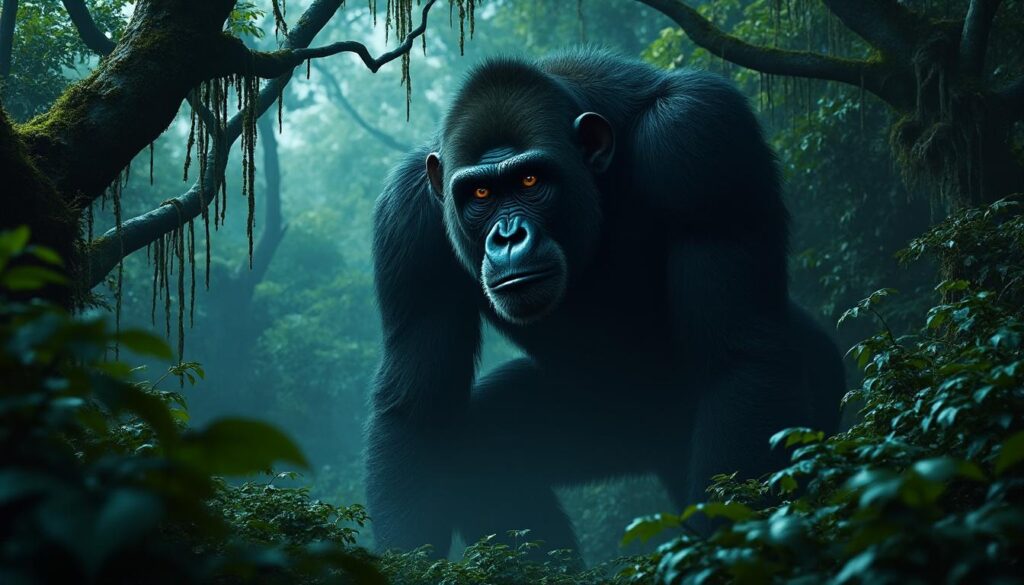
The latter, infected by a rabid animal, transforms into a deadly creature. The juxtaposition of a too-smooth setting and animal brutality creates a powerful contrast effect. The innocence of a monkey resembling a childhood companion transforms into a nightmare. This contrast is precisely what makes Roberts’ work both captivating and disturbing.
A Relentless Exploration of Violence
One of the most striking features of “Primate” is its treatment of violence. The film hides nothing and shrinks from no excesses. Indeed, brutality is omnipresent, from the visuals to the carefully choreographed scenes. The stakes are simple: to survive against a terrifying predator. Viewers are plunged into a hellish atmosphere where their expectations are often thwarted.
Throughout the film, scenes of carnage follow one another. The characters, often caricatured, quickly confront their own mortality. Moreover, some moments introduce a humorous note, which reinforces the parodic nature of the whole. Roberts seems to take particular pleasure in playing with these codes, skillfully blurring the boundaries between horror, comedy, and satire.
The Direction: A Masterful Game of Tension
Visually, Johannes Roberts does not hold back. On the contrary, he skillfully exploits the locations and shadows. The use of slow motion heightens the tension in key scenes, while a carefully orchestrated sound presence enhances the suspense. The director manages to create a palpable atmosphere where every little noise can trigger a surge of anxiety in the viewer.
The monkey, portrayed by a masked actor, adds an element of authenticity. Indeed, the fluid and natural movements of the chimpanzee contribute to making the terror even more palpable. Rather than relying heavily on special effects, Roberts chooses to focus on the emotional impact, providing an immersive experience that leaves a mark. The climactic scenes, where confrontations and revelations intertwine, testify to undeniable attention to detail.
The Legacy of This Cross-Genre Thriller
“Primate” thus positions itself as a horror film that does not hesitate to break free from norms. With a blend of brutal violence and moments of lightness, it gives the viewer food for thought. Ultimately, it is a work that transcends the expectations of a traditional thriller, exploring deeper themes related to human and animal nature.
By balancing between entertainment and sharp critique, Roberts offers us a unique cinematic experience. Beyond horror, this film questions our relationship with animals, violence, and what makes us human. The blend of genres and the director’s bold choices make him a key player in contemporary cinema.
An Intriguing Cinematic Experience
The new film by Johannes Roberts, titled “Primate”, offers the audience a bold incursion into the world of horror cinema. Skillfully playing with the codes of the genre, this captivating thriller does not merely aim to deliver a few chills but also highlights the striking contrast between the innocence of the characters and the savage brutality that surrounds them.
Through the story of Lucy and her entourage, Roberts plunges us into a world that initially seems familiar: a paradise island, young adults with romantic aspirations, and a luxurious house. However, as the complexities of human relationships are explored, the plot quickly spirals into bloody chaos. The dear chimpanzee Ben, bitten by a rabid animal, transforms into a fearsome being, creating a climate of tension where each scene can reveal imminent death.
Surprisingly, “Primate” manages to fit into the tradition of horror films while offering an offbeat approach, flirting with the absurd and the grotesque. Through a carefully measured mix of brute violence and dark humor, Roberts invites viewers to reflect on their own relationship with fear. This dynamic allows him not only to intrigue but also to entertain in unexpected ways.
Finally, Roberts’ careful direction, combined with convincing acting, ensures that “Primate” remains etched in memory long after the credits roll. This film, while it may appear superficial on the surface, reveals layers of complexity, making it a work that deserves to be rediscovered on the big screen.


