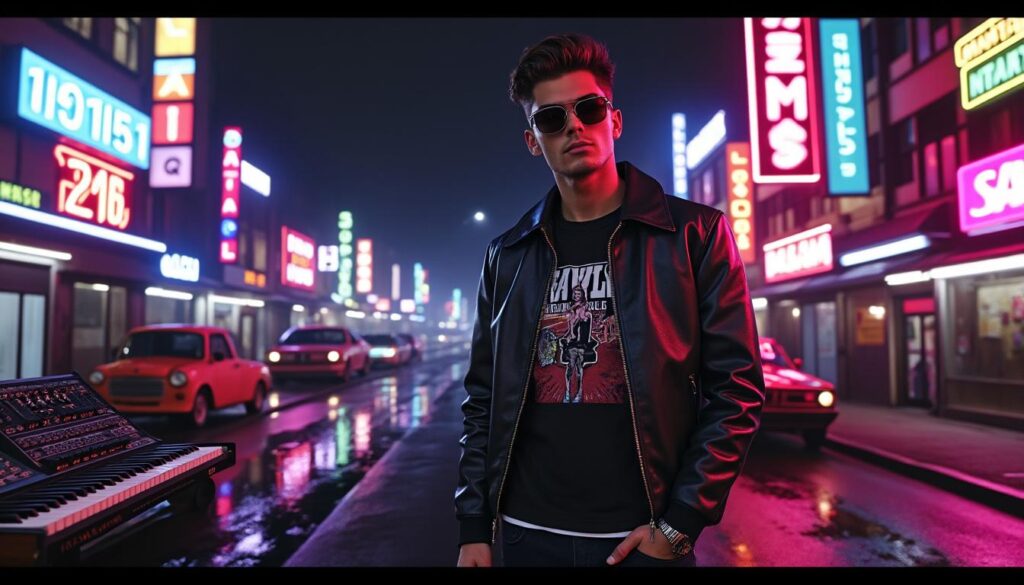
In the universe of French crime films, certain movies remain essential references. Tir à vue, directed in 1984 by Marc Angelo, reflects this prolific and complex era. Through a narrative tinged with violence and love, it explores the psychological meanders of its characters while fitting into a visual aesthetic marked by the 80s. This film, which blends romanticism and social drama, deserves to be rediscovered, both for its electronic soundtrack and its bold approach to crime and society. A cinematic journey that conjures the years of rebellion and artistic experimentation.
Marc Angelo: a look back at the electro classic ‘Tir à vue’ (1984)
The film ‘Tir à vue’, directed by Marc Angelo in 1984, left a mark with its atypical approach to French crime cinema. With a dark atmosphere and an electro soundtrack, it evokes a time when cinema intertwined with the modernity of the 80s. This feature film revisits the genre’s norms by presenting iconic characters and a narrative where violence and romanticism intertwine. Through this analysis, we will delve into the universe of this cult film, exploring its themes, direction, and the legacy it has left.
A director in tune with his time
The career of Marc Angelo, although brief on the big screen, is worth noting. He managed to capture the spirit of a decade rich in social and artistic upheavals. With ‘Tir à vue’, Angelo demonstrates creativity, distancing himself from the conventions of a classic crime film. By integrating electro into his score, he creates an atmosphere that is both captivating and unsettling, which still resonates today.
Inspired by earlier works, his approach fits into a broader movement often perceived as a new wave. His attention to detail and ability to portray human fragility amid chaos are particularly striking. The dialogues, although sometimes overly ornate, add layers to the psychology of the characters.
The iconic characters
Richard and Marylin, the two protagonists, embody a youth in crisis. Richard, armed with his resentment, spirals into violence. His partner, Marylin, oscillates between innocence and crime. This mismatched duo, played by Laurent Malet and Sandrine Bonnaire, creates a captivating dynamic. Bonaire, with her performance rich in nuances, sometimes transcends the script, offering an unexpected depth to her role.
- Richard, a figure of rebellion, represents not just an outlaw but a symbol of growing despair.
- Marylin, both alluring and formidable, grabs attention with her duality.
The sound aesthetic: a memorable soundtrack
The music in ‘Tir à vue’ plays a crucial role. Gabriel Yared’s compositions combine synthesizers and electronic sounds, firmly rooting the film in its era. This soundtrack contributes to the atmosphere by transforming each scene into an immersive experience. The incisive beats and enchanting melodies are carefully arranged to reflect the tumultuous emotions of the characters.
It also plays a role in the storytelling. Each piece seems to converse with the action on screen, highlighting moments of tension and introspection, while transporting the viewer into a universe that navigates between genres. It is a bold choice that Angelo does not hesitate to showcase, making the cinematic experience all the more captivating.
The influences and references
‘Tir à vue’ is not just a simple crime film; it is a work that pays homage to several influences. For instance, references to Bonnie and Clyde and other iconic movies of the same genre enrich a cinematic mythology. Angelo, aware of his heritage, skillfully weaves elements from different film genres, mixing romanticism, drama, and western.
Iconic scenes also draw inspiration from classics, recalling both social drama and archetypes of popular culture. The use of visuals rich in figures and symbols accentuates this impression of diversity. A skillful way to engage the viewer while prompting them to think about broader issues.
A mixed reception and a lasting legacy
Upon its release, ‘Tir à vue’ elicited mixed reactions. Critics often praised its boldness, while others pointed out a lack of coherence. However, this did not prevent the film from finding its audience over the years. Beyond its commercial modesty, the film established itself as a cinematic curiosity.
Over time, it has become a subject of study for crime film enthusiasts, revealing themes still relevant today, such as disillusionment and the quest for identity. The rediscovery of this film on Blu-ray attests to its cult status, allowing new generations to appreciate a piece of French cinema from the 80s.
In summary, ‘Tir à vue’ stands out as a masterpiece of the French crime genre and a fascinating exploration of the human psyche. A film that, thanks to Marc Angelo, continues to inspire discussions and attract attention within the cinematic landscape.
A look back at the electro classic ‘Tir à vue’ (1984)
The direction of Marc Angelo, Tir à vue, released in 1984, fits into a cinematic panorama that was undergoing transformation. This crime film, unique in its genre for Angelo, attempts to reinvent the genre’s codes by mixing dance, romanticism, and violence. Through the tumultuous fate of Richard and Marylin, two lovers on the run, Angelo offers a bold vision of crime that is both captivating and striking in the landscape of French cinema of the time.
Angelo, who was also an expert in crime storytelling on television, manages to weave a fascinating narrative while incorporating elements of popular culture and a dose of sociology of his time. It is in this duality that the strength of his film lies. By drawing inspiration from cinematic myths like Bonnie and Clyde, he transforms his characters into modern icons while questioning the frustrations and social struggles of the youth of the 80s. Sandrine Bonnaire’s performance remains memorable, bringing a richness and depth that her partner lacks, while reinforcing the brutal and desperate energy of the narrative.
However, Tir à vue is not free from its flaws. With a sometimes implausible script and hesitant dialogues, the film struggles to find its rhythm. Angelo’s attempts to iconize his characters can be both alluring and disorienting, revealing an imbalance within the story. Nevertheless, this feature film holds a special place in the hearts of crime film enthusiasts, paying homage to a cinematic era that is sometimes misunderstood and forgotten.