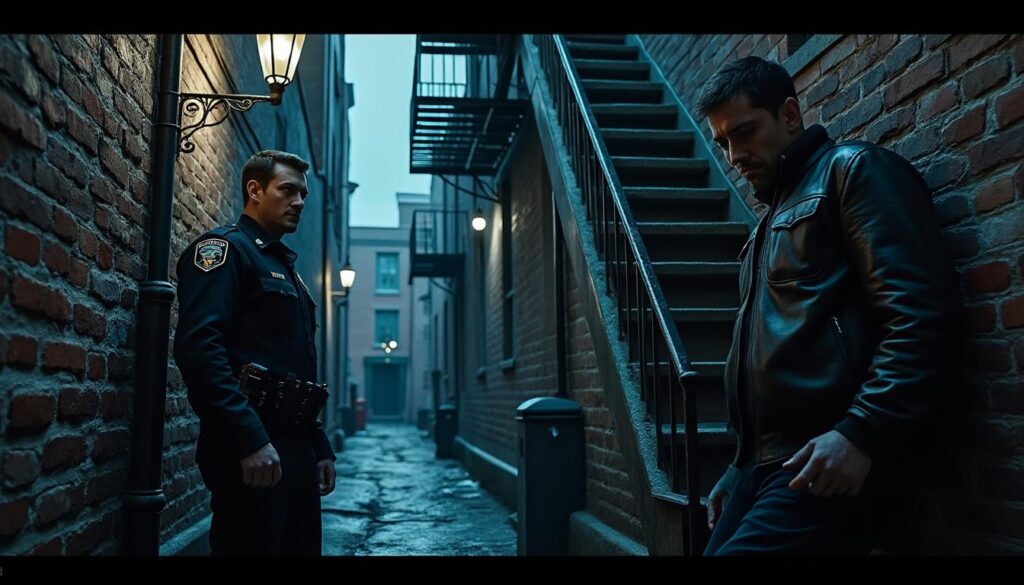
In the American cinematic landscape, Martin Scorsese stands out for his ability to revisit and reinvent significant narratives of his time. With The Departed, released in 2006, he immerses the viewer in the heart of a fierce struggle between the police and the Irish mafia, exploring themes of corruption, double life, and identity. This film, which has become iconic, is not just a simple remake; it fits within a rich and complex narrative dynamic, while brilliantly asserting the artistic authority of a director at the height of his career.
Martin Scorsese: Captivating Dive into the World of “The Departed” (2006)
Martin Scorsese’s masterpiece, “The Departed,” is not merely a simple adaptation. It is an intense exploration of the worlds of police and mafia, a psychological confrontation between good and evil, where each character is pushed to their limits. This Oscar-winning film represents much more than a story of betrayal. Through its skillful exploration of the themes of corruption and identity, it highlights exceptional performances. At the heart of its direction, Scorsese stands out as a master of cinema, opening new paths and dialogues with his own cinematic heritage.
A Bold Adaptation
At first glance, “The Departed” may seem like a simple remake. In reality, it is based on an original story. This film takes its roots from the Hong Kong film “Infernal Affairs”. Writing it with a modern pen, Scorsese transposes the action to Boston. The population, the winding streets, and the neighborhoods are recreated with striking detail. This work is not just a story of infiltration but an inverse dive into the criminal and police world.
Scorsese, with the screenplay by William Monahan, has transformed a plot several years old into a cinematic masterpiece. Rather than following the traditional model, he explores the moral complexities of the characters. Each protagonist must navigate a world where loyalty and betrayal often share the same face. By taking such liberties, the director prompts the audience to question their beliefs. The palpable tension between the different camps emerges from every scene.
The Characters: A Fascinating Duality
The characters in “The Departed” are both deeply human and tragic. On one side, we have Billy Costigan, played by Leonardo DiCaprio. This young policeman from a modest background infiltrates the Irish mafia. On the other side, Colin Sullivan, portrayed by Matt Damon, who is fully integrated into the police, obeys his handler, the boss Frank Costello, played by Jack Nicholson.
- Billy, in search of acceptance, gradually becomes overwhelmed by the violence and the role he plays.
- Colin, on his side, is torn between loyalty and betrayal, creating an intriguing parallel with his corrupted soul.
- The dynamic between these two men, although diametrically opposed, reveals the internal struggles regarding the identities they carry.
Their interactions show us how manipulation and distrust are omnipresent. The moments of tension between them are as much mind games as physical confrontations. Urgency, paranoia, and danger intertwine at every turn. The viewer finds themselves watching every move, every glance. These character nuances are often highlighted by striking staging, thanks to rhythmic editing. Scorsese uses music and background noise to underscore the despair and tragedy of these characters’ lives.
A Visual and Auditory Exploration
Scorsese employs a unique approach through his visual universe. The choices of Michael Ballhaus in cinematography are unforgettable. The streets of Boston, though familiar, become an unsettling labyrinth in which the characters are trapped. Each scene brings an intensity that enhances the suspense. The dark tones provide a heavy and evocative atmosphere.
Moreover, the soundtrack plays a strategic role in the narrative. Iconic tracks, such as “Gimme Shelter” by the Rolling Stones, evoke deep emotions and remind us of the themes of danger and pervasive violence. The musical choices are not merely there to embellish the film; they are narrative elements in their own right, anchoring the audience in the intensity of the story. Aesthetically, everything is carefully chosen, from the setting to the camera movements.
An Timeless Legacy of Martin Scorsese
With “The Departed,” Scorsese does not settle for a simple reinterpretation. He renews cinematic conventions, blending an intense narrative with a reflection on the moral ramifications of his characters. This film represents a rebirth for the director, sweeping aside doubts about his place in the world of contemporary cinema. Years after his early successes, he proves he can still captivate the audience. This masterpiece has become a reference point for films dealing with similar themes.
Beyond the narration and aesthetics, this film enchants with its performances. The chemistry between the actors, the emotional investment of each, and the conflicting nature of every interaction contribute to making this feature something surreal. At the heart of this work, we feel the internal struggles of the characters, while being fascinated by the fluidity of the plot. Each scene helps build a world where identity is precarious, where every choice carries heavy consequences.
Martin Scorsese: Captivating Dive into the World of “The Departed” (2006)
The Departed, Martin Scorsese’s masterpiece, represents a watershed moment not only in his career but also in the cinematic landscape. Through a bold narrative and complex characters, the film immerses us in a world where good and evil are often indistinct. This masterpiece highlights Scorsese’s skill in reinventing the noir genre while integrating remarkable psychological depth into his protagonists.
The screenplay, brilliantly crafted by William Monahan, draws inspiration from a Hong Kong noir, skillfully adapted to capture the violent and corrupt essence of Boston. The performances of Leonardo DiCaprio and Matt Damon are simply stunning, delivering palpable tension, while Jack Nicholson embodies the boss Frank Costello with unforgettable intensity. The rich and varied cast, uniting talents from past and present generations, ensures a captivating narrative dynamic.
The bold use of music, visual styles, and narrative elements, crowned by Scorsese’s virtuosic directing, grants The Departed a timeless quality. By juxtaposing the internal struggles of the characters with the pervasive corruption, the film becomes a mirror of the contemporary world, highlighting the moral dilemmas and psychological stakes we face today.
In summary, The Departed is not just a captivating thriller; it is a profound exploration of the themes of identity, loyalty, and betrayal, illuminating Martin Scorsese’s extraordinary cinematic mastery. This film is undoubtedly an essential work that continues to resonate in today’s cinematic landscape.