
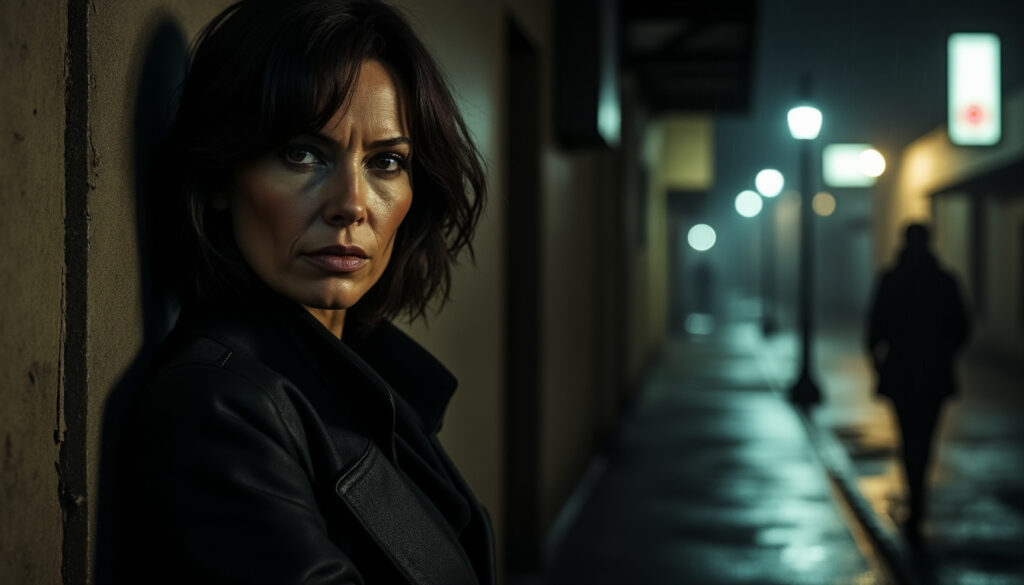
Nadine Trintignant stands out as an emblematic figure of French cinema, illustrating through her works a remarkable emotional and aesthetic power. In her film The Crime Thief, she explores the meanders of the human soul and seeks to capture contemporary solitude while offering a bold and offbeat narrative. With explosive and inventive staging, she provides the viewer with a fascinating journey into the torments of a character trying to break the chains of anonymity. Far from conventions, this film captivates with its complexity and the skill of its writing, revealing the emotional and narrative richness characteristic of Trintignant’s style.
Nadine Trintignant has made a mark on French cinema with profoundly impactful works, including “The Crime Thief.” In this film, the dark reality of a human seeking recognition is illuminated through a disturbing narrative and captivating staging. The complexity of the characters and the richness of the themes explored, such as modern solitude, disillusionment, and the quest for meaning, make this film both disturbing and fascinating. This work stands out for its ability to provoke reflections on human nature.
A bold vision of cinema
In “The Crime Thief,” Trintignant expresses a bold vision of cinema. Her approach reflects a desire to stand out from classic conventions. The convoluted narrative structure, between black comedy and drama, creates a whirlwind of emotions. This contrast between the sordid and the light captivates the viewer, who finds themselves drawn into the chaotic universe of Jean, the protagonist. By using striking visual effects, Trintignant keeps the audience on the edge of their seats throughout the film.
A complex character
Jean, played by Jean-Louis Trintignant, is an ordinary man, the archetype of the everyman. His personal life is marred by a deep existential anxiety. Through his gaze, the film explores the nature of soft madness. At the moment he decides to claim a murder he did not commit, he paves the way for a series of unexpected events. This choice, although incomprehensible, reveals a desire for transcendence. The absurdity of his act only increases the intensity of his journey, propelling the narrative to unprecedented heights.
An innovative directing style
Trintignant’s staging favors an immersive approach. She plays with timings and rhythms, multiplying visual effects. The cuts and lateral tracking shots. The direction aims to be explosive, leaving little room for boredom. There is a sense of urgency, a rage that pervades every scene. The soundtrack, oscillating between psychedelic rock and pop, accompanies this tour de force. From the first notes, the atmosphere is set: an invitation to a unique journey as one plunges into the intrigue.
Reflection on modern solitude
The film addresses contemporary solitude poignantly. Jean, while living surrounded by loved ones, faces a feeling of isolation. This duality is at the heart of his existence, creating a palpable tension. Modern society, in transformation, impacts human relationships. Each interaction becomes a reflection of this inner distress. Trintignant responds with a fine analysis of the human soul, rooted in reality. It is from this cruel melancholy that an exceptional narrative tension arises.
An echo of reality
What makes “The Crime Thief” powerful is its echo in reality. At a time when notoriety is often sought at any cost, Jean embodies this quest for visibility through transgression. Strangely, he manages to strike a chord with the audience, raising moral questions. Reflections on celebrity and the need for attention are universal themes that resonate across generations. At the same time, the film depicts the catastrophic consequences of such choices. Far from glorifying violence, it presents it as a last resort, a tragic escape.
A strong cinematic legacy
Finally, “The Crime Thief” positions itself as a milestone in French cinema. It testifies to Nadine Trintignant’s commitment to addressing profound and often controversial themes. Through this work, the director weaves a link between her past career and that of this era. The film, rediscovered by new audiences, reminds us of the importance of narratives that disturb and invite reflection. It is a slice of life that endures, highlighting the evolution of cinematic thought.
Nadine Trintignant, an emblematic figure of French cinema, has managed to mark her era with a work of exceptional richness and boldness. With “The Crime Thief,” she plunges the viewer into a tormented universe, where drama and comedy intertwine with captivating intensity. This work does not merely explore the meanders of the human mind but also questions the relationship with society, fame, and morality. Through the character of Jean, she addresses universal themes such as boredom, the need for recognition, and the quest for identity.
Trintignant’s directing style, both bold and thoughtful, enhances the power of her narrative. By blending various visual techniques and dynamic editing, she leads us into a spiral of emotions, leaving little room for boredom. Her use of music, particularly the psychedelic rock soundtrack, helps create an immersive atmosphere that accompanies Jean’s unease. This innovative approach recalls the influences of new cinema and demonstrates her ability to appropriate codes to better subvert them.
With “The Crime Thief,” Trintignant does not simply narrate a story: she urges us to reflect on our own humanity and the consequences of our actions. By transforming a mundane act of daily life into a spectacular event, she highlights the growing despair of the individual in the face of an increasingly dehumanizing society. Through this means, she manages to create a powerful echo between the narrative and contemporary realities, making this work a must-see for anyone interested in the history of cinema and the questions of society and individuality.


