
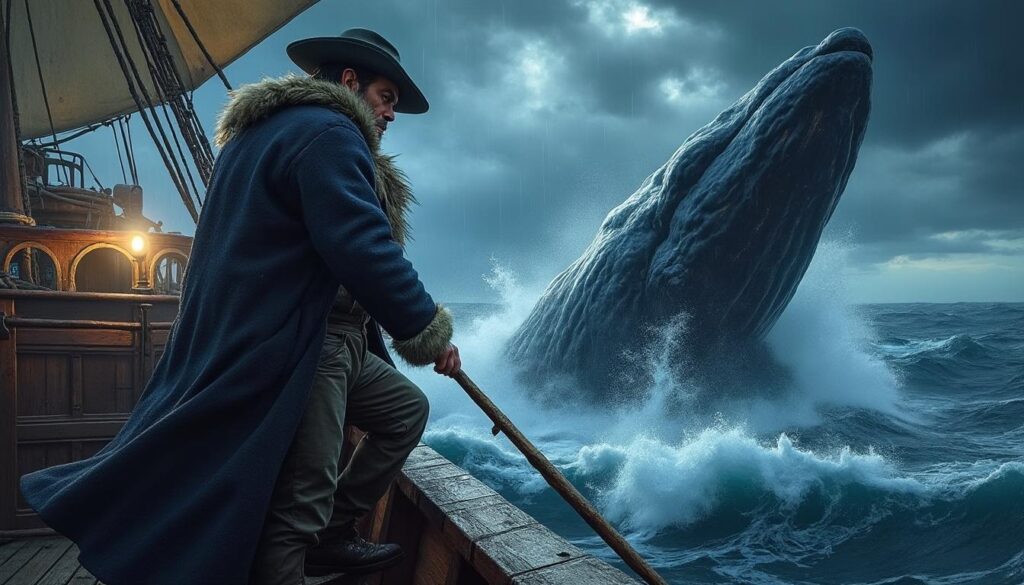
In a world where virtual realities and the deepest desires intertwine, Philipp Yuryev immerses us in a captivating universe with his film The Whale Hunter. This feature film explores the themes of isolation and interfering love, contrasting the lives of a young camgirl and a young man in search of connection. Through this story of wandering between two worlds, Yuryev reveals a poignant reflection on the challenges of human relationships in the digital age. As the plot unfolds, the viewer is invited to navigate through troubled waters, where the quest for authenticity and intimacy collides with the vastness of an ocean of estrangement.
Philipp Yuryev: In Pursuit of the Sea Giants, the Whale Hunter
The film “The Whale Hunter,” directed by Philipp Yuryev, uniquely explores themes of desire, isolation, and the quest for human connection, while plunging us into breathtaking marine landscapes. This feature film highlights the story of a young man, Leshka, caught in the nets of his love obsession for a camgirl. Through this article, we will discover the different facets of this work, from the presentation of its author to the analysis of the main themes that traverse it, including an exploration of the contrast between two distant worlds.
The World of Philipp Yuryev
Philipp Yuryev is a filmmaker who attracts attention for his ability to blend documentary elements with dramatic fiction. However, this film, shot in 2020, was not screened in France until several years later, revealing a rather unique journey. His style fits within a tradition that questions both the human condition and the impact of technology on interpersonal relationships. This mix proves fascinating, and the way Yuryev evokes the modern world allows for real immersion.
With a sharp gaze, he examines the reality of the young generation, searching for sensations and contacts. Yuryev shows us through his film how fragile and illusory ties can become. This director, armed with his camera, offers us a work that paints a nuanced portrait of our time, oscillating between comedy and tragedy.
A Striking Introduction
The opening scene of “The Whale Hunter” sets the tone of the film remarkably. The camgirl, played by Kristina Asmus, is filmed within the confines of a small room, a space that is both confined and open to the world through cameras. The contrast between this candy-pink room and the Siberian village of the Chukchi Peninsula in the distance is striking. This discrepancy raises issues of communication and escape, as well as a reflection on the reality of voyeurism in the digital age.
This cinematic moment invites us to question the importance of physical space in relation to interactions in a virtual world. Thus, the little room becomes a metaphor for uprootedness and the quest for an illusory happiness. Far from the usual clichés of the brothel, Yuryev depicts a reality that may seem comical but ultimately unearths darker emotions.
The Main Characters and Their Quest
At the heart of the story, we meet Leshka, a young man beset by his solitude. His fascination with the camgirl quickly becomes an obsession, an escape from his monotonous daily life. Leshka represents the disoriented youth, torn between the desire for love and the isolation inherent in his fishing community. Throughout the film, the character shows how a gaze on a screen can become an all-consuming passion.
For Leshka, crossing the Bering Strait to join his beloved becomes an almost heroic quest. This journey confronts him with the realities of the modern world, where it is very difficult for him to distinguish the virtual from the real. This tension between illusion and the possibility of shared love adds emotional depth to the narrative. In time, Yuryev’s camera reveals the layers of complexity of human feelings, transforming passion into a source of suffering.
A Revealing Contrast
The film deploys a sumptuous contrast between the intimate life of the main character and the extraordinary natural space that surrounds him. The vast Siberian landscapes evoke the brutal beauty of nature, while the virtual world of the camgirl depicts an artificial reality. This aspect is essential in the discourse on contemporary relationships. Their interactions, although filtered by a screen, represent a modern quest for authenticity.
The themes of isolation, voyeurism, and virtuality intertwine to enrich the narrative fabric. As Leshka seeks to forge a connection with the camgirl, he sinks further into his solitude, trapped in a cycle that makes him increasingly vulnerable. The interactions he imagines with her are tinged with despair, and the nuances of humanity are highlighted by this tortuous path.
A Multifaceted and Captivating Work
“The Whale Hunter” oscillates between a dramatic comedy and a tale of wandering. Although some sequences are imbued with lightness, others plunge into anguish and despair. This duality only enriches the viewer’s experience, who is constantly prompted to reflect on the noetic nature of love. Leshka, through his quest to reach his camgirl, becomes the face of a lost youth, always searching for an unattainable ideal.
Each scene, with its own rhythm, contributes to the overall structure. By integrating almost documentary moments, Yuryev does not hesitate to energize his narrative, making it both accessible and complex. The introduction of the element of whale hunting, for example, is surprising but also echoes the characters’ obsession. He thus avoids a linear narration, playing on the audience’s emotions while confronting them with their own perceptions.
Open Conclusion
Philipp Yuryev, with his unconventional directing, makes us question humanism in the digital age. “The Whale Hunter” is a work that, although sometimes unbalanced, offers a profound reflection on love, isolation, and the reality of our contemporary relationships. Through Leshka’s quest, the story illustrates how geographic and psychological barriers can hinder our understanding of what constitutes a true human bond.
The Emotional Echoes of “The Whale Hunter”
The film “The Whale Hunter,” directed by Philipp Yuryev, offers both an intriguing and disturbing cinematic experience. Through the poignant story of a man desperately in love with a camgirl, the director succeeds in capturing the essence of modern solitude in the digital age. The juxtaposition of two worlds, that of a young woman exposed under the camera’s spotlight and that of fishermen living in geographic isolation in Siberia, creates a striking contrast that questions notions of intimacy and escape.
The narrative structure, oscillating between comedy and drama, reflects the complexity of human emotions when faced with realities that are sometimes inaccessible. The characters struggle in a whirlwind of obsessions and unfulfilled desires, echoing the exploration of relationships in the digital age. Leshka, the protagonist’s quest for love raises questions about the nature of human connections, whether real or virtual. The film manages to establish a link between these two worlds, thereby revealing the fragility of our desires in a world where technology acts as a filter between the individual and reality.
Watching “The Whale Hunter” is an invitation to examine the consequences of new forms of communication and how they can shape our understanding of love and solitude. Philipp Yuryev succeeds in creating a portrait that is as touching as it is unsettling, while borrowing elements of raw realism and poetry, thus offering a profound reflection on human nature and the contemporary challenges we face. This film, while sometimes bewildering, represents a bold and thought-provoking work that remains etched in the viewer’s mind.


