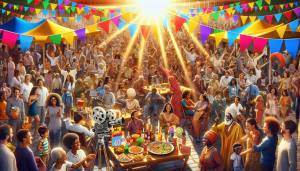
R.O. Blechman immerses us in a unique adaptation of “The Soldier’s Tale”, a little-known masterpiece that resonates with the melancholy of the human condition through an unprecedented audiovisual work. By blending animation, music, and poetic narration, this artist reveals a world where the stakes of the soul collide with the vicissitudes of modern capitalism. This luminous interpretation of the story inspired by Igor Stravinsky and Ramuz evolves in a colorful and dreamlike universe, while tackling profound and committed themes that question our current reality.
A bold and feverish work
R.O. Blechman, renowned animation artist and illustrator, presents a singular adaptation of “The Soldier’s Tale,” an original work that fuses visual art, music, and storytelling. In this realization, he draws inspiration from Igor Stravinsky’s score, translating a deep reflection on “humanity” through a narrative that evokes universal stakes. Far from mere entertainment, this adaptation awakens powerful emotions by appealing to the senses and the collective memory, shedding light on the themes of loss and identity.
A sonic and visual journey
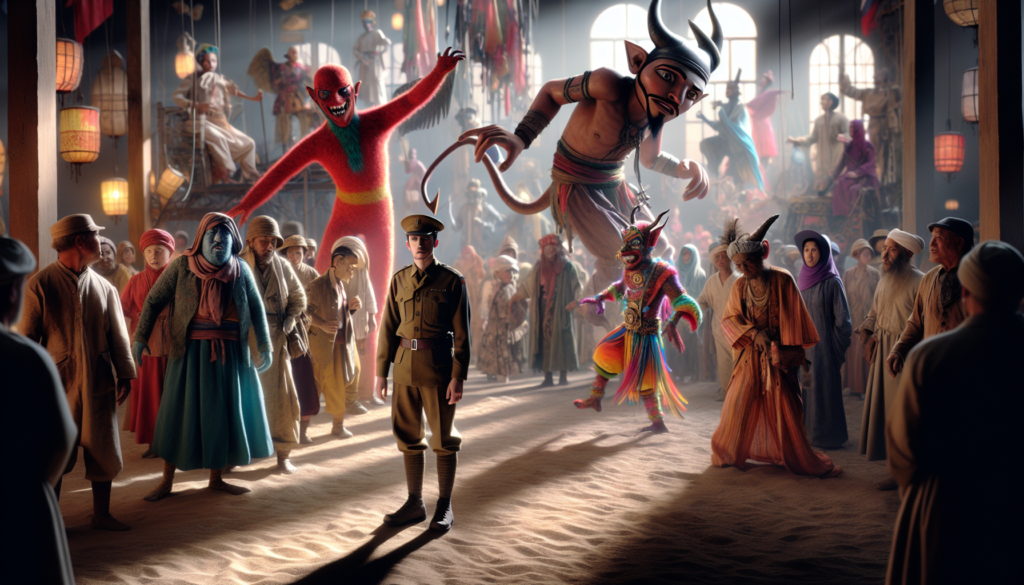
In his adaptation, Blechman combines animation and acoustics in an unprecedented way. The use of Stravinsky’s music creates a soundscape that accompanies and enriches the visual experience. The characters, animated with poetic subtlety, depict a world in transformation, between illusion and reality. Through evocative sequences, the young soldier Vertov, caught up in his desires, faces a heartbreaking choice. His exchange with the devil, embodied by a captivating voice, becomes the core of an inner drama that resonates with the audience.
These elements are intertwined, forming a sensorial mosaic where each image and each sound sends an invitation to reflection. The visual narration goes beyond mere words and encourages the viewer to feel, to perceive the hidden meaning behind each gesture. In a presentation style reminiscent of the narrative tradition, Blechman explores the arcana of human consciousness while merging the past and the present.
A critique of the modern world
Blechman succeeds in transcending the original tale, addressing themes that are both personal and societal. Based on a critical reading of the modern world, the story evokes issues such as materialism and the alienation of individuals in a consumer society. The Faustian pact between the soldier and the devil symbolizes an eternal quest for meaning in the face of a rapidly changing world. The visuals of the film, with their stunning aesthetics, convey a sense of urgency, chaos, and lost hope.
- The devil as the seductive figure of prosperity.
- Vertov, trapped between dreams and reality.
- A society obsessed with spectacle but devoid of meaning.
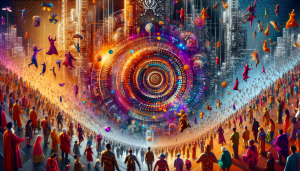
This framework is illustrated by erased silhouettes, bright colors, and shapes evoking the confusion between shadow and light. The main character, in searching for his soul, finds himself stripped of his identity, navigating in a world that excludes him.
An animation with multiple facets
R.O. Blechman pushes the boundaries of the animation medium with his innovative technique. The colorful collages, combined with drawing sequences, create a hypnotic effect. This approach makes horizon and perspective an intermediate terrain, a bridge between different states of mind. Emotions burst forth through visual compositions that, almost psychedelic, capture the essence of the soldier’s inner reflections.
A ballet of animations intertwines in constant motion. The figures animate, distort, almost as if expressing feelings of despair and joy. We witness a true quest for self through an immersive experience, where each image stimulates the imagination and pushes to explore profound themes.
Through “The Soldier’s Tale,” R.O. Blechman offers us more than just an adaptation; he transcends the barriers of tradition to present an engaging and reflective work. His clever use of music and animation transforms this classic story into a modern exploration of the human condition. This work, through its unique artistic approach, reminds everyone of the importance of memory and the choices we make.
|
IN BRIEF
|
A unique adaptation of “The Soldier’s Tale” by R.O. Blechman
R.O. Blechman, through his work *The Soldier’s Tale*, immerses us in an unprecedented visual and auditory experience. His ability to merge animation, music, and narration creates a universe where each element contributes to enrich the narrative. In this adaptation, the American filmmaker offers a contemporary reinterpretation of a tale as ancestral as it is Faustian, acting as a mirror to our modern society.
The interpretation of Igor Stravinsky’s music, combined with iconic voices like those of Gainsbourg and Henri Salvador, gives this adaptation an even more poignant dimension. The music, perfectly aligned with the animation, almost becomes a character in its own right, adding a layer of emotion to the characters and their inner struggles. Blechman manages to make us feel the turmoil of Vertov, this young soldier whose quest for identity and fulfillment is hindered by the weight of modern capitalism.
The mise en abyme present in the work brilliantly highlights the contradictions of a consumerist society, where art and beauty are often relegated to the background against the incessant demands of the material world. By using striking imagery and fluid transitions, Blechman succeeds in creating an atmosphere that is both dreamlike and anxiety-inducing, inviting the viewer to a deep reflection on the meaning of our existence.
Ultimately, R.O. Blechman’s adaptation of *The Soldier’s Tale* rises as an essential work, both for its artistic innovation and its engaged discourse, redefining our perception of art in a constantly evolving world.