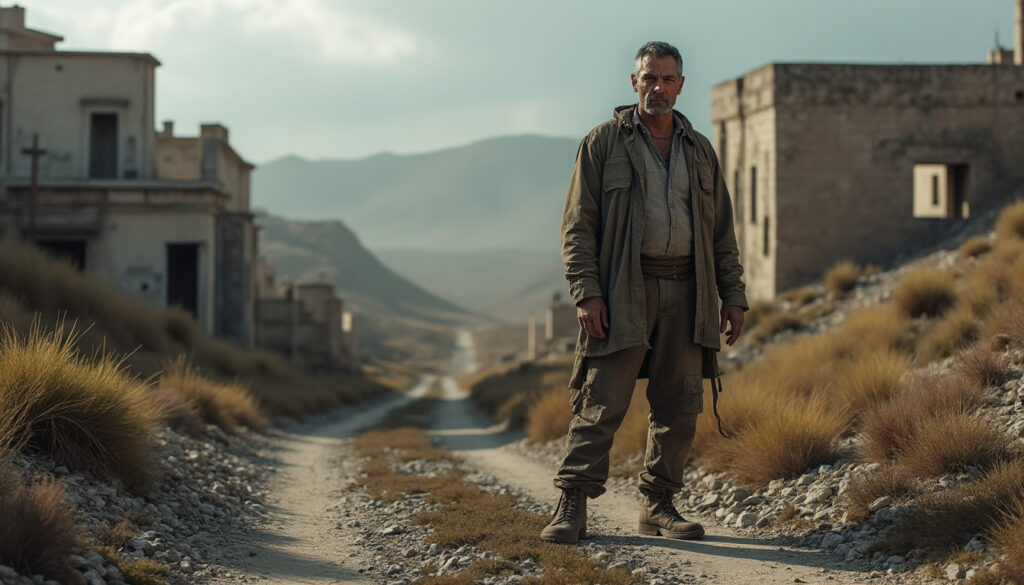
In contemporary cinematic universe, Safy Nebbou imposes himself as a multifaceted director, capable of exploring the nuances of the human soul through moving narratives. His work, particularly Fils de personne, embodies a profound reflection on parenthood and grief, while highlighting the distance that can exist between beings. Through his delicate narrative, Nebbou invites us to a poignant exploration of a man’s journey in search of identity and belonging, taking us on an odyssey where the bonds of blood clash with those of the heart.
Director Safy Nebbou evokes strong emotions through his work. With his latest film, he explores complex themes such as loss, parenthood, and the quest for identity. At the heart of his narrative, we find tormented characters, sharing relationships marked by distance and melancholy. In this article, we will delve deeper into Nebbou’s universe, examining the dimensions of his latest feature film, “Fils de personne”, where these subjects are beautifully treated.
A look at Safy Nebbou
Safy Nebbou is a filmmaker whose keen eye on the human condition distinguishes him in the current cinematic landscape. Originally from France, he began his career in film by directing short films. Over the years, his style has evolved, pushing him to tackle deeper and often more difficult themes. His passion for visual storytelling is palpable in his work, and he knows how to capture the essence of human emotions.
Beyond his technique, Nebbou is interested in narratives that highlight social injustices and perceive the meanders of love and grief. His films often have a melancholic tone that leaves an imprint, reflecting his attentiveness to the nuances of human relationships.
The major themes of “Fils de personne”
“Fils de personne” focuses on the relationship between an adoptive father and his child. A palpable tension arises from Thomas’s inability, played by Romain Duris, to forge bonds with young Mapring. The film evokes emotional distance that can exist within families, even those formed by love. The presence of a loving couple, at first, is later undermined by tragedy and sorrow.
This tale woven with despair shows how the death of one of the characters reinforces this separation. Thomas, abandoned to his pain, finds himself on a quest to restore the connection with his son. Geographical distance combines with the language barrier, an obstacle that keeps them further apart, adding an inextricable tension to their relationship.
The symbolism of distance
In the film, the concept of distance is omnipresent. It is represented not only by space but also by emotions and misunderstandings. The opening scenes where we see the adult and the child walking down a hallway visually express this separation. The camera captures their backs, illustrating that bond that seems broken, a strong symbol of a feeling of isolation. This simple image depicts the complexity of human relationships, where words fail to bridge hearts.
The distance is also geographical, where Thomas’s journey to Thailand represents a quest. It is a path in search of answers, but also one of discovering the soul of his son. This journey, both figurative and literal, becomes a metaphor for their respective journeys towards acceptance and understanding.
A work imbued with melancholy
“Fils de personne” brilliantly manages to encapsulate a feeling of melancholy. The camera, through palpable softness, pays tribute to pain. Each scene is crafted with particular attention to detail, giving the work an almost tangible texture. The fragility of relationships is accentuated by silence, as when Thomas and Mapring share moments of life without exchanging a single word.
- These moments are rich in emotion despite their simplicity.
- Gestures can sometimes speak louder than words.
- The camera then becomes the witness of unspoken words and buried feelings.
Thus, the depth of the work lies in its delicate rhythm that allows for reflection. Nebbou creates a contemplative atmosphere, balancing between moments of calm and underlying tensions, perfectly illustrating the complexities of feelings. By showing the inner struggles of his characters, he invites us to feel and reflect on the challenges of fatherhood and loss.
The quest for identity and adoption
Adoption is a central theme in “Fils de personne”. Mapring, a Thai child, is caught in a dynamic where he seeks to understand his new place in the world. The difficulty of creating bonds and defining oneself through an adoptive father raises questions about identity and genealogy. This journey towards his origins, undertaken by Thomas, illustrates this quest to understand where one comes from and how it influences our lives.
The complexity of interethnic and intercultural relationships is also highlighted. Thomas’s attempt to get to know his son is tinted with clumsiness and misunderstandings. This blend of fear, hope, and wisdom mixes to create a rich and nuanced portrait of the quest for identity. This journey leads them to the understanding that despite the distance, love can forge unbreakable bonds.
The universal message of Safy Nebbou
Beyond the melancholy, “Fils de personne” delivers a strong message: seeking to overcome the pain of loss and build a future. Nebbou explores how love can become a powerful vector of hope. The film does not merely evoke sadness; it also shows us how resilience can emerge from the ashes of pain. Sometimes, a single gesture is enough to initiate change.
Nebbou’s characters are not defined solely by their pain or their past. They are individuals in search of meaning, trying to navigate a world that is often ruthless. The way they fight, even for authentic contact, is touching and poignant.
In summary, Safy Nebbou invites us to reflect on our own relationships and on how we care for others. His work is an ode to humanity, where every exchanged glance or every tear shed echoes the intrinsic human nature.
The latest film by Safy Nebbou, “Fils de personne”, immerses us in an intimate and poignant narrative centered on the universal themes of parenthood and loss. With a delicate approach, Nebbou explores the complexity of human relationships through the story of Thomas and his young adoptive son, Mapring. From the beginning of the film, a palpable emotional distance is established, illustrated by scenes where the characters seem lost in their own grief, unable to reach each other even physically.
The director manages to capture this incommunicability through very thoughtful stylistic choices. The absence of dialogue and the use of long shots reinforce this feeling of isolation and melancholy. However, this same device can sometimes give the impression of a narrative that is too static, lacking a certain cadence or a more dynamics that is more prolific. The emotions of the characters, although present, do not always seem to connect with the viewer, creating a sense of frustration in the face of the potential stakes of the narrative.
Thus, “Fils de personne” is a paradoxical film, both eloquent in its representation of the delicacy of the parental bond and at the same time limited by its desire to remain in a narrative comfort zone. Nebbou offers an enriching reflection on adoption, grief, and the quest for identity, but also leaves the viewer longing for more authenticity and movement. Despite its imperfections, the work highlights the ability of art to spark reflection on serious and profound themes, thus affirming the unique artistic vision of its director.