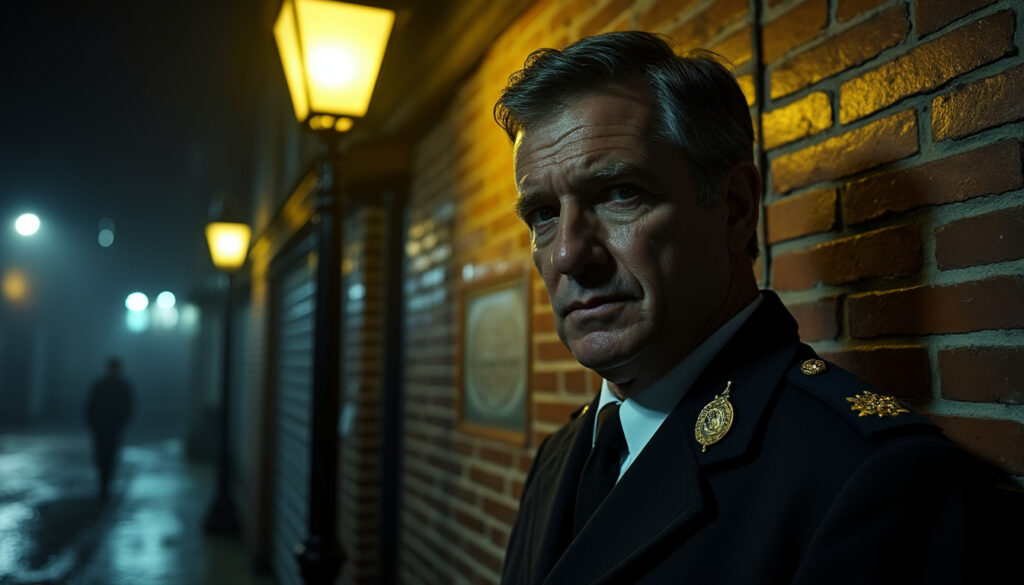
Directed by Sidney Lumet in 1972, « The Offence » is a captivating psychological thriller that explores the dark depths of the human mind. Employing a resolutely pessimistic tone and a bold cinematic approach, this film stands out for its non-linear narrative and its analysis of themes of violence and trauma. Featuring Sean Connery in a raw role, Lumet creates a disturbing work that questions both the psyche of its protagonist and the moral processes at play in the police world. Beyond its reputation, « The Offence » reveals the inner wounds of its characters, while questioning the very nature of justice.
Sidney Lumet and His Intense Psychological Thriller: « The Offence » (1972)
« The Offence », directed by Sidney Lumet, is an iconic film in crime cinema that delves into the tormented psyche of a police sergeant. Released in 1972, it depicts a troubling universe where violence and moral corruption closely coexist. This feature film was long considered a cursed work, remaining in the shadows for decades before experiencing a critical rediscovery. In this article, we will explore the themes, direction, and sociocultural context surrounding this fascinating film.
A Troubled Production Context
The gestation of « The Offence » is marked by major challenges. First of all, Sidney Lumet had already imposed his unique style, borrowing elements from theater to breathe new life into his scripts. In this sense, Lumet had partnered with Sean Connery, one of the most popular actors of the time. Together, they chose to adapt a play written by John Hopkins, entitled « The Story of Yours ». Connery, eager to move away from glamorous roles, was seeking a darker adventure, more infused with his British culture.
On the production side, the film was received with skepticism by the United Artists studio. They feared that this thriller, both brutal and psychologically intense, would harm Connery’s image, then a star of James Bond films. Ultimately, after many twists and turns, the film found its way to theaters.
The Non-Linear Narrative Structure
The choice of a non-linear narrative is bold and contributes to the oppressive atmosphere of the film. From the outset, Lumet imposes a palpable tension, starting with a violent interrogation. The viewer is plunged into the turmoil of the main character, Johnson, played by Connery. Technically, the direction is marked by close-ups and a mobile camera that creates a feeling of claustrophobia, while the sequences are often interspersed with flashbacks.
Each confrontation in the film – whether with Johnson’s colleagues, his wife, or the suspect – allows for a deeper exploration of the protagonist’s psychology. The scenarios revolve around pain, anxiety, and a latent violence that always awakens interest. Indeed, the actors’ performances are essential in conveying these emotions, where Connery excels in this complex and troubling role.
An Disturbing Soundtrack
The soundtrack by Harrison Birtwistle plays a crucial role. Dark and dissonant, it creates an almost surgical atmosphere, heightening the sense of unease. This composition, rare for its time, emphasizes Johnson’s internal conflicts, to the point of being almost an entry into his tortured mind. Thus, each note resonates like a cry of distress, an echo of human suffering.
Thematic Elements of the Film
« The Offence » addresses heavy themes. At the heart of the story are questions about violence, authority, and the human faced with inhumanity. Johnson is portrayed as a broken man, a victim of his environment, and his quest for truth leads him to destruction. The film emphasizes the idea that evil is never as simple as it seems, often hiding behind familiar faces.
The dialogues are both powerful and revealing. The way Johnson interacts with other characters illustrates his loss of control. The exchanges are sometimes brutal and leave no room for ambiguity. A striking example is his dialogue with his wife, where the pen of words becomes a weapon just as sharp as those of hands.
A Rehabilitated Legacy
Although « The Offence » was initially received with caution, its rediscovery has allowed it to regain its nobility. Thanks to recent editions in Blu-ray and DVD, notably by Wild Side Video, the film benefits from a new master and additional documents. These reissues have allowed for a revisit of the work from a new angle and to explore the contemporary themes of the film.
The film, often ranked among the most remarkable psychological thrillers of the 70s, has thus become a reference for contemporary filmmakers. Its exploration of character psychology and the authenticity of Connery’s performance continues to influence many directors today. In short, « The Offence » is a masterpiece often overlooked, but one that deserves to be celebrated.
Conclusion on Cinematic Impact
Over the years, « The Offence » has become a poignant example of what cinema can offer. It is not just a thriller but a reflection on humanity, morality, and the limits of mental health. This film remains particularly relevant in our contemporary society, where questions of violence and ethics are more pertinent than ever.
Sidney Lumet and His Intense Psychological Thriller: « The Offence » (1972)
The career of Sidney Lumet, an Australian director who marked the history of cinema with a bold approach to psychological and societal themes, reaches new heights with his film « The Offence ». This film, which has long been considered cursed and overlooked, reveals the dark and complex angle of human nature. In choosing to narrate the story of a policeman whose mind is disturbed by the brutality of his job, Lumet plunges into a universe where psychological imprisonment proves to be more constraining than physical confinement.
Known for its tense atmosphere and exploration of themes of violence and moral decline, the work demonstrates mastery of psychological cinema. With an audacious narrative structure and a dissonant soundtrack, Lumet succeeds in portraying a tormented main character, trapped by his own demons. The choice of Sean Connery in the role of Johnson marks a significant turning point in his career: the actor moves towards darker and more vulnerable roles, far from his iconic James Bond image.
The performances of the actors, the inventive direction, and the use of theater elements enrich the cinematic experience, underscoring the intensity and emotional resonance of the story. « The Offence » thus stands out not only for its form but also for its content, prompting viewers to reflect on human nature and the devastating consequences of violence. In the context of 1970s police cinema, Lumet offers a unique and disturbing perspective that continues to resonate in the contemporary cinematic landscape.